
Name Meaning
Overview
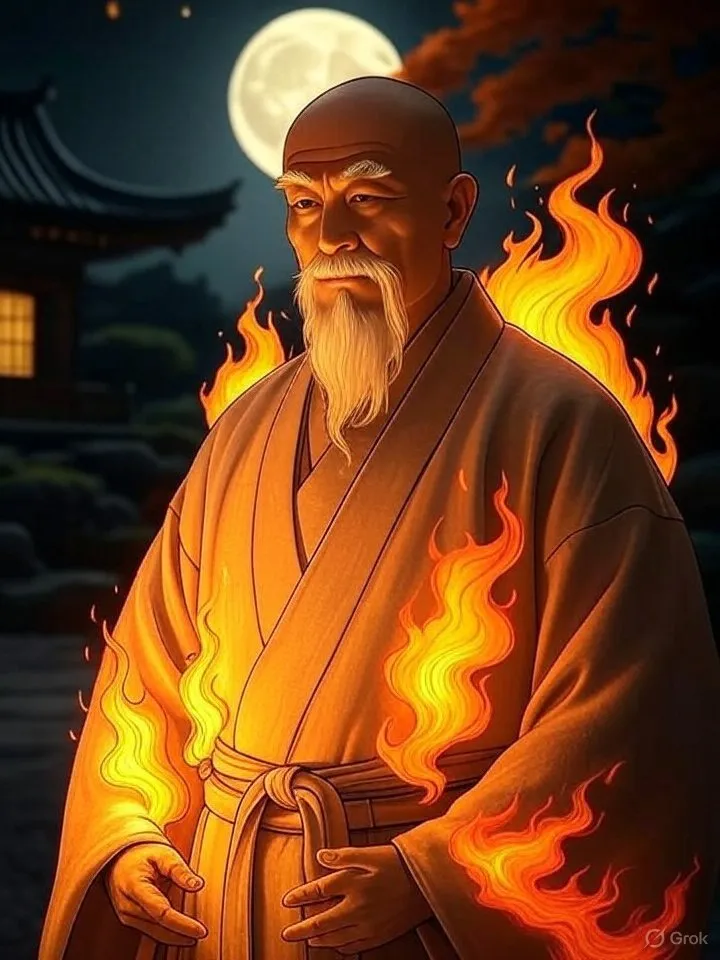
Sōgenbi (叢原火) means “Fire of the Sōgen field,” referring to the area in Kyoto where the spirit is said to appear.
- Sōgen (叢原) = name of the field in Kyoto
- Bi (火) = fire
Origin
- Appears in the folklore of Kyoto’s Sōgen area.
- Said to be the ghost of a monk who stole oil from a temple lamp.
- The monk was cursed to wander as a flaming head as punishment.
Appearance
- Appears as a floating, fiery head engulfed in blue or red flames.
- Its face is tormented and sorrowful, occasionally crying out in pain.
- Visible mostly at night, near temple ruins or graveyards.
Behavior & Myths
- It drifts silently through the air, weeping and glowing.
- Sometimes chases travelers who cross its cursed field.
- Seen as a warning against sacrilege and theft from sacred places.
Symbolism
- Embodies punishment for religious transgression and greed.
- Represents the lingering pain of regret and spiritual unrest.
- A reminder to respect sacred traditions and offerings.

Illustrated folktale
The tale of Sōgenbi

In the misty veil of evening, when the lanterns of Sōgen's temples cast flickering shadows on the ground, I chanced upon a traveler whose eyes were fixed upon the darkness. His name was Kaito, and he had wandered far from his village in search of wisdom. As we walked together through the quiet streets, he spoke of his longing to behold the legendary Sōgenbi – the fiery head that roamed the land as a specter of sorrow.
I warned him then of the tales told about this creature: how it drifted silently through the air, its blue flames burning bright with an otherworldly light. They said it wept for the transgressions of old, and chased travelers who crossed its cursed field with a fierce determination. But Kaito's curiosity was not to be swayed.
As night deepened, we approached the ancient temple where legend claimed Sōgenbi first appeared. The wind stilled, and an eerie silence fell upon us as if the very spirits of the dead watched our approach. And then, in a flash of blue flame, the Sōgenbi materialized before us.
Its face contorted in torment, Kaito's eyes widened with awe and terror. I felt the hairs on my neck stand on end as the creature drifted closer, its red flames casting an eerie glow on the surrounding stones. Its gaze was fixed upon Kaito, a sorrowful plea burning within those fiery depths.
"Why do you follow me?" Kaito whispered, his voice trembling.
Sōgenbi's cry echoed through the night air – a mournful wail that shattered the stillness and sent shivers down my spine. It drifted closer still, its flames licking at Kaito's feet as if seeking to engulf him in their burning grasp.
In a burst of insight, I understood: this was no ordinary specter, but a soul trapped between worlds by the weight of its own transgressions. Sōgenbi's cry was not one of anger, but of sorrow – for the oil it had stolen from the temple lamp all those years ago, and the pain that still lingered within.
As if awakened to this truth, Kaito took a step back, his eyes wide with understanding. "Forgive me," he whispered, his voice barely audible above the night's gentle sighs. "I will respect the sacred places of your village, just as I would wish others to respect mine."
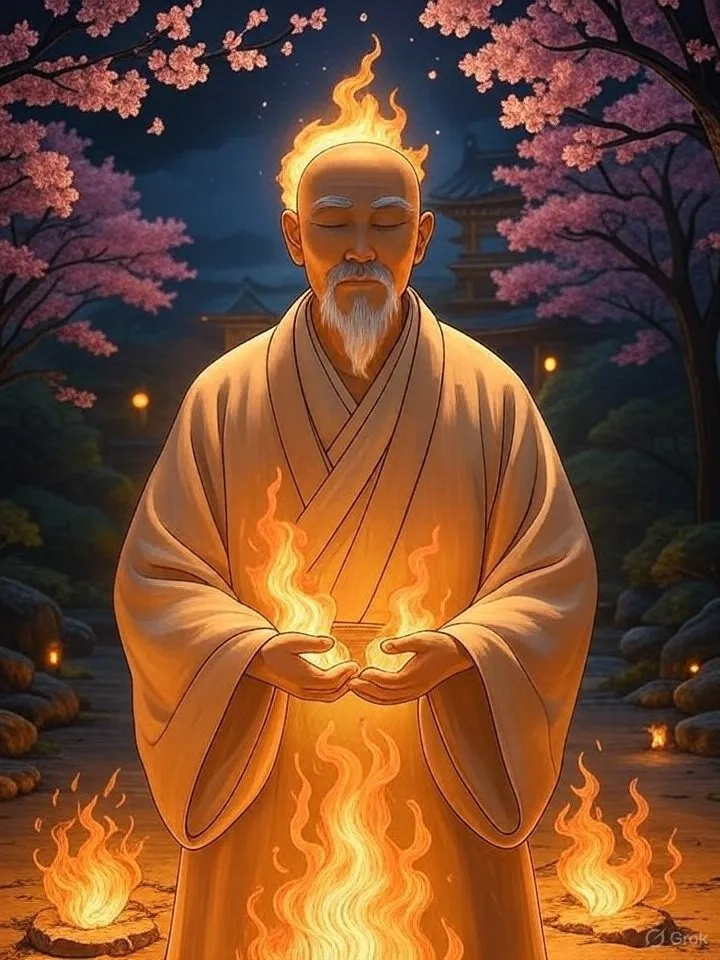
And in that moment, Sōgenbi's fiery form began to dissipate, its blue flames dying down to a soft, golden glow. The creature's face relaxed into a semblance of peace, and it vanished into the darkness, leaving Kaito and me standing alone beneath the temple's ancient eaves.
The night air was still once more, but I felt a change within myself – as if the sorrowful spirit had imparted its wisdom to me, reminding me that respect and reverence are not trivial things.