
Name Meaning
Overview
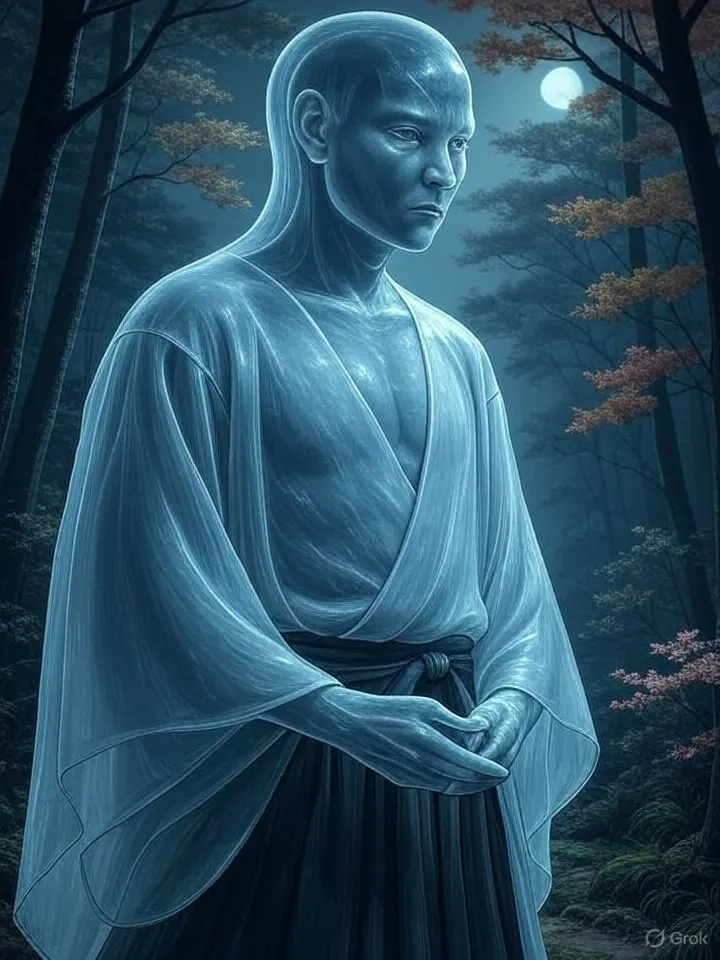
Shiryō (死霊) means "spirit of the dead" in Japanese. These are souls of those who have passed away, but remain bound to the world of the living.
- Shi (死) = Death
- Ryō (霊) = Spirit or ghost
Origin
- Derived from ancient Buddhist and Shinto beliefs about the afterlife and spirits.
- Often connected with grief, attachment, or improper burial rituals.
- Common in classical ghost stories and Edo-period literature.
Appearance
- Often depicted as pale or transparent figures.
- Sometimes missing legs, floating with trailing garments.
- Eyes may be blank or full of sorrow or wrath.
Behavior & Myths
- May haunt a location or person connected to their life or death.
- Can seek closure, deliver a message, or act out of vengeance.
- Rituals and prayers may help appease or guide them.
Symbolism
- Symbolize regret, unresolved emotions, or injustice in death.
- Represent the fragile boundary between life and the spirit world.
- Act as cautionary figures in tales about karma and remembrance.

Illustrated folktale
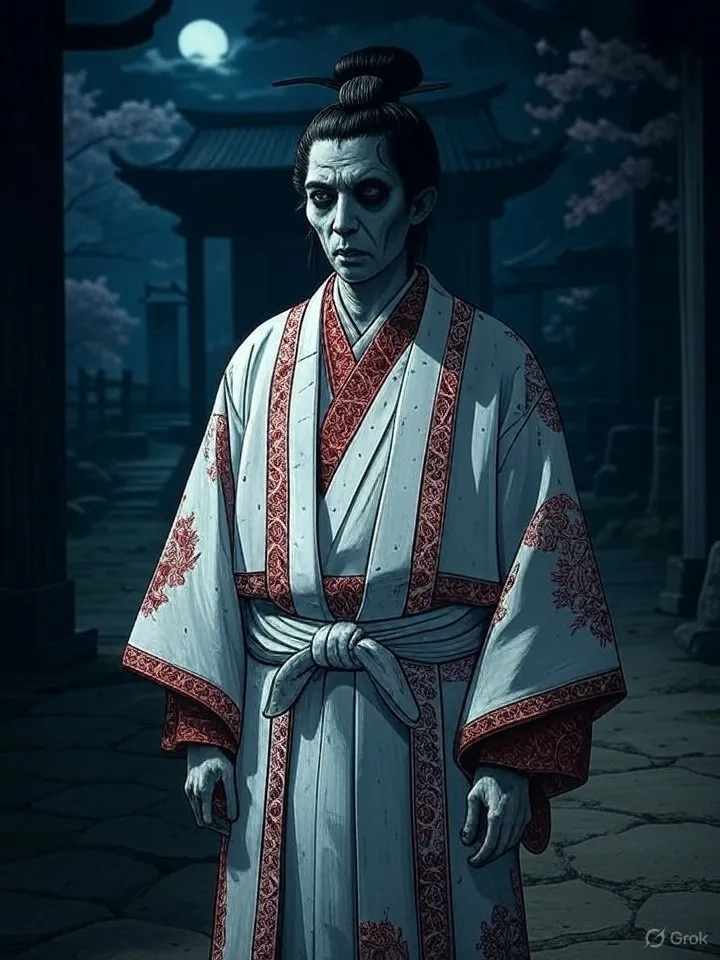
The tale of Shiryō

In the twilight hours, when shadows danced on the forest floor, a lone traveler stumbled upon a village nestled deep within the mountains. The villagers, accustomed to strangers, welcomed him with kindness and steaming bowls of rice porridge.
As night fell, the traveler, weary from his journey, retired to an inn near the edge of town. He was troubled by vivid dreams that lingered long after waking – visions of a figure shrouded in mist, her form shifting like the wind.
The next morning, as the sun rose over the village, the traveler sought out the elderly wise woman who resided on the outskirts of town. Her name was Kōro, and she was known for her insight into the workings of the spirit world.
Kōro listened intently to the traveler's tale, her eyes veiled with concern. "You have encountered a Shiryō," she said, her voice barely above a whisper. "A being trapped between worlds, driven by unresolved emotions."
The traveler inquired about the mist-shrouded figure that haunted his dreams. Kōro explained, "She was once a bride, young and beautiful, who perished in this very forest under tragic circumstances. Her spirit, fueled by grief and anger, has been searching for justice ever since."
As Kōro spoke, the village awakened to a cacophony of whispers and wails carried on the wind. The villagers exchanged worried glances, knowing that the Shiryō's presence signaled an opportunity for closure.
A small procession formed, with Kōro at its forefront. They carried offerings of incense, sake, and silk fabric, tokens meant to placate the restless spirit. As they approached the forest, the traveler sensed a change in the atmosphere – the air thickened with anticipation, like the prelude to a storm.
Deep within the woods, they found a clearing where wildflowers bloomed despite the season's frost. Kōro led the group in chanting prayers, imploring the Shiryō to reveal herself and find peace. The traveler watched as the mist-shrouded figure began to coalesce before them – her eyes now filled with a glimmer of hope, rather than sorrow.
With a nod from Kōro, the villagers gently offered the gifts to the Shiryō, who accepted each item with an ethereal smile. As she absorbed the incense's fragrance and sipped the sake, her form began to fade like morning dew on leaves. When the last whisper of her presence vanished, the forest returned to silence.
As the procession made their way back to the village, Kōro took the traveler's hand. "The Shiryō has found solace," she said softly. "Now, it is time for you to continue your journey – may its lessons remain with you." And so, the traveler departed, forever changed by his encounter with the Shiryō and her unwavering quest for justice.