

Name Meaning
Overview
Setotaishō (瀬戸大将) combines “Seto,” referring to a region famous for pottery, with “Taishō,” meaning general or commander.
- Seto (瀬戸) = famous pottery-producing area
- Taishō (大将) = general or commander
Origin
- Belongs to the tsukumogami class—objects that gain spirits after 100 years.
- Formed from discarded or broken ceramic wares that felt betrayed or neglected.
- Legends are rooted in Seto, Aichi Prefecture, known for fine ceramics.
Appearance
- Appears as a humanoid warrior assembled from mismatched shards of earthenware.
- Often depicted wearing armor made of ceramic plates and bowls.
- May have glowing eyes set into teacups or pot lids.
Behavior & Myths
- Roams abandoned kilns and storerooms at night.
- May exact vengeance on careless owners who broke or tossed valuable pottery.
- Sometimes seen protecting other tsukumogami or broken items.
Symbolism
- Embodies the spirit of forgotten tools and artistry.
- Symbolizes respect for craftsmanship and the impermanence of objects.
- Reminds people to value and properly dispose of household goods.

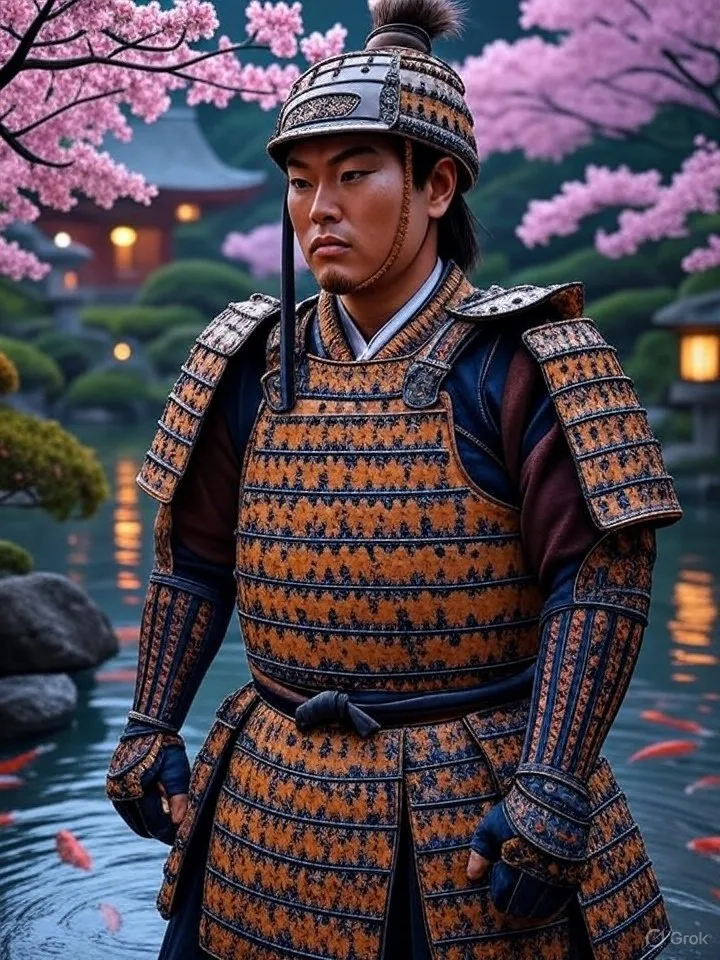
Illustrated folktale
The tale of Setotaishō

In the heart of Seto, where the misty dawn crept over the hills, there lived a potter named Kaito. His hands had created countless vessels, each one imbued with love and care, but Kaito's own heart was heavy with sorrow. His father, the master craftsman, had passed away just a year prior, leaving behind a kiln filled with unfinished work and a son struggling to come to terms with his loss.
As the days turned into months, Kaito's studio fell into disarray. Pots lay shattered on the floor, their shards scattered like tears. The old kiln, once a sanctuary for his father's spirit, now stood silent and still, its warmth extinguished by grief. It was as if the very essence of Seto's artistry had been lost with Kaito's father.
One night, a soft breeze rustled through the kiln, carrying with it whispers from beyond. In the darkness, a figure began to take shape. Mismatched shards of earthenware assembled into a humanoid form, its body composed of cracked pots and broken cups. The Setotaishō stirred to life, forged from the discarded remnants of Kaito's craft.
With each passing night, the Setotaishō roamed the abandoned kiln, its glowing eyes set within teacups burning like embers. It searched for a master to guide it, someone who would honor the artistry of the past and tend to the broken vessels that scattered the floor.
Kaito, lost in his sorrow, had forgotten the lessons of his father's teachings: that every piece of pottery holds a memory, and each shard contains a spark of life. The Setotaishō watched over him, sensing the anguish that weighed upon Kaito's heart. It knew the pain of abandonment, for it too was forged from broken dreams.
One evening, as the Setotaishō patrolled the kiln, it stumbled upon Kaito, sitting amidst the ruins of his studio. The young potter wept, mourning not only his father but also the loss of their artistry. The Setotaishō approached him, its ceramic armor creaking softly in the silence.
Kaito looked up to see a warrior assembled from shards of pottery, its eyes aglow with an otherworldly light. In that moment, he understood the truth: his father's spirit had not been lost but was now guarding the kiln, watching over the unfinished work and guiding him toward redemption.
With newfound purpose, Kaito began to rebuild the kiln, tenderly gathering shards of pottery and coaxing them into new vessels. The Setotaishō stood sentinel beside him, its glowing eyes illuminating the path forward. As they worked together, the old kiln's warmth returned, and the artistry of Seto's potters was reborn.
In the stillness of that night, Kaito heard his father's voice whispering in the wind: "A potter's craft is not just about creating vessels; it is about honoring the memories they hold. Never forget, for in every shard lies a spark of life."