
Name Meaning
Overview
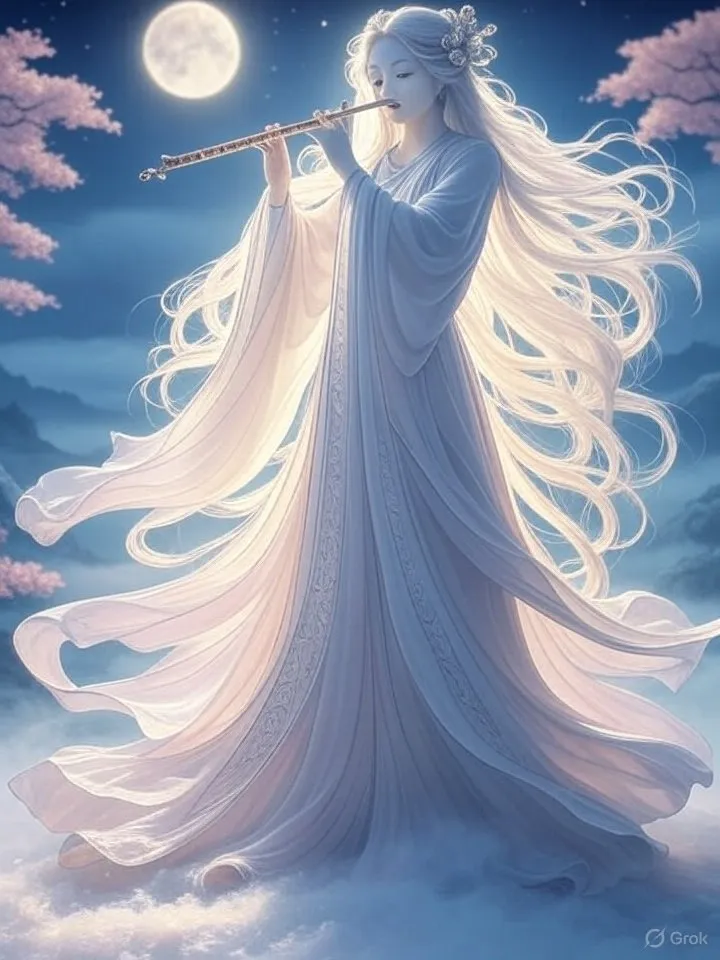
Tennin (天人) means "heavenly person" or "celestial being" in Japanese, typically referring to divine women of incredible beauty and grace.
- Ten (天) = heaven
- Nin (人) = person
Origin
- Originates from Buddhist cosmology and influenced by Chinese celestial maidens (tiān nǚ).
- Often appear in Noh and kabuki plays, especially the famous "Hagoromo" (Feathered Robe).
- Sometimes said to live in the heavens or descend to earth to bathe and interact with mortals.
Appearance
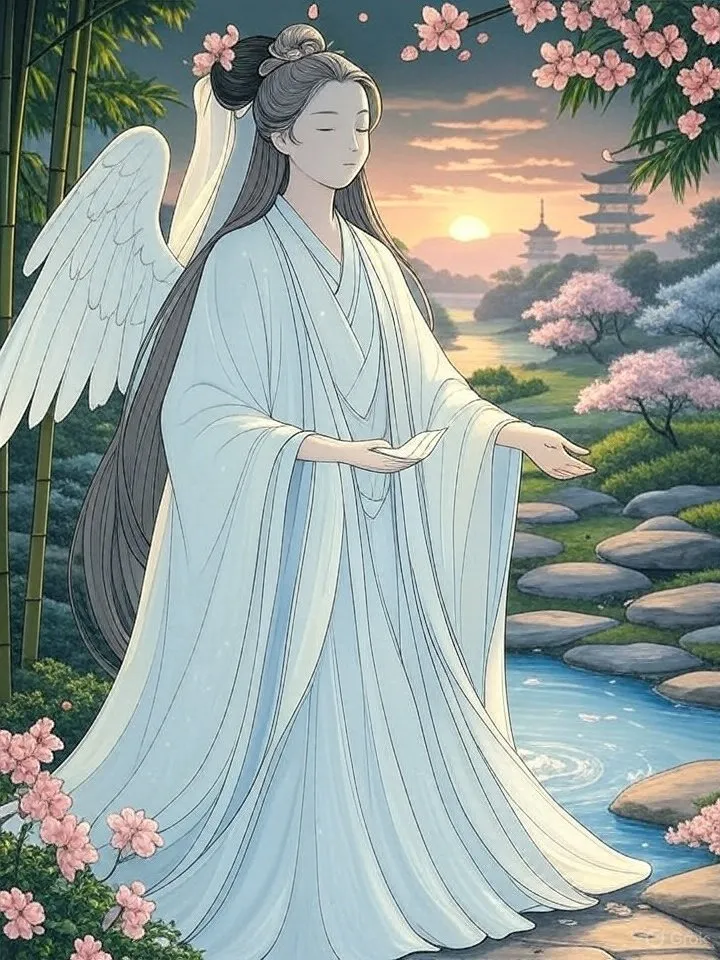
- Portrayed as elegant, beautiful women in flowing robes known as hagoromo.
- May have wings or the ability to fly using magical garments.
- Graceful and serene in movement and expression.
Behavior & Myths
- Descend to earth to dance, bathe, or observe humanity.
- Some tales describe a mortal hiding a tennin’s robe to marry her—until she finds it and returns to the heavens.
- Serve as messengers of Buddhist deities or protectors of sacred places.
Symbolism
- Represent divine beauty, serenity, and transcendence.
- Symbolic of spiritual purity and enlightenment.
- Connect the heavens with the mortal world in religious and cultural stories.

Illustrated folktale
The tale of Tennin

In the depths of spring, when cherry blossoms burst forth and new life stirred within the village, a young woodsman named Kaito ventured into the forest to gather firewood for the coming summer. As he wandered through the tranquil woods, his footsteps quiet on the moss-covered path, he chanced upon a glint of iridescent silk caught in a branch.
Drawn by curiosity, Kaito carefully plucked the shimmering fabric from its resting place. Unfurling it, he beheld a robe of unblemished white, woven with intricate patterns that seemed to dance across its surface like the constellations on a clear night. Entranced, Kaito wondered who might wear such an ethereal garment.
That evening, as the sun dipped into the horizon, casting the village in a warm orange glow, a rustling in the underbrush announced the arrival of a tennin. Her name was Akane, and she had descended from the heavens to bathe in the nearby river and partake in the village's festivities.
Kaito watched, transfixed, as Akane emerged from the trees, her hagoromo robe fluttering behind her like wings. He stood frozen, awestruck by her serenity, her beauty a reflection of the springtime that surrounded them. As she approached the riverbank, Akane's gaze met Kaito's, and he felt an unshakeable sense of reverence.
Days passed, with Kaito observing from afar as Akane joined in the village's celebrations: her laughter mingling with the cherry blossoms' gentle fall, her footsteps weaving a harmonious rhythm through the dance. Each night, she would return to the heavens, leaving behind the faint scent of moonflowers and the promise of an eternal bond between mortals and celestial maidens.
As spring gave way to summer, Kaito's fascination with Akane deepened. He began to leave tokens of his affection – wildflowers, polished stones, and soft silk threads – for her to discover upon her morning visits. Though he dared not approach her directly, he knew that his offerings reached the tennin's heart.
One fateful evening, as the moon hung low in the sky, Akane chanced upon a hidden glade. Within its secluded clearing lay Kaito's treasures: a garland of blooming wisteria, a delicate locket carved from a river stone, and a silken thread adorned with a silver charm bearing an image of the full moon.
Moved by the woodsman's devotion, Akane descended from her heavenly realm to gather Kaito in her arms. In that moment, their hearts became entwined – bound by threads of love, duty, and reverence for the mysteries that lay beyond mortal reach.
From that summer forward, as seasons ebbed and flowed like a river, Kaito and Akane's love persisted. When she rose to join the celestial host, he would watch in awe as her hagoromo robe shone like a beacon, beckoning him toward spiritual enlightenment and union with the divine. Though their bond was fragile – liable to be severed by the whims of the heavens – their hearts remained steadfast, echoing the harmony of spring's awakening within the natural world.