
Name Meaning
Overview
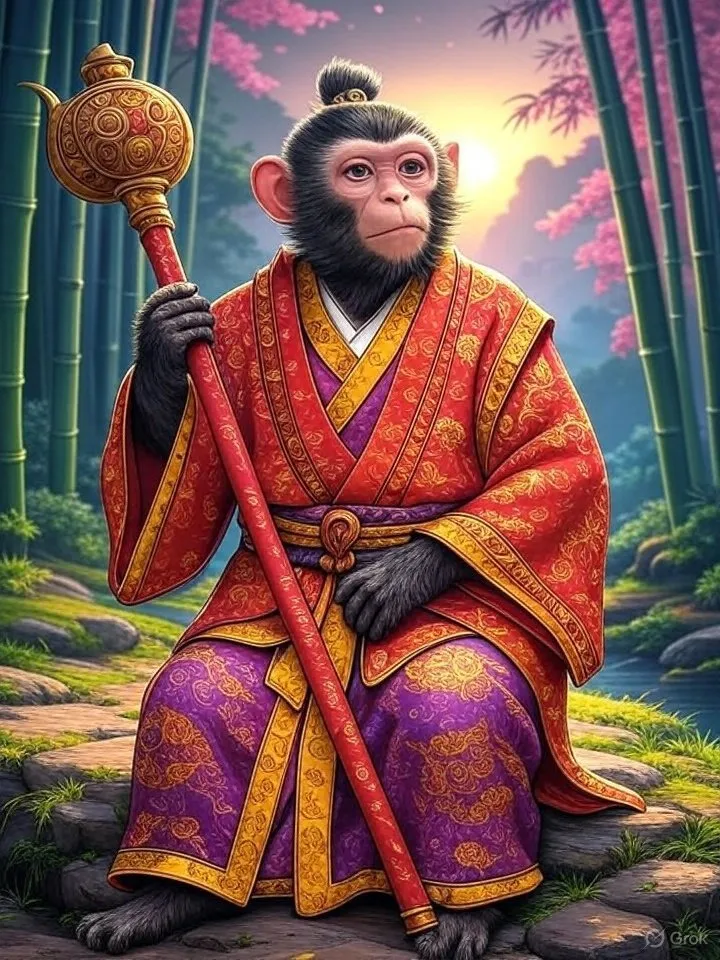
Son Gokū (孫悟空) is the Japanese rendering of the Chinese name Sun Wukong, meaning “Awakened to Emptiness.”
- Son (孫) = Surname “Sun”
- Gokū (悟空) = Awakening to emptiness or enlightenment
Origin
- Originates from the Chinese classic “Journey to the West.”
- Introduced into Japanese culture via adaptations of the tale.
- Widely popularized in Japanese media and folklore as a powerful trickster hero.
Appearance
- A monkey-like being with golden fur and supernatural aura.
- Often shown wielding a magical staff (Nyoi-bō) and wearing celestial armor.
- May have a crown or headband that symbolizes spiritual discipline.
Behavior & Myths
- Known for rebelling against the heavens and causing celestial chaos.
- Has the power of transformation, flight, strength, and immortality.
- Eventually becomes a protector and disciple on a holy pilgrimage.
Symbolism
- Embodies rebellion, cleverness, and the path to spiritual enlightenment.
- Represents the taming of ego through discipline and wisdom.
- Popular in both religious and pop culture as a heroic icon.

Illustrated folktale
The tale of Son Gokū

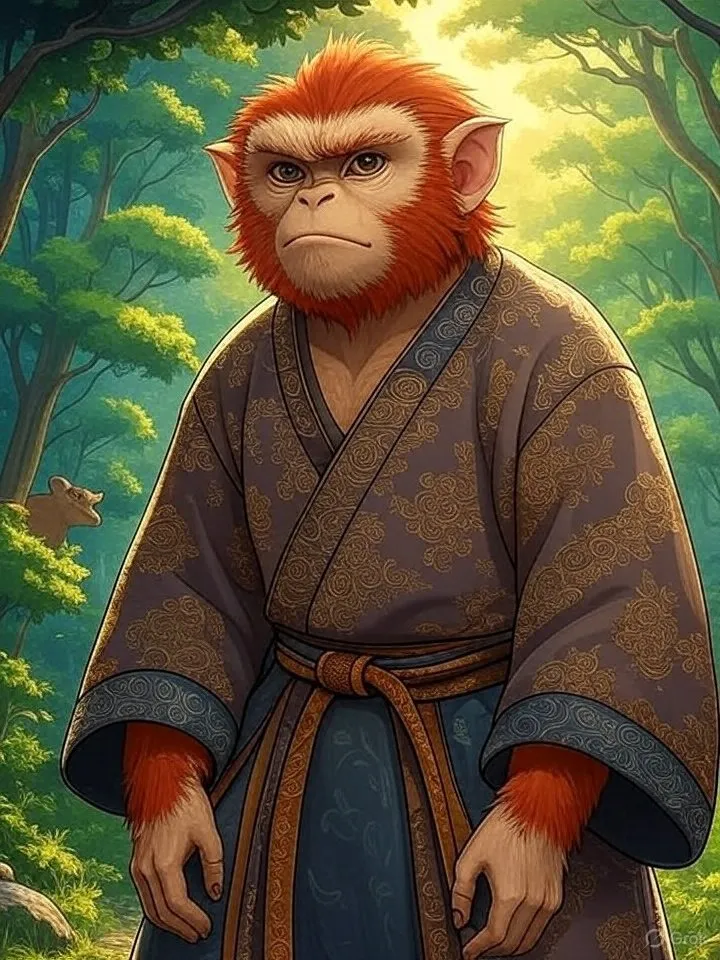
In the mist-shrouded mountains of Kiso Province, where cedar forests whispered secrets to the wind, a lone traveler appeared on the path to Narai Pass. His name was Son Gokū, a being of uncommon might, born of human and divine bloodlines. As he walked, his golden fur glistened in the fading light, and those who crossed his path felt an inexplicable awe.
The villagers at Narai Hot Springs whispered among themselves about the stranger's exploits. Some claimed to have seen him scale the sheer cliffs, unaided by ropes or ladders, while others spoke of his battles against monstrous creatures that lurked in the mountains' depths. His staff, Nyoi-bō, seemed to hold an otherworldly power, and its presence sent shivers down the spines of even the bravest warriors.
One evening, as Son Gokū approached the hot springs, a young girl named Kiyomi emerged from her family's inn. Her eyes widened in wonder as she beheld the golden-haired warrior. She felt drawn to him, sensing a connection that went beyond mortal bounds.
"Why do you roam these mountains, Son Gokū?" Kiyomi asked, her voice barely above a whisper.
"I seek balance," he replied, his words carrying an air of ancient wisdom. "The heavens have grown turbulent, and the gods themselves seem divided. I aim to restore equilibrium by righting the wrongs of the celestial realms."
As they spoke, a fierce storm rolled in, bringing with it torrential rains and thunder that shook the mountainside. Son Gokū raised his staff, channeling the tempest's fury into a swirling vortex above the inn. The villagers watched in awe as their homes were spared from the destruction.
Kiyomi approached him, her eyes shining with curiosity. "Will you teach me the secrets of your power?" she asked.
Son Gokū regarded her for a moment before nodding. Together, they ascended to a secluded clearing high above Narai Pass. There, under the watchful gaze of stars and moon, he shared with Kiyomi the mysteries of transformation and self-discipline. The young girl listened intently, drinking in the wisdom like autumn rain.
As dawn broke over the mountains, Son Gokū vanished as suddenly as a ghost, leaving behind only his staff, its wood glowing softly in the morning light. From that day on, Kiyomi felt an inner change, her heart carrying a spark of the divine. She wandered the mountains, seeking balance and harmony in all living things.
Years passed, and Son Gokū's name became synonymous with courage and wisdom among the mountain folk. His legacy lived on through generations, reminding them that even in times of turmoil, there existed beings capable of restoring order to a chaotic world. And those who listened closely could still hear the whispers of his staff, guiding them toward enlightenment.