
Name Meaning
Overview
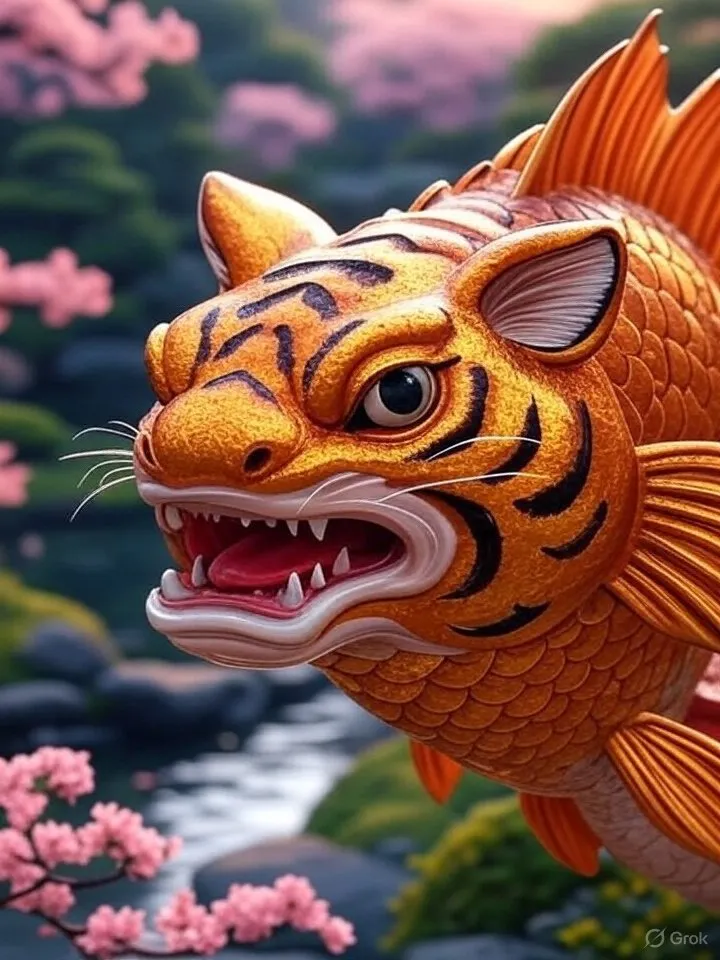
Shachihoko (鯱) combines “shachi” (orca or tiger shark) and “hoko” (a mythical beast), reflecting its hybrid nature.
- Shachi (鯱) = orca/tiger shark
- Hoko = a mythological creature
Origin
- Originates from Chinese mythology and adopted into Japanese folklore.
- Commonly placed on rooftops of castles and temples to protect against fire.
- Also appears in decorative art and festival floats.
Appearance
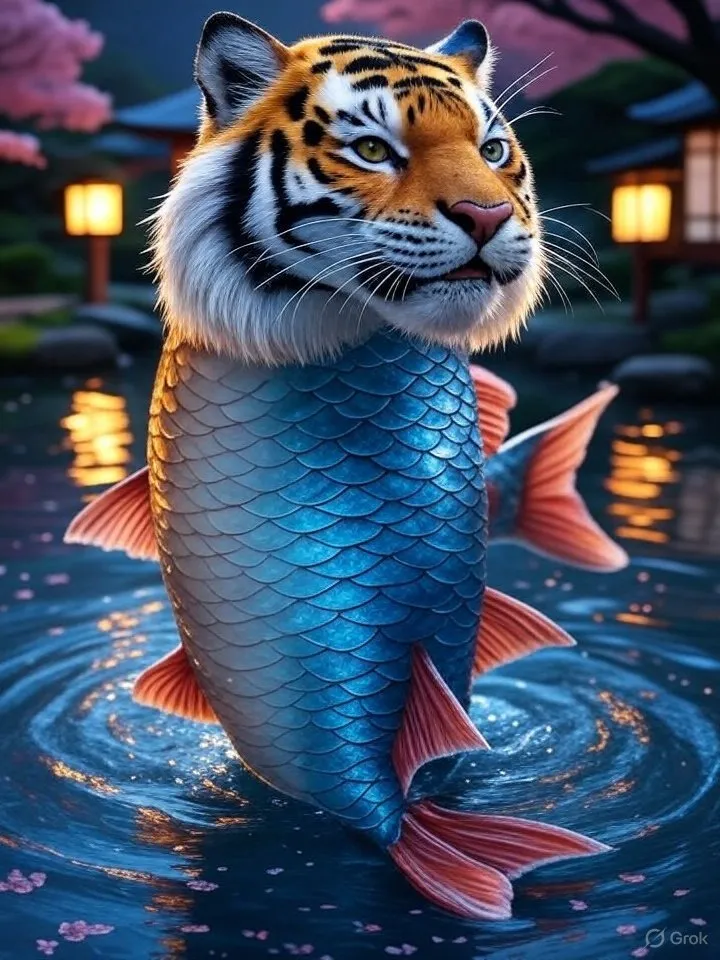
- Features the head of a fierce tiger and the body of a carp or fish.
- Often shown with a sharply arched tail and stylized fins.
- Typically constructed from bronze or ceramic for rooftops.
Behavior & Myths
- Believed to summon rain and prevent fires in buildings it guards.
- Acts as a protective charm, especially for wooden structures.
- Legends say it can douse flames by spraying water from its mouth.
Symbolism
- Represents vigilance, protection, and divine intervention.
- Symbol of authority and prestige, especially for feudal lords.
- Still used in modern architecture as a decorative relic.

Illustrated folktale
The tale of Shachihoko

In the mountainside village of Akakawa, where mist swirled around ancient pines and rice paddies shone like silver mirrors, there stood a humble temple dedicated to the Water Dragon's benevolent spirit. For generations, its wooden structures had been safeguarded by the majestic Shachihoko perched atop its tiled roof.
One scorching summer evening, as villagers danced in honor of the Water Dragon beneath twinkling paper lanterns, a fierce thunderstorm swept in from the east, threatening to engulf the temple with flames. A drought-stricken year had parched the fields, and embers from the festival's cookfires raged out of control.
Inside the temple, the venerable Abbot Kaito sensed the Shachihoko's vigilance stirring within him. He gazed up at the bronze guardian, its tiger head fixed intently upon the tempest, as if awaiting a sign from the heavens. The Shachihoko's fins quivered with an otherworldly energy, and Kaito felt a shiver run down his spine.
Suddenly, a brilliant streak of lightning illuminated the sky, and a mighty roar shook the air as the Shachihoko leapt to life. Its mouth agape, water gushed forth like a fountain, cascading down onto the dry thatched roofs below. Flames, once spreading with reckless abandon, were instantly doused by the cool, crystal clear water.
Villagers watched in awe as the storm's fury slowly receded, and calm returned to the temple grounds. As night descended, Kaito approached the Shachihoko, now tranquil on its pedestal, its stylized fins folded against its body like a loyal sentinel at rest. The Abbot bowed his head in reverence, acknowledging the Shachihoko's noble deed.
The storm's aftermath saw an unexpected miracle: rain began to fall upon Akakawa village, quenching parched fields and filling ancient water sources that had long gone dry. As the rains continued to pour down, villagers attributed their salvation to the Shachihoko's unyielding protection. From then on, they whispered stories of its power, a living embodiment of vigilance and divine intervention.
Years passed, but the legend of Akakawa's temple and its guardian Shachihoko lived on, etched in the collective memory of the village like the intricate carvings that adorned the wooden pillars within. Its sacred spirit continued to watch over the village, ever vigilant, always ready to summon rain and safeguard its people from the fiery whims of nature. For in a world beset by tempests both fierce and subtle, the Shachihoko stood steadfast, an enduring symbol of the benevolent power that protected all who dwelled within the mountainside haven of Akakawa.