
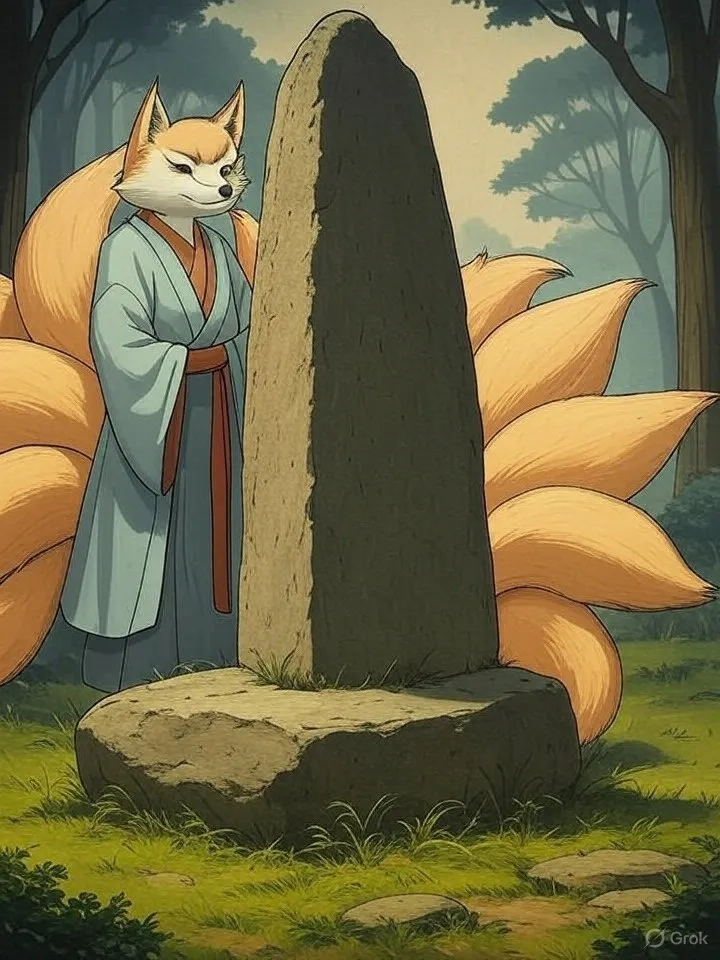
Name Meaning
Overview
Sesshō-seki (殺生石) means "Killing Stone" in Japanese. It is a cursed stone believed to kill anyone who comes into contact with it.
- Sesshō (殺生) = killing
- Seki (石) = stone
Origin
- Connected to the legend of Tamamo-no-Mae, a powerful fox spirit who was slain and her soul bound to the stone.
- The stone lies in Nasu, Tochigi Prefecture, and has been feared for centuries.
- Even in modern times, it broke apart in 2022, sparking folklore conversations again.
Appearance
- Resembles an ordinary volcanic rock, often surrounded by a rope and warning signs.
- Some depictions show it glowing or surrounded by eerie mist.
Behavior & Myths
- Said to instantly kill birds, animals, or humans who touched it.
- Legends say Buddhist priests eventually exorcised the spirit from the stone.
- The story was used in literature, Noh theater, and popular ghost tales.
Symbolism
- Embodies the dangerous remnants of yokai or evil spirits.
- Warns against unchecked power or deceitful beauty, as with Tamamo-no-Mae.
- A symbol of fear and mystery in Japanese spiritual geography.

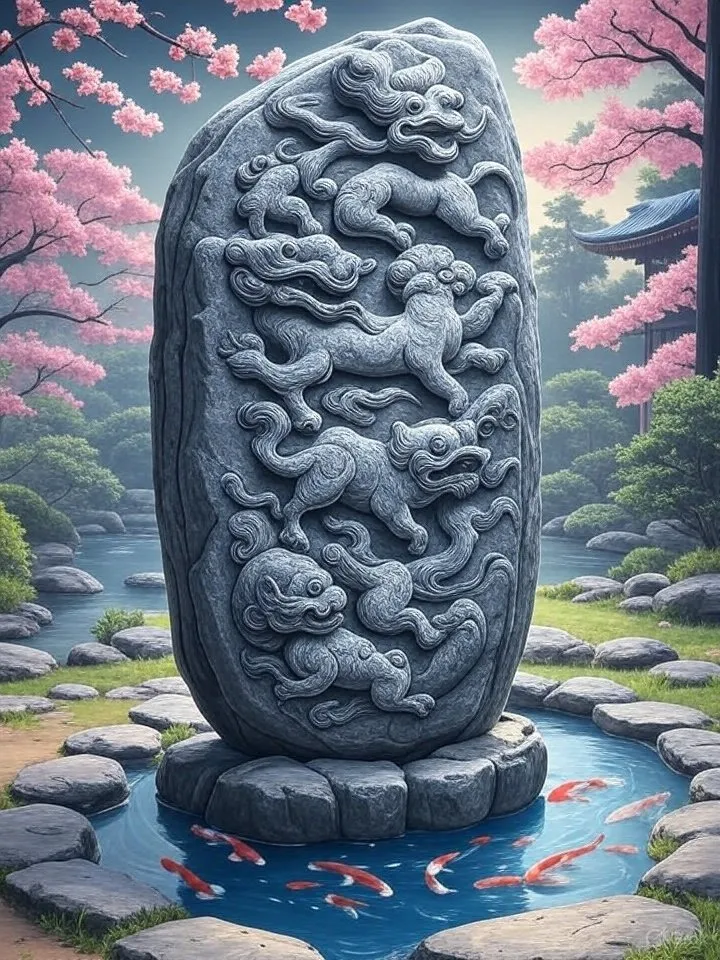
Illustrated folktale
The tale of Sesshō-seki

In the forgotten corners of Nasu's mist-shrouded hills, where wildflowers whispered secrets to the wind, there stood an unassuming boulder. Its granite skin was weathered to a soft gray, like the belly of a worn river stone. Few paid it mind, thinking it naught but a relic of long-forgotten volcanic fire.
A lone traveler, Kaito, chanced upon the rock on a drizzly spring morning. His eyes, weary from the road's monotony, were drawn to the boulder as if by an unseen thread. As he approached, the mist around it seemed to deepen, swirling in a maddening dance. The air grew heavy with anticipation.
Kaito's thoughts turned to his mother, who had warned him of this cursed stone. "The Sesshō-seki," she called it, her voice barely above a whisper. He had never paid much heed, but now, feeling the weight of his footsteps echoing off the surrounding hills, he began to understand.
As he reached out to touch the rock's weathered surface, a faint hum filled the air – like the quiet buzzing of a thousand midges. The mist coalesced into tendrils that grasped at Kaito's sleeve, as if attempting to hold him back. He hesitated, sensing a presence within the stone.
Tamamo-no-Mae's spirit, bound to this rock since time immemorial, stirred within its confines. She had danced in the shadows of imperial courts, her beauty a snare for unsuspecting souls. Her demise at the hands of ruthless men had left behind only this – an unyielding malevolence.
Kaito felt the Sesshō-seki's power coursing through him like dark water. His hand, mere inches from the rock, began to tremble as he realized that he was not merely touching a stone, but a gate into a realm of raw fury and pain.
With an unseen force, his fingers were drawn back, as if by an invisible chain. The mist dissipated, revealing a network of glowing threads surrounding the boulder – like ethereal roots binding it to the earth. In that moment, Kaito understood: this rock was not merely cursed, but a vessel for the boundless suffering of Tamamo-no-Mae's past.
Breathless and shaken, he retreated from the Sesshō-seki, leaving behind only his footprints in the damp earth. The wind whispered its secrets once more, carrying away any who dared to approach the rock with reckless abandon. And Kaito, wise now to the power of this forgotten stone, vowed never to speak of it aloud – lest he risk awakening the malevolent presence that lay dormant within.
From that day forward, when mist crept over Nasu's hills at dawn, the wind carried a soft warning: do not disturb the Sesshō-seki. The villagers whispered tales of those who had ignored this caution – their bodies found, lifeless and unblemished, by the rock's side, as if struck down by an unseen hand.