
Name Meaning
Overview
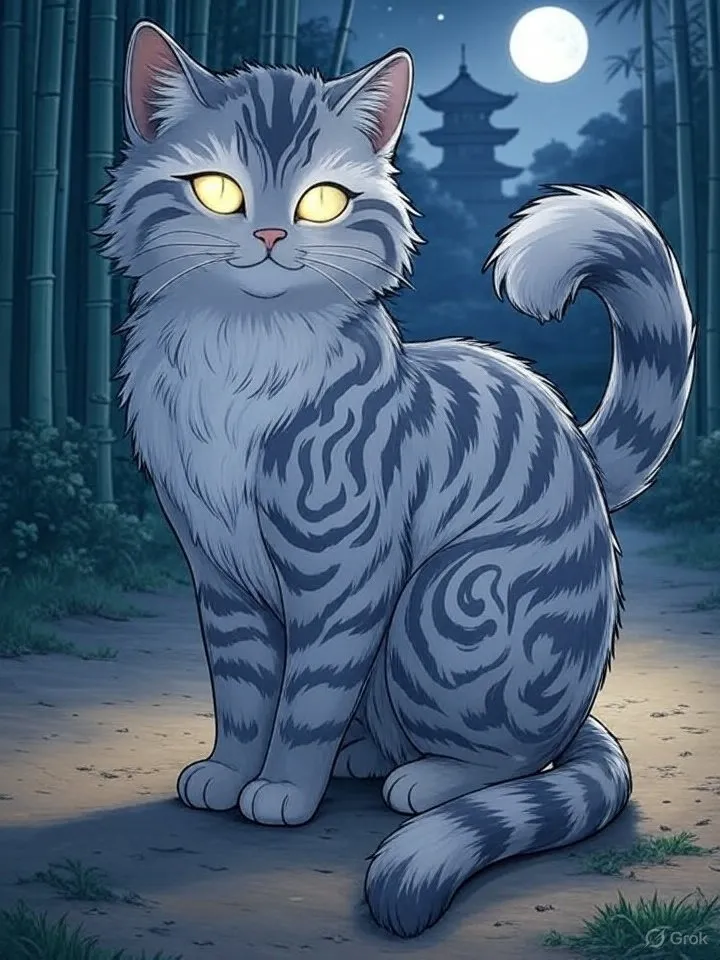
Nekomata (猫又) means “forked cat” and refers to a cat that has lived a long life and transformed into a yokai with a split tail and supernatural powers.
- Neko (猫) = Cat
- Mata (又) = Again / forked / split
Origin
- Roots in Chinese folklore but fully developed in Japanese stories.
- Appears in Edo-period yokai illustrations and writings.
- Linked with fear and superstition around aging animals.
Appearance
- Looks like a large domestic cat with a split tail.
- May walk on two legs or wear clothing in some depictions.
- Eyes glow with unnatural light; sometimes emits fireballs or curses.
Behavior & Myths
- Known for necromancy—can reanimate the dead or manipulate spirits.
- May curse cruel owners or households that mistreated it.
- Plays tricks or causes illness and misfortune to those it dislikes.
Symbolism
- Represents the mysterious and dangerous side of familiar animals.
- Warns against cruelty to animals and neglect of household pets.
- Serves as a reminder of the spiritual power attributed to age and transformation.

Illustrated folktale
The tale of Nekomata

In the depths of rural Japan, where mist-shrouded valleys met the whispering woods, there lived an elderly cat breeder named Kaito. He was known throughout the village for his exceptional feline companions and the care with which he treated them. His home, surrounded by tall cypress trees, was a haven for stray cats that wandered into the countryside.
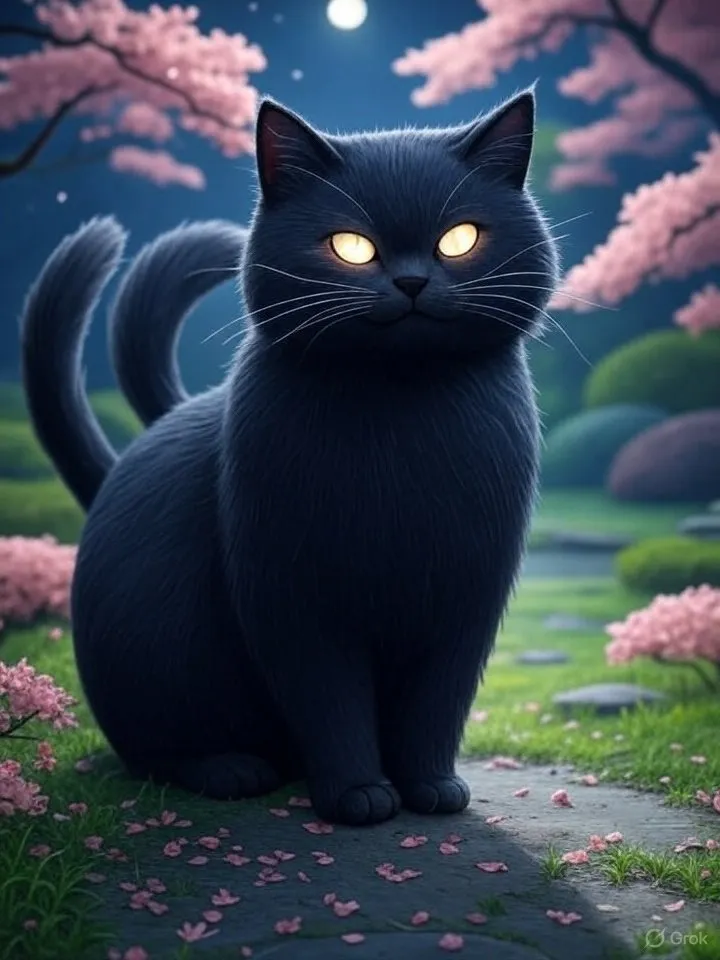
Kaito's latest acquisition was a majestic black cat with eyes like polished onyx. The villagers had whispered among themselves about this particular cat, how it possessed an otherworldly aura and seemed to regard its owner with a mixture of disdain and curiosity. Kaito, however, saw only kindness in the cat's gaze and welcomed it into his household.
As days passed, Kaito began to notice strange occurrences within his home. Kitchen utensils would go missing or reappear in peculiar places; sometimes, he'd catch glimpses of the black cat walking upright on two legs, its eyes aglow with an ethereal light. The villagers' whispers grew louder, warning of the Nekomata's presence – a creature said to embody the darker aspects of aging and death.
One stormy night, as Kaito huddled by his hearth, the black cat materialized before him. Its eyes blazed like lanterns in the darkness, illuminating the shadows that danced upon the walls. The air grew heavy with an unseen presence, as if the very spirits of the land had gathered to bear witness.
"You have shown me kindness and respect," the Nekomata spoke in a low, raspy voice, "yet I sense the cruelty that lies within some of your kin." Its tail swished back and forth like a metronome, imbuing the atmosphere with an air of malevolent intent. "You, Kaito, are different. Your heart is not tainted by malice."
As the storm raged outside, the Nekomata began to weave its dark magic. It conjured fireballs that danced in the hearth, casting a kaleidoscope of colors upon the walls. The air thickened with an eerie energy, as if the very fabric of reality was being twisted and manipulated.
"You have been chosen," the Nekomata declared, "to inherit my power. But be warned, Kaito: this gift comes with great responsibility and a stern reminder – age is not to be feared, but respected. The transformation that awaits us all is neither cruel nor kind; it simply is."
With these words, the storm subsided, leaving behind an unsettling calm. The villagers, though wary of the Nekomata's presence, began to sense Kaito's connection to the mysterious creature. From that day forward, he was revered for his compassion and insight into the spiritual world.
As the seasons passed, Kaito's home became a sanctuary not only for strays but also for those who sought guidance on living in harmony with the natural world. The black cat, now an extension of its owner, watched over them all – its eyes aglow like beacons, illuminating the path to wisdom and respect for the mysteries that lay beyond mortal understanding.