
Name Meaning
Overview
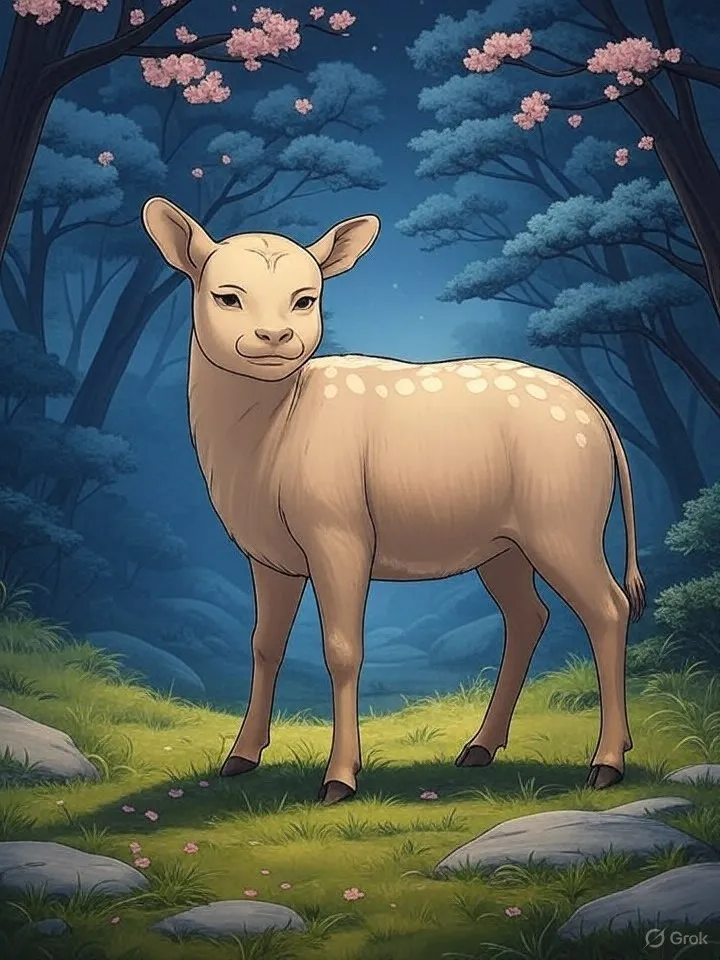
Kudan (件) refers to a yokai with the body of a calf and the face of a human, appearing only briefly to deliver a prophecy.
- Kudan (件) = A term meaning “matter” or “affair,” here referring to the creature’s significant message.
Origin
- Stories became popular in the Edo and Meiji periods.
- Considered a yokai omen of national or regional calamity.
- Often appears to farmers or villagers in times of unrest or approaching crisis.
Appearance
- Body of a young calf or ox.
- Face of a human, sometimes capable of speech.
- Glowing or sorrowful expression; often appears at night.
Behavior & Myths
- Speaks a clear prophecy, usually of disaster, famine, or death.
- Dies shortly after delivering its message.
- Its image was often circulated as a protective talisman against the predicted event.
Symbolism
- Embodies divine warning or cosmic justice.
- Considered a spiritual protector despite its grim message.
- Serves as a reminder of life’s fragility and the importance of heeding omens.

Illustrated folktale
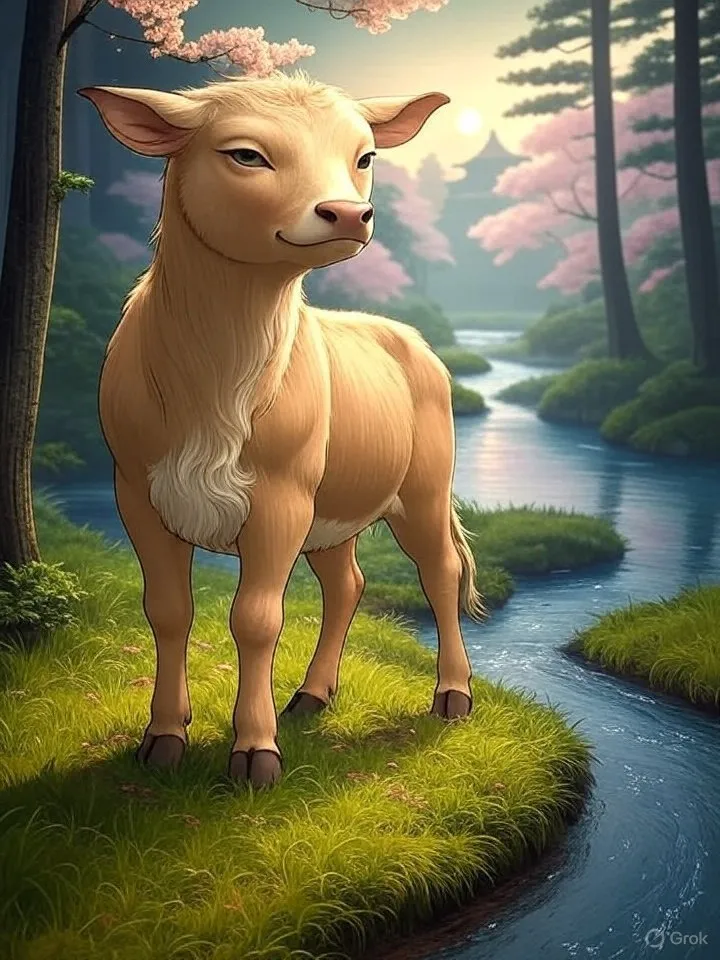
The tale of Kudan

In the villages nestled between the mist-shrouded mountains and the rice paddies of old Kiso, there lived a farmer named Hiro. His land was fertile, his crops were abundant, and his family prospered. But one autumn evening, as the harvest moon cast an eerie glow over the fields, a strange creature appeared.
It stood by the edge of the paddy, its body that of a young calf, but its face was unmistakably human. The skin was pale, with eyes like dark pools that seemed to hold a deep sorrow. Hiro's heart skipped a beat as he approached the creature cautiously.
"Why have you come, Kudan?" Hiro asked, his voice barely above a whisper.
The creature regarded him with an unblinking gaze before speaking in a low, rumbling tone: "Famine will come, Hiro, and it will be long. The rains will fail, and the crops will wither. Your family will struggle to survive."
Hiro felt a chill run down his spine as he gazed into the Kudan's face. He knew that the creature was not one to speak lightly of doom, but its words were laced with a somber truth.
"Is there no way to avoid this fate?" Hiro asked, desperation creeping into his voice.
The Kudan's expression remained sorrowful, but its eyes seemed to hold a hint of compassion. "There is nothing you can do, Hiro. The balance of nature has shifted, and the gods are displeased. But know that your family will persevere, for you have been chosen to endure this trial."
With those words, the Kudan's body began to weaken, its limbs trembling as if with exhaustion. Its glowing eyes dimmed, and it spoke once more: "Remember, Hiro, that I am but a messenger of the gods. Heed my warning, and may your family emerge from this darkness stronger and wiser."
As the creature finished speaking, it let out a final, mournful sigh before its body collapsed onto the earth. The villagers, who had gathered at the edge of the paddy, gazed upon the Kudan's lifeless form with reverence.
From that night on, Hiro tended to his family with renewed devotion and vigilance. They worked tirelessly to prepare for the impending famine, storing grain and seed, and seeking aid from neighboring villages. Though the coming year was indeed marked by drought and scarcity, Hiro's family persevered, relying on their strength of spirit and the lessons they had learned from the Kudan.
Years later, when the rains finally returned and the crops flourished once more, Hiro would often look up at the autumn sky, remembering the Kudan's somber visitation. He knew that he owed his family's survival to the creature's warning, and that its sacrifice was not in vain. The memory of the Kudan remained etched in his heart, a reminder of life's fragility and the importance of heeding the whispers of the divine.