
Name Meaning
Overview
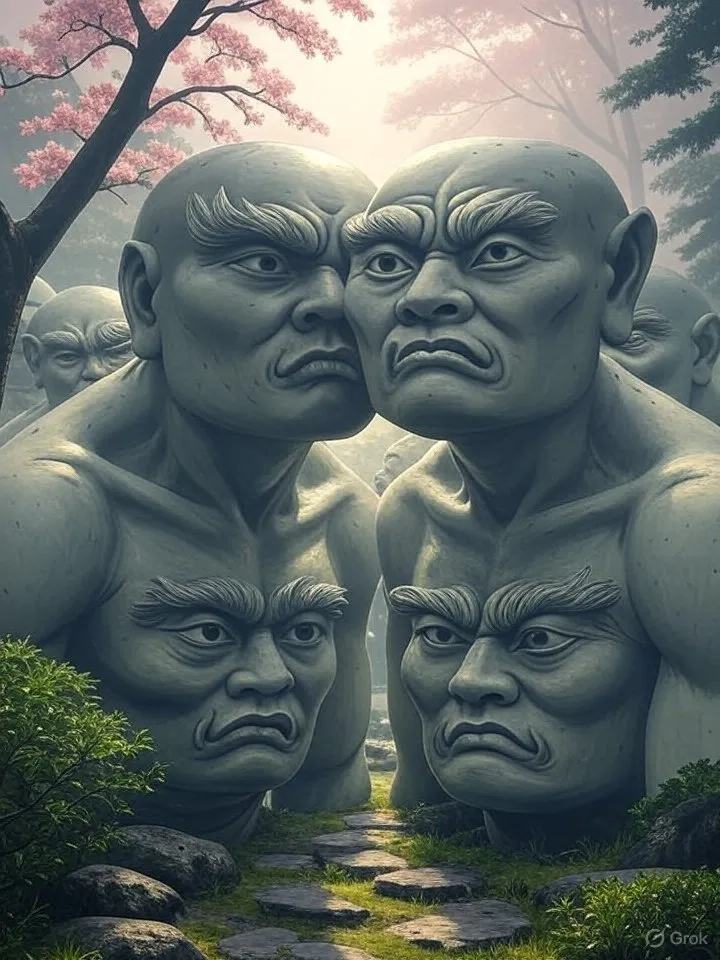
Maikubi (舞首) translates roughly to “dancing heads.” It refers to the disembodied heads of three criminals who cannot stop arguing, even after death.
- Mai (舞) = dance
- Kubi (首) = head
Origin
- Derived from Edo-period folklore and ghost stories.
- Often featured in kaidan (ghost story) collections as a moral lesson.
Appearance
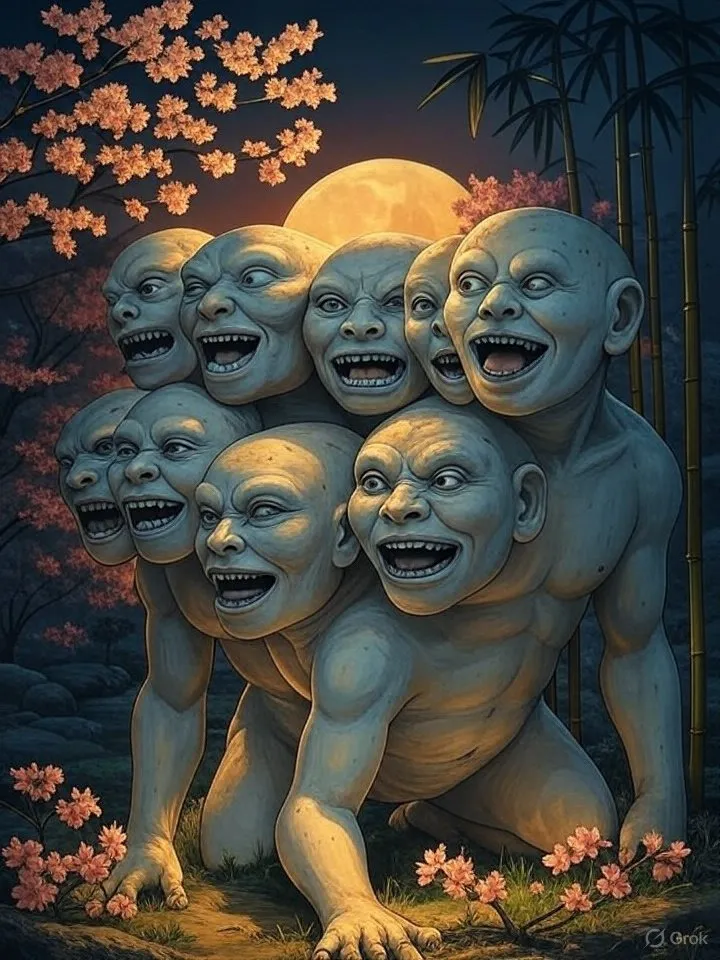
- Three disembodied heads, floating or rolling together.
- Each head represents a criminal soul condemned for eternal bickering.
- Grotesque and animated, with exaggerated expressions of anger.
Behavior & Myths
- The heads argue nonstop, often hurling insults at each other.
- Sometimes appear to travelers at night or near execution grounds.
- They are a symbol of unresolved guilt and endless punishment.
Symbolism
- Represents the futility of discord and karmic retribution.
- Embodies the idea that one’s deeds follow them beyond death.
- Appears in ghost stories to frighten and warn the living.

Illustrated folktale
The tale of Maikubi

In the depths of autumn, when night's veil shrouds the world in darkness, travelers on the mountain roads often speak of a terrifying sight: three floating heads that dance and scream through the forest like spirits possessed.
I recall the tale as it was told to me by my grandmother, who heard it from her own storyteller. It is said that long ago, in a village nestled at the foot of these mountains, there lived three brothers whose names were Kaito, Akira, and Shinjiro.
The brothers were known for their wicked ways, often quarreling among themselves over trivial matters. They would argue over who should eat the last piece of sweet potato or which one was superior in a game of Go. Their constant bickering turned their home into a cauldron of anger, poisoning the air with resentment.
One fateful evening, as they strolled through the village's execution grounds, their bickering reached a fever pitch. A prisoner, condemned to death for his own transgressions, watched them from beneath his executioner's blade and shook his head in sorrow. "Fools," he whispered to himself, "you will soon join me on this very spot, and your discord will be the very thing that seals your fate."
The brothers laughed at the prisoner's words, but as they lay on their futon that night, a strange wind began to howl through the village. The air grew thick with an otherworldly presence, and when morning broke, the three brothers were gone.
Rumors spread like wildfire: the brothers had been taken by a malevolent spirit, condemned for eternity to roam the world as disembodied heads, forever trapped in their cycle of anger and recrimination.
From that day forward, travelers reported seeing the Maikubi on moonless nights. The three heads would float, rolling together in a macabre dance, each one contorted in a grotesque grimace. Their voices, like a chorus of banshees, would wail through the darkness, a cacophony of curses and blame.
I have walked these mountain roads many times since hearing this tale, but never once have I seen the Maikubi with my own eyes. Yet, on certain nights, when the wind carries the whispers of the dead, I can almost hear their angry voices, still bickering into the void, as if their eternal punishment is a reminder to us all: that discord and guilt follow us beyond death's door.
The villagers say that if you are unfortunate enough to encounter the Maikubi, you will be left with a deep sense of sorrow for the brothers' fate. Their story serves as a warning, a cautionary tale about the dangers of unresolved conflict and the weight of karmic retribution. I believe it is a reminder that, even in death, we remain bound to our own actions, forever trapped in the cycle of our own making.
And so, on autumn nights, when darkness gathers and the wind stirs the leaves, I listen for the distant whispers of Kaito, Akira, and Shinjiro – their heads forever lost in a maelstrom of anger, a haunting reminder that discord and guilt are the greatest punishments of all.