
Name Meaning
Overview
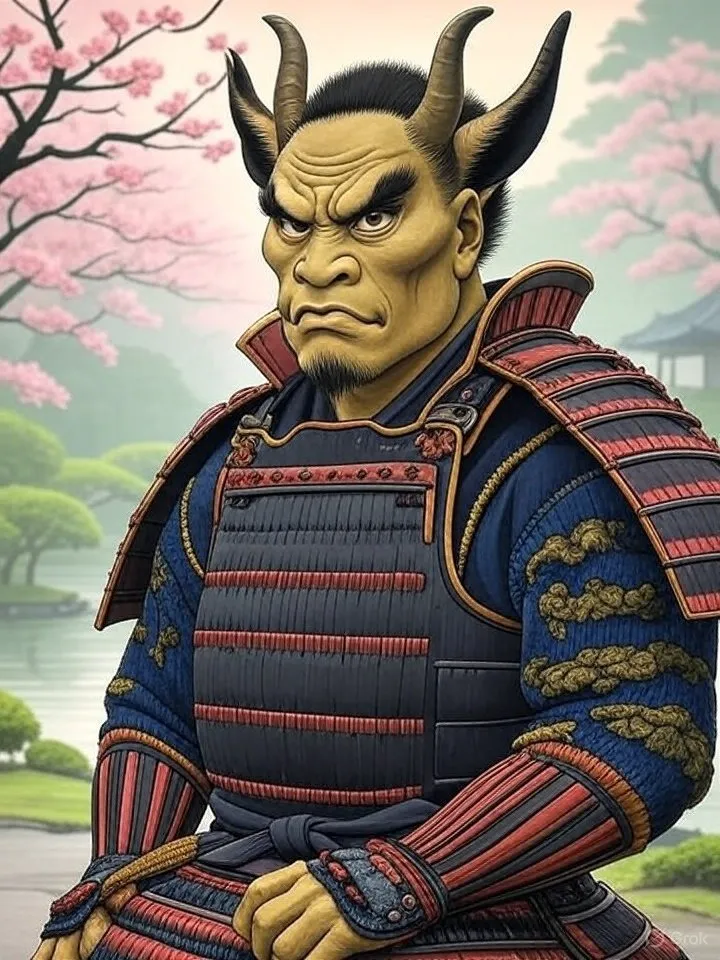
Anmo (アンモ) is a traditional demon-like figure from Japan’s Iwate Prefecture. The name doesn’t have a clear etymological root but is used regionally to describe this unique disciplinary entity.
Origin
- Originates from traditional **New Year’s rituals** in rural villages of **Iwate Prefecture**.
- Appears during special festivals or events to **discipline misbehaving children** and remind them of good conduct.
Appearance
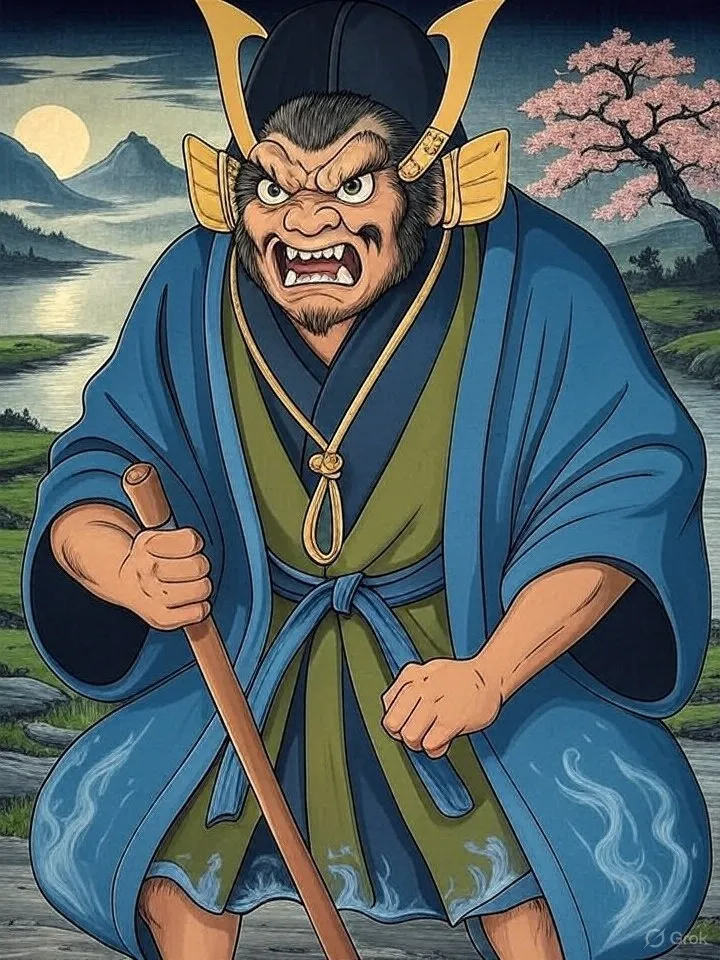
- Depicted as a **masked, ogre-like figure** wearing tattered robes or straw.
- Often holds a **staff or switch**, used symbolically to “punish” bad behavior.
- May wear a terrifying face to instill fear—but it's rooted in tradition, not harm.

Behavior & Ritual
- Visits homes and shouts or scolds children to **scare away laziness and disobedience**.
- Similar in spirit to **Namahage** and other regional “disciplinary demons.”
- Seen not as evil, but as a **guardian of good morals** and **rural tradition**.
Symbolism
- Serves as a **living embodiment of moral order** and local discipline.
- Strengthens **community bonds** and reminds youth of ancestral values.
- A symbol of **seasonal renewal** and **cultural continuity**.
Illustrated folktale
The tale of Anmo

In the depths of winter, when snowflakes danced in the mountain air and village fires crackled with warmth, there lived a young boy named Kaito. His family resided on the outskirts of Akakawa village, nestled between rugged peaks that whispered secrets to the wind.
Kaito was a rambunctious child, prone to tangling his toes in his worn sandals and chasing after stray chickens as they pecked at the snow-covered paths. His parents, though patient, grew weary of his antics and worried for his future.
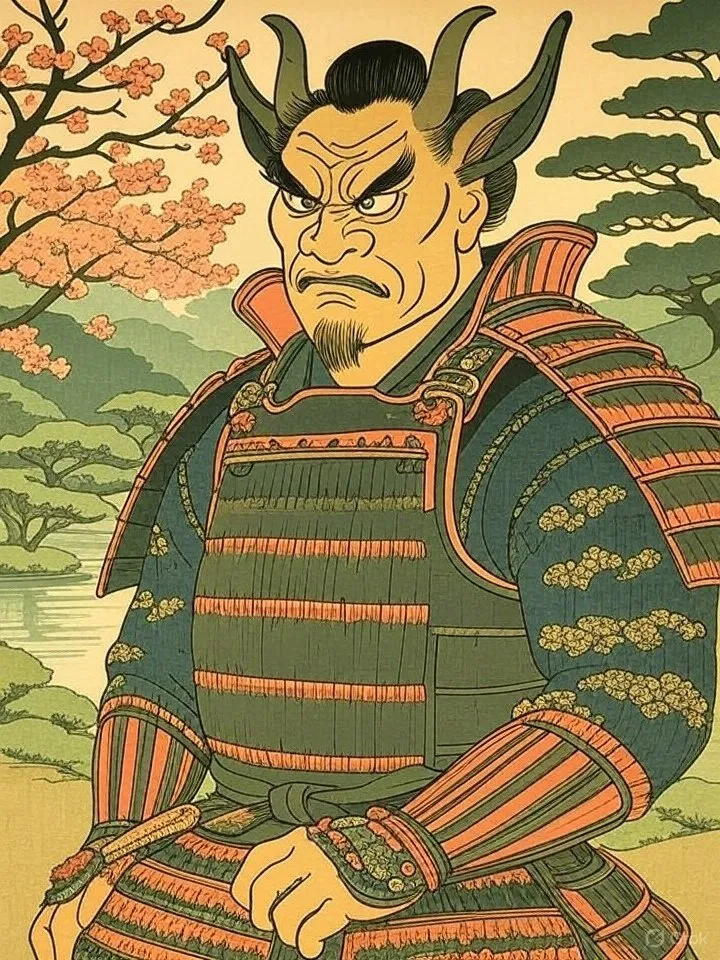
One evening, as the villagers prepared for the upcoming New Year's celebration, a strange figure emerged from the shadows. Its massive frame was shrouded in tattered robes, worn to reveal threads of crimson and indigo beneath. A mask, carved with ancient symbols, glared like two eyes of fire from its ogre-like face.
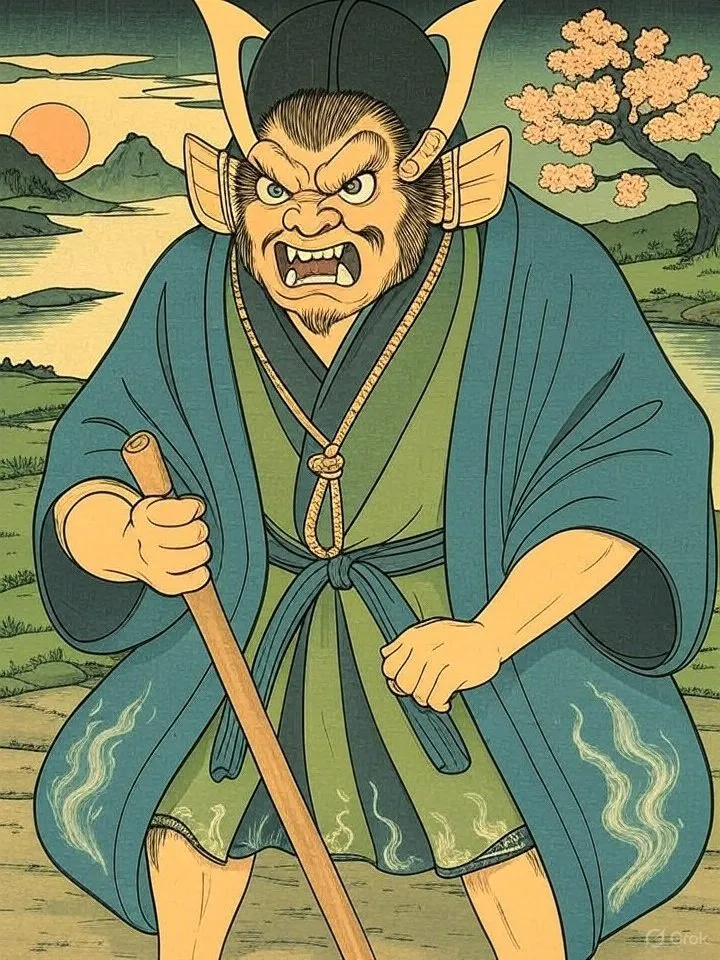
The creature, known only as Anmo, strode through the village streets, its staff a-thrum with an otherworldly energy. The wind responded to its presence by howling in sympathy, sending snowflakes swirling around it like a vortex.
Anmo's path converged with Kaito's as he darted out of his family's small cottage, laughing and shouting at the villagers' preparations for the grand feast ahead. The Anmo halted before him, its voice rumbling like thunder in the stillness: "Kaito, son of Akakawa! Your footsteps dance with chaos, your laughter a mockery of discipline!"
The child trembled as Anmo's switch cracked in the air, mere inches from his ear. Kaito cowered beneath the creature's intimidating gaze, but instead of fear, he felt an unfamiliar stirring within himself – a spark of regret for his carefree ways.
With each passing night, Anmo visited the village homes, its voice and presence awakening something primal in those who listened. The villagers, young and old alike, began to feel the weight of tradition upon them, as if the past itself had come alive to remind them of their duties.
Kaito's parents, observing their son's transformation, whispered stories of Anmo's ancient power: a guardian of morals, a weaver of good conduct. As they watched Kaito return from each day's labor with his chores completed and his head held high, they smiled in gratitude toward the mysterious figure that stalked the village shadows.
One final night, as snow fell thick and fast around Akakawa, Anmo appeared once more before Kaito. The young boy stood tall, no longer trembling but facing the creature with newfound understanding. "I have learned from you, great Anmo," he said, his voice steady. "Your lessons will guide me through the seasons."
Anmo's face glowed with a soft, ethereal light as it regarded Kaito. For an instant, its mask seemed to slip, revealing eyes that shone like winter stars. Then, in a burst of glittering snowflakes, the creature vanished into the night.
From that moment on, Kaito became one with the village's rhythm – his feet moving in harmony with the land, his laughter and joy now tempered by respect for tradition. And whenever Akakawa villagers spoke of Anmo, their voices carried a hint of reverence, acknowledging the silent guardian who walked among them, reminding all of the importance of moral order and community bonds.