
Name Meaning
Overview
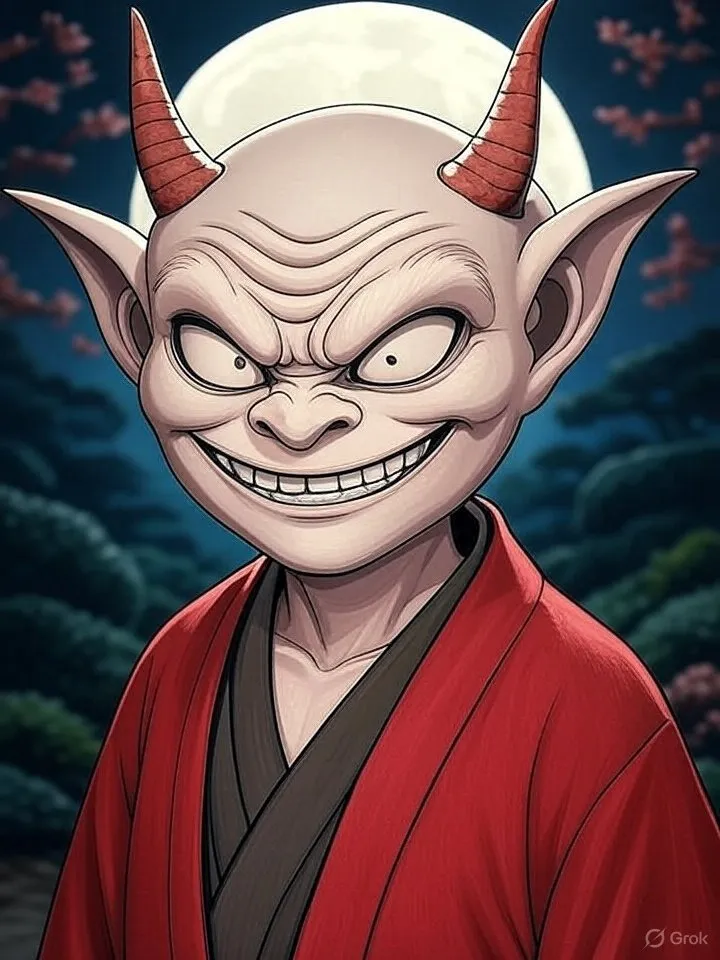
Amanojaku (天邪鬼) is a small but deeply malevolent demon from Japanese folklore, known for provoking people into wicked behavior or exploiting their darkest impulses. It is infamous for its contrarian and mischievous nature.
- Ama (天) = Heaven
- Nojaku (邪鬼) = Evil spirit or demon → “Heavenly Evil Spirit”
Origin
- Appears in ancient texts and Noh plays, deeply rooted in classical Japanese belief systems.
- Sometimes connected with female demons or figures from Buddhism and Shinto tales.
Appearance
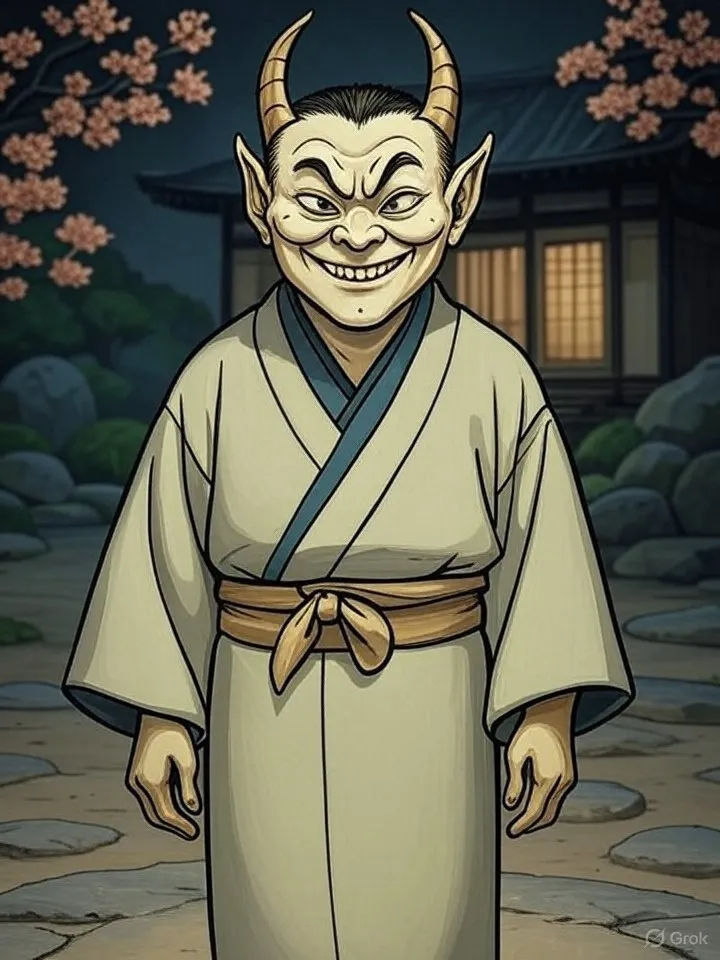
- Small imp-like creature with horns, sharp teeth, and a mischievous grin.
- Often depicted with a hunched back and wearing a loincloth or simple garments.
- May appear harmless or even amusing at first glance.

Behavior & Lore
- Encourages people to act on their worst instincts—jealousy, anger, selfishness.
- Loves to defy norms, resist commands, and twist words to confuse or provoke.
- Appears in stories where it tricks people into their own downfall or exposes hidden flaws.
Symbolism
- Represents the inner voice of defiance, temptation, and rebellion.
- A cautionary figure used to teach moral discipline and self-awareness.
- Still referenced in language today to describe contrarian behavior.
Illustrated folktale
The tale of Amanojaku

In the small village of Akakawa, nestled between the mountains and the misty sea, there lived a young apprentice blacksmith named Kaito. He was known for his exceptional skills and kind heart, but also for his fiery temper and quick tongue. The villagers would often joke that Kaito's words could cut steel like his hammer.
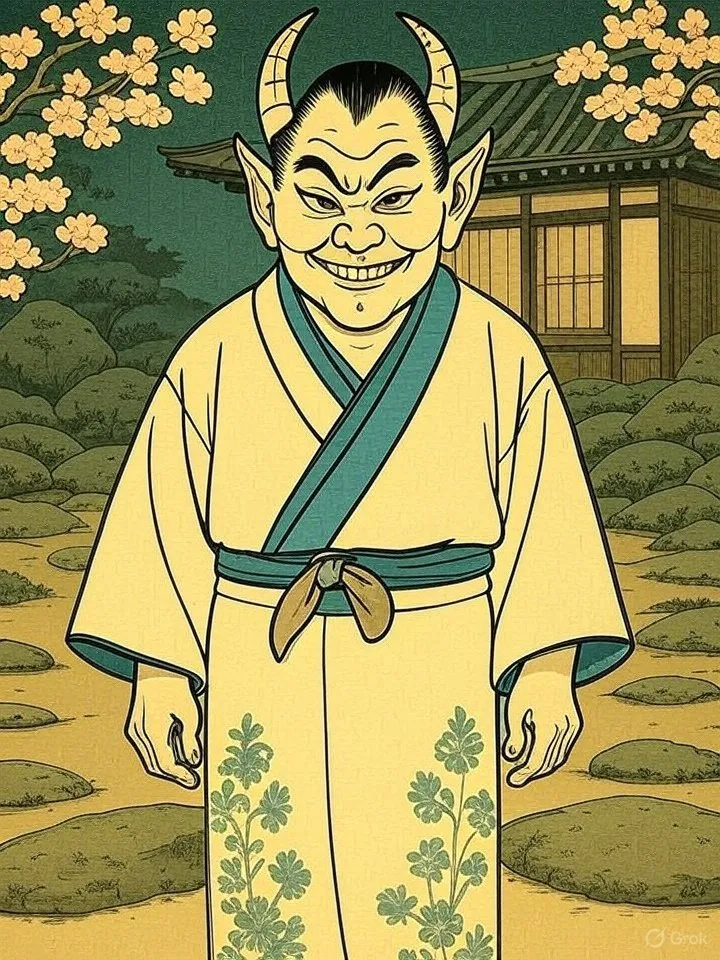
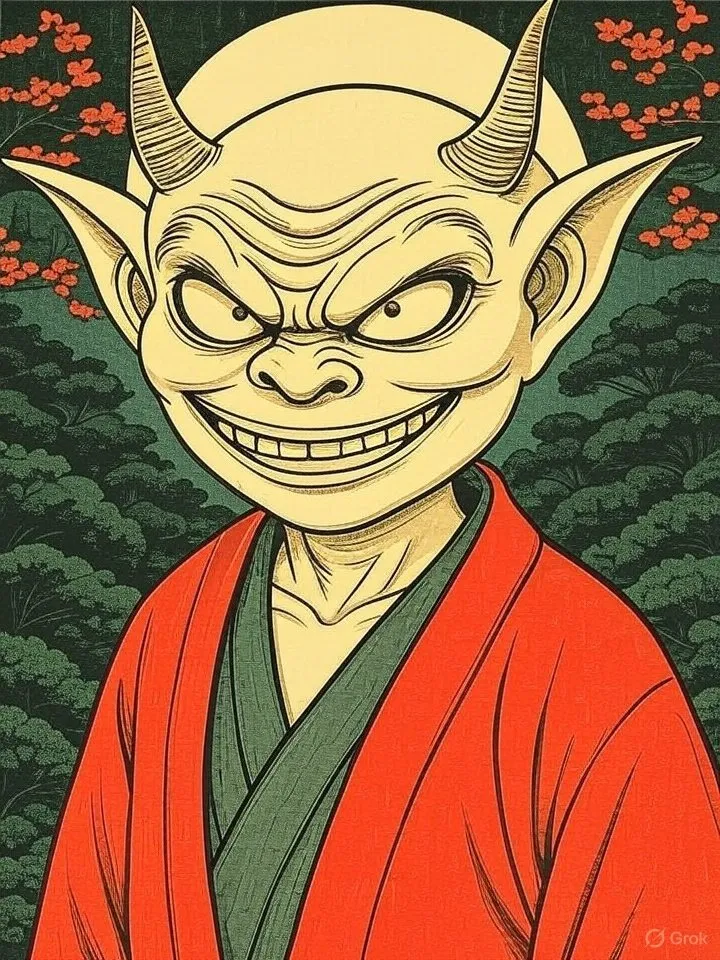
One day, while Kaito was out gathering rare irons for the forge, he stumbled upon a mischievous creature perched on a nearby rock. It was an Amanojaku, its horns curved like scimitars and its grin twisted in perpetual amusement. The imp-like creature watched Kaito with an unblinking gaze, as if sizing him up for a challenge.
At first, the Amanojaku spoke in whispers, tempting Kaito to let his jealousy get the better of him. "Your master's son is favored over you," it whispered. "He receives more apprentices and guidance, while you're left to toil alone." The words dripped with honeyed malice, and Kaito's heart began to burn with resentment.
The Amanojaku cackled at the fire that had been lit within Kaito. "Ah, now you see the truth! Your master is unfair, and his son a selfish brat!" But as Kaito listened, entranced by the creature's words, he felt his anger swell to boiling point.
That night, under the light of the full moon, Kaito stormed into the forge, his hammer raised high. "I'll show that fool of a master!" he shouted, but in his rage, he swung too hard and struck the anvil with such force that it shattered into a thousand pieces.
The villagers gathered around the destroyed forge, their faces filled with concern. Kaito's master stood amidst them, his expression stern but also sad. "Kaito, my apprentice," he said gently, "your heart is like raw steel – prone to rust and destruction. The Amanojaku has played you like a flute, making you dance on the strings of your own passions."
As the villagers worked together to rebuild the forge, Kaito gazed out into the night, searching for the mischievous creature that had led him astray. But it was gone, vanished into the shadows like a fox at dawn.
From that day forward, Kaito practiced self-control and humility, learning to temper his words and actions with patience and understanding. His master smiled in approval as Kaito's skills improved, and his character deepened. "The Amanojaku may have tested you," he said, "but it also taught you the value of self-awareness and inner balance."
As for the Amanojaku, some say it still lurks in the mountains and valleys, waiting to tempt the unwary with its twisted words and mischievous grin. Others claim that on quiet nights, when the moon is full, you can hear its laughter echoing through the trees – a reminder to stay vigilant against our own inner demons.