
Name Meaning
Overview
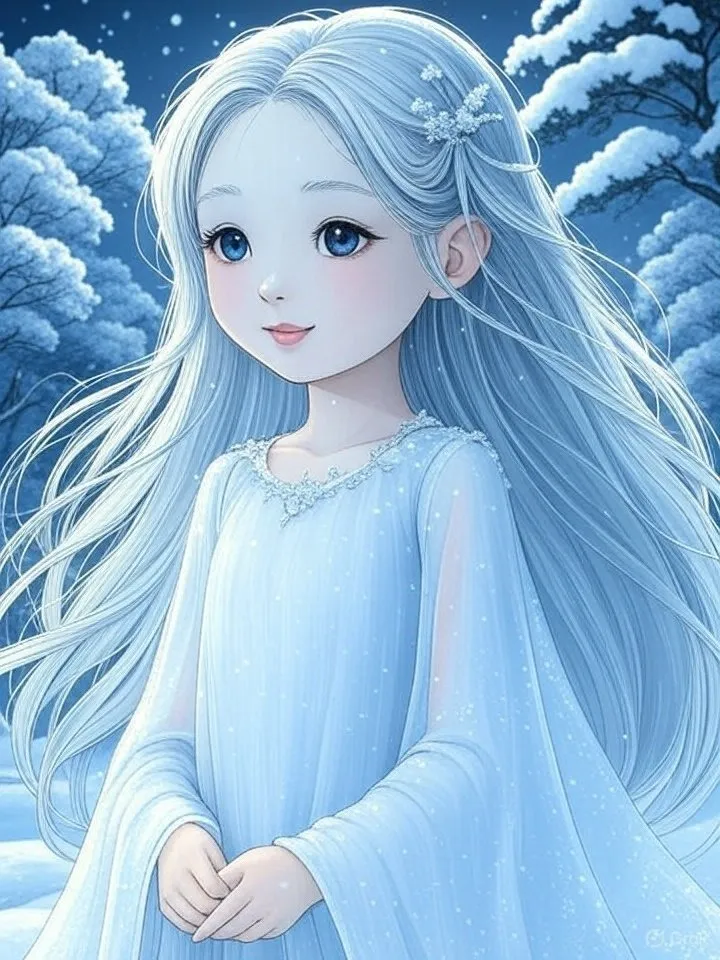
Yukinko (雪ん子) means “snow child” in Japanese, a name that reflects this yokai’s frosty, youthful appearance and wintery nature.
- Yuki (雪) = snow
- Ko (子) = child
Origin
- Found in snowy mountain villages in northern Japan.
- Linked with winter festivals and blizzards.
- Sometimes conflated with child spirits or benevolent snow kami.
Appearance
- Appears as a small child wrapped in snow or white garments.
- Skin is pale or icy blue, with visible frost or snowflakes.
- Leaves no footprints in the snow.
Behavior & Myths
- May appear to lost travelers in blizzards, either to help or mislead them.
- Seen as both a trickster and a protector of children.
- Linked with the arrival of heavy snowfall and freezing winds.
Symbolism
- Represents the dual nature of winter—beautiful yet dangerous.
- Symbolizes childhood innocence and the harshness of nature.
- Acts as a reminder to be cautious and respectful of the seasons.

Illustrated folktale
The tale of Yukinko

In the snow-shrouded village of Akakawa, where the winds howled through the pine trees like a chorus of restless spirits, there lived a young traveler named Kaito. He was on his way to visit his ailing grandmother in a distant town, but a sudden blizzard had forced him off the trail and into the dense forest.
As he stumbled through the knee-deep snow, the flakes danced around him like tiny ballerinas, their delicate forms melting instantly against his skin. Kaito's breath misted before his face as he called out for help, but only the wind replied with mournful sighs.
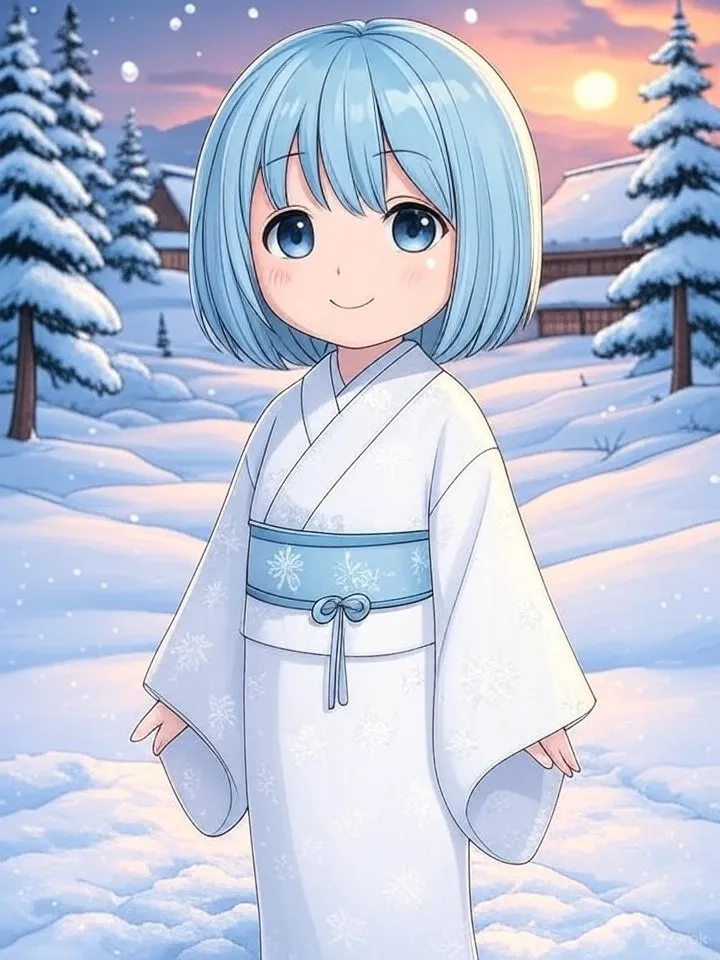
Suddenly, a faint light flickered in the distance. As he drew closer, a small figure emerged from the snowy gloom – a tiny child wrapped in a mantle of frost-kissed white, her skin an icy blue that seemed almost... transparent. Her eyes sparkled like winter stars as she gazed up at Kaito.
"Lost?" she asked in a voice as fragile as a snowflake.
Kaito nodded, his breath catching in his throat. The child, whom he took to be the Yukinko of Akakawa's legend, reached out and took his hand.
"Hold on," she said, "and I'll guide you through."
Together they slogged through the drifts, the Yukinko's small form undulating with each step as if she were woven from living snow. Her touch sent shivers up Kaito's arm, but not from cold – it was a gentle tremor that echoed deep within his bones.
As they walked, the blizzard raged on, piling drifts higher than their heads. But the Yukinko navigated these barriers with an uncanny ease, her tiny footsteps leaving no impressions in the pristine snow.
Eventually, Kaito's grandmother's village came into view – a cluster of lantern-lit cottages huddled together against the wind. The old woman herself stood at the door, a wispy figure wrapped in a woolen shawl, and beckoned Kaito inside.
The Yukinko vanished as suddenly as she appeared, leaving behind only the faintest whisper on the wind – a hint of winter's wild song that lingered long after Kaito had warmed his hands by the hearth. As he sipped hot tea with his grandmother, he couldn't shake the feeling that they were not alone in the village, that the Yukinko still watched over them from some hidden corner of the snowy world.
Later, when the winds died down and a cold stillness descended on Akakawa, Kaito caught a glimpse of a small figure playing in the snow outside his grandmother's window – a delicate child-thing whose frost-kissed form blended seamlessly with the winter landscape. He smiled, knowing that the Yukinko remained near, guardian of the village and all its secrets, hidden within the very essence of the snowy mountains themselves.
In the months to come, when blizzards swept through Akakawa once more, villagers whispered about the small child who seemed to dance in every snowstorm – a fleeting glimpse of the Yukinko, ever-changing yet constant as the winter wind.