
Name Meaning
Overview
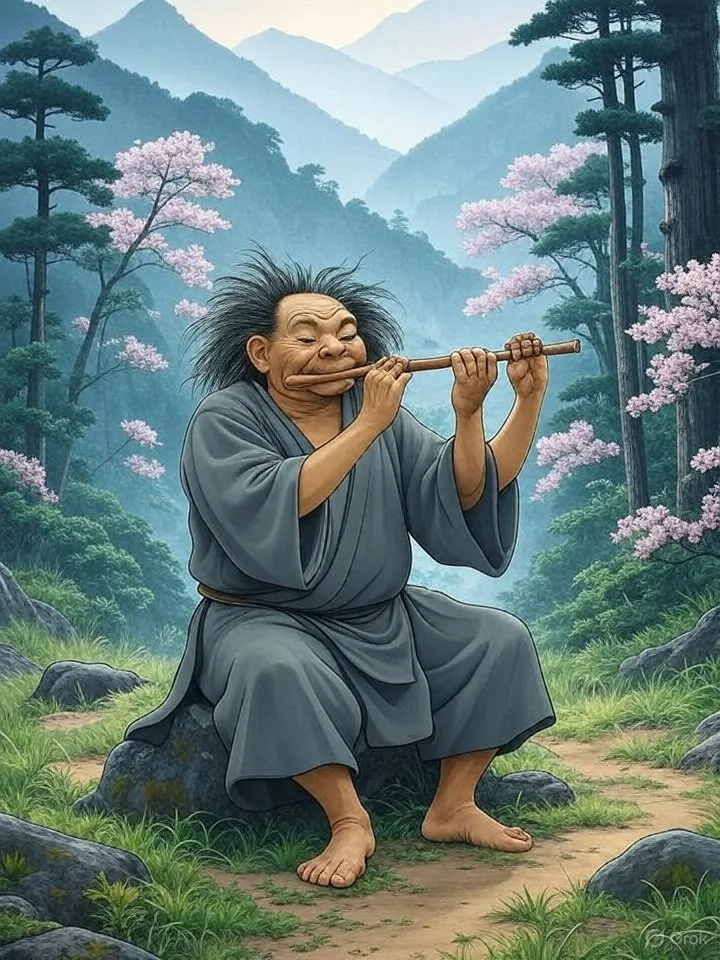
Yama-bito (山人) translates to “mountain people” and refers to a legendary group or species of beings believed to inhabit the remote mountain regions of Japan.
Origin
- Folklore from rural mountain villages in Japan.
- Possibly inspired by isolated groups or hermits living in the forest.
- Sometimes linked to lost tribes or survivors of ancient civilizations.
Appearance
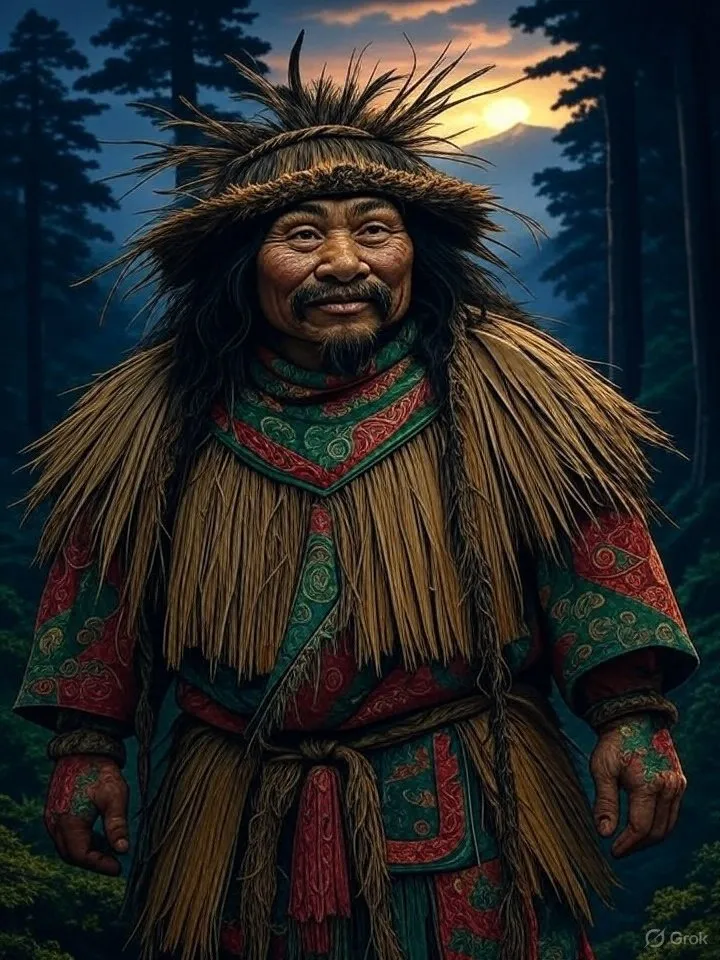
- Often described as human-like but with wild, unkempt hair and primitive clothing.
- May have beast-like features or unusual physical strength.
- Sometimes portrayed as grotesque or otherworldly.
Behavior & Myths
- Known for abducting humans or luring them deep into the forest.
- Can be peaceful, mischievous, or dangerous depending on the tale.
- Occasionally share knowledge of herbs or mountain secrets with locals.
Symbolism
- Symbolize the unknown and mysterious power of nature.
- Represent fear of the untamed wilderness and what lies beyond civilization.
- Some modern interpretations see them as metaphors for isolation or forgotten peoples.

Illustrated folktale
The tale of Yama-bito

In the depths of Akakawa valley, where the forest grows dense and the mist lingers, there lived an elderly man named Kaito. He was said to have wandered into those woods as a youth, never to return to the village. Many believed he had been taken by the Yama-bito, but his family knew better – Kaito had chosen to leave, seeking a solitude that only the mountains could provide.
Years passed, and whispers of Kaito's whereabouts faded into legend. Some claimed to have seen him foraging in the woods, or heard his gentle humming echoing through the valleys. One stormy night, a young traveler named Emiko stumbled upon an old cabin nestled within the trees. She sought shelter from the torrent, but as she entered, a faint light flickered, beckoning her deeper.
Kaito's face, creased by time and wind, appeared in the doorway. His eyes, like polished stones, shone with kindness. He invited Emiko to sit beside him, offering hot tea brewed from leaves he had gathered himself. As they sipped, a faint howling began to rise outside – the sound of the Yama-bito, said to roam these woods.
Kaito's expression remained serene as the wails grew louder. "It is their way," he explained, "to announce a presence. They sense you are here." Emiko trembled, but Kaito placed a reassuring hand on her shoulder. The cries slowly subsided, replaced by an unearthly silence.
As night wore on, Emiko felt an otherworldliness envelop the cabin. She saw shadows dance upon the walls, and Kaito's eyes seem to hold secrets she could not fathom. "The Yama-bito are our guardians," he said softly. "Keepers of this land's ancient wisdom." He handed her a small pouch containing herbs he had gathered from the depths of the forest.
"We must respect their domain," Kaito cautioned, "and heed their warnings. In these woods, one misstep can lead to eternal wanderings."
Emiko left at dawn, though Kaito had not bid her go. As she descended into the valley below, a faint rustling in the underbrush caught her attention – a creature unlike any she'd seen: skin like bark, hair wild and gray as stone. Their eyes met for an instant before the Yama-bito vanished into the trees.
In days to come, Emiko found herself drawn back to Akakawa valley, seeking the wisdom Kaito had imparted. With each visit, she grew more attuned to the forest's whispers – a language only those who listened with respect and reverence could understand. Though some said she was forever changed by her encounters with the Yama-bito, others whispered that Emiko had merely found her true place within the ancient heartbeat of the mountains.
And in the silence that followed, it seemed Kaito's cabin remained standing, a testament to the secrets shared between those who ventured into the unknown and the guardians who watched over this sacred land.