
Name Meaning
Overview
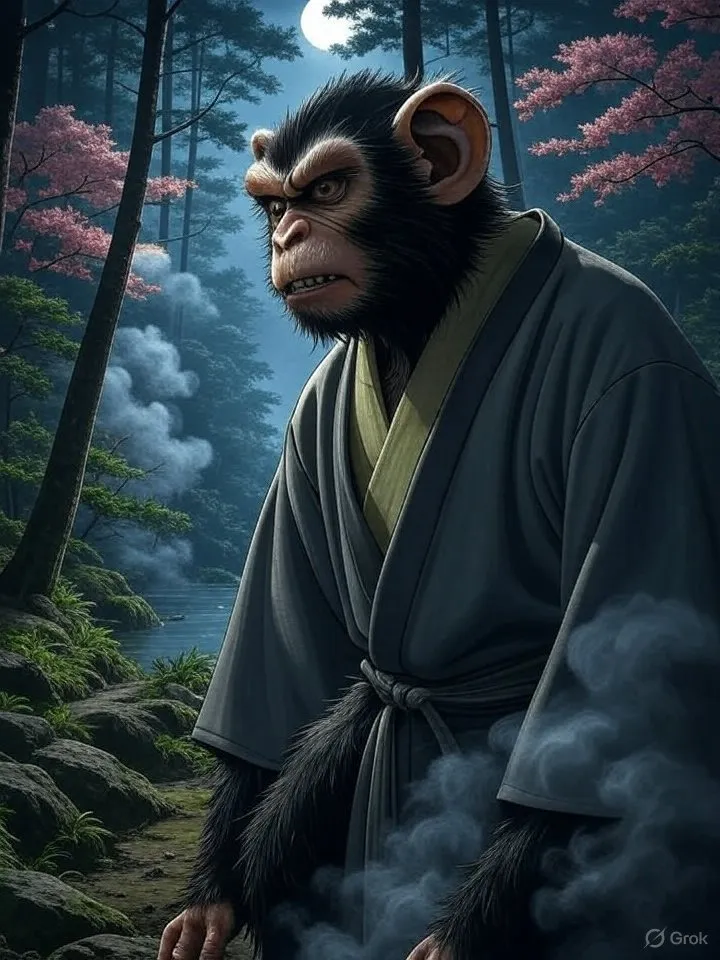
Sarugami (猿神) means “monkey god” or “monkey spirit,” but despite the divine-sounding name, this yokai is often a malevolent force in folklore.
- Saru (猿) = Monkey
- Gami (神) = God or spirit
Origin
- Features in old legends from Japan, often as a hostile mountain spirit.
- Particularly prominent in stories where it demands sacrifices from villagers.
- Eventually defeated by a brave dog, sometimes named Hayatarō.
Appearance
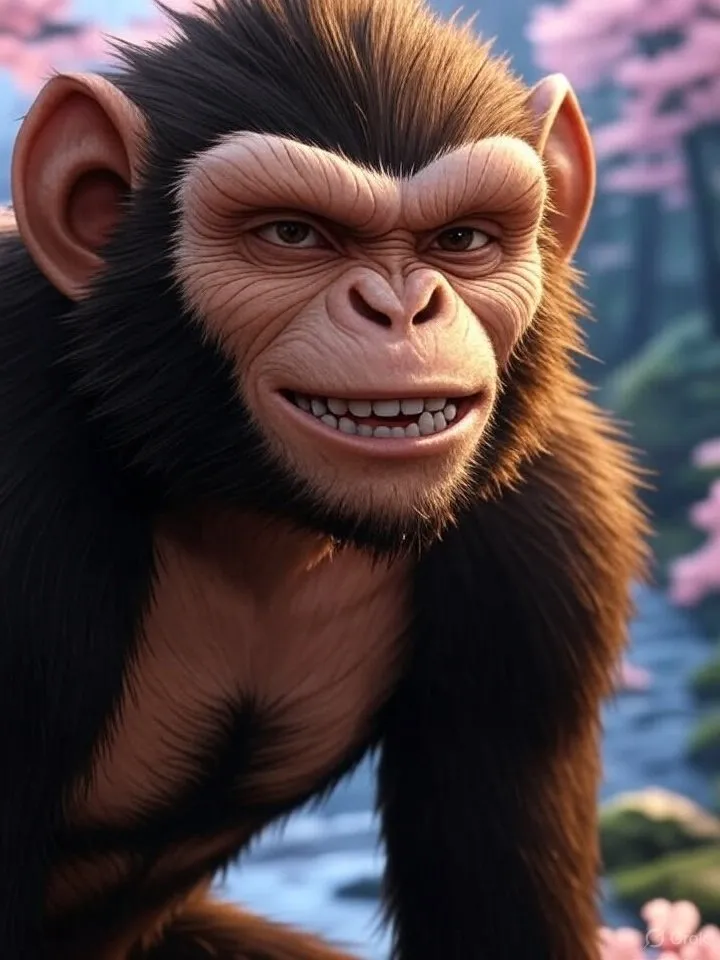
- Looks like a large, feral monkey with wild fur and sharp claws.
- May have glowing eyes and a distorted, human-like face.
- Moves swiftly and often hides in forests or mountains.
Behavior & Myths
- Harassed and terrorized villagers, demanding maidens as offerings.
- Known to kill or abduct those who defied it.
- Was eventually slain by a dog sent from a nearby temple.
Symbolism
- Represents wild and chaotic nature turned against humanity.
- Symbolizes unchecked power and superstition.
- Its defeat marks the triumph of good over wicked spirits.

Illustrated folktale
The tale of Sarugami

In the mist-shrouded mountains of old, where wild boar roamed free and cedars pierced the sky, there lived a terror beyond human understanding: Sarugami, the feral god. Its presence was as fleeting as a summer storm, but its malevolence lingered like autumn's chill.
The villagers below knew only to whisper its name in hushed tones, lest it hear their voices and stir from its lair. For when Sarugami roared with rage, mountains trembled and rivers ran red with blood. Its demands were clear: a maiden, pure as the driven snow, was required for its dark altar.
The villagers cowered in fear, offering token sacrifices to appease the feral god. But their gestures only seemed to whet its hunger. One by one, brave young men ventured into the mountains, seeking to vanquish Sarugami and put an end to its reign of terror. None returned.
Until Hayatarō, a hound with eyes like polished obsidian, was sent from the temple's wise monks. His paws barely touched the forest floor as he pursued the scent of death and despair that clung to Sarugami like a shroud.
One moonless night, beneath a canopy of twisted cedars, Hayatarō finally closed in on his quarry. The feral god's eyes blazed with an otherworldly light as it lunged at the dog, jaws agape. But Hayatarō dodged its wild swings, seeking to outmaneuver the creature's wrath.
For hours, the chase raged through the mountainside, echoing through valleys and canyons like a chorus of despair. Sarugami's howls rent the air, while Hayatarō's yips answered with fierce defiance. At last, as dawn broke over the ridgeline, the dog cornered the feral god on a windswept precipice.
Sarugami's face contorted in rage and fear, its skin stretched taut over bony features like a drumhead. Hayatarō, panting with exhaustion, stood his ground against the creature's snarling assault. With one final, desperate lunge, the hound seized Sarugami's wrist, and the feral god stumbled backward into the abyss.
As the first light of dawn crept over the mountainside, a silence fell like snow. The wind whispered secrets to the trees, and Hayatarō, victorious but weary, lay down beside the void where Sarugami had fallen. From that day on, the villagers breathed easier in their homes below, knowing that the mountain's dark heart had been stilled.
Yet, some say that on certain moonless nights, when winds howl through the cedars like a chorus of the damned, Hayatarō's ghost still roams these mountainsides, ever vigilant against the return of Sarugami – for even in defeat, the feral god's malevolent spirit remains, waiting for its next victim to stumble into the darkness.