
Name Meaning
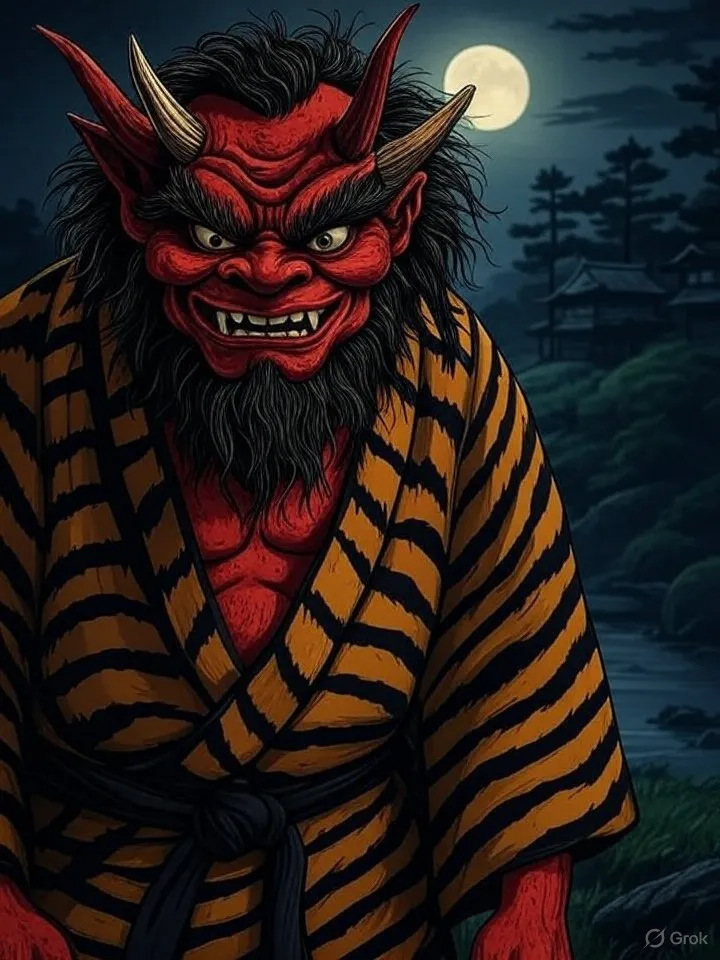
Oni (鬼) translates directly as “demon” or “ogre” in Japanese, referring to monstrous creatures often depicted with horns and tiger-skin loincloths.
- Oni (鬼) = Demon, ogre
Origin
- Rooted in Buddhist and Shinto traditions.
- Oni were originally spirits that punished the wicked in the afterlife, later evolving into symbols of evil and mischief.
- Linked to Setsubun rituals, where beans are thrown to drive them away.
Appearance
- Typically depicted with red or blue skin, horns, sharp claws, and wild hair.
- Often carries iron clubs called kanabō.
- Can be male or female, though male forms are most common.
Behavior & Myths
- Portrayed as evil-doers who devour humans, torment sinners, or attack villages.
- Sometimes reformed or act as guardians in temple gates (niō).
- In popular tales, they are often defeated by clever humans or monks.
Symbolism
- Symbolize destruction, punishment, and the darker side of nature.
- In festivals, represent evil to be cast out for good fortune.
- Also used to warn children and reflect internal demons in literature.

Illustrated folktale
The tale of Oni

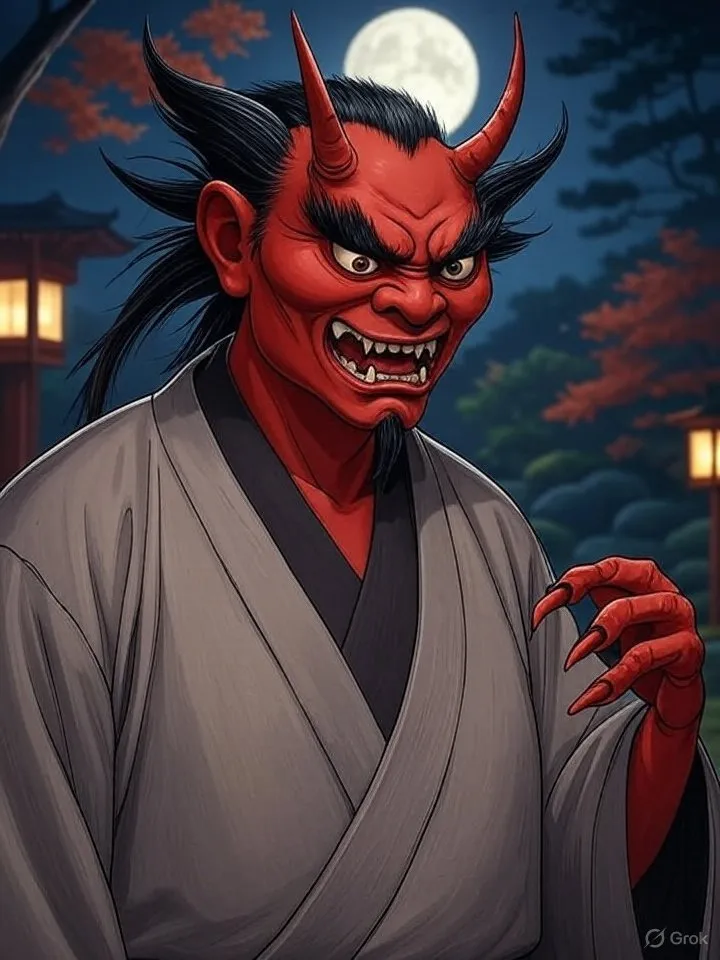
In a village nestled between two great mountains, where cherry blossoms bloomed in pink abundance and autumn leaves rustled with whispers of old tales, there lived an Oni named Kage.
Kage's skin was a deep crimson, like the ripest persimmons, and her horns curved upwards from her forehead, sharp as scimitars. Her wild hair snaked around her shoulders like living vines, its tangles resembling the twisted roots of ancient trees. She roamed the mountainsides, searching for villages to devour, sowing chaos wherever she stepped.
But one winter's eve, Kage stumbled upon a secluded temple perched on a windswept crag. Smoke curled from the chimneys, carrying the scent of incense and simmering miso soup. As she watched from afar, a young monk named Shō entered the main hall, candle in hand, to perform a ritual before the ancestors.
Kage, intrigued by the quiet rituals and warm light within the temple walls, hesitated at the entrance. She remembered an Oni's propensity for destruction, but something about this place drew her back, like autumn leaves rustling against her feet. Perhaps it was the gentle hum of chanting monks or the way Shō smiled as he lit incense sticks.
As she loitered outside, a gust swept away her iron club, kanabō, leaving Kage to watch helplessly as it clattered into the temple's courtyard. Unbeknownst to her, this act would seal her fate with Shō and his community. The young monk approached her calmly, offering a bowl of steaming soup, flavored with dried seaweed and sesame seeds.
"Kage-san," he said softly, "come closer. We have prepared something for you, too."
With great trepidation, the Oni stepped inside, leaving behind the frozen mountainside. Shō welcomed her warmly, guiding her to a place by the hearth where flames danced with orange tongues, banishing the cold.
As they shared the soup's warmth and taste, Kage felt something within her – long suppressed by hunger and pain – begin to stir anew. Memories of her own past, as a minor demon tasked with punishing wicked souls in the afterlife, resurfaced. She recalled whispers of forgotten kindnesses she had performed amidst her duties.
Over that winter's night, under Shō's guidance and warmth, Kage slowly let go of some of her nature's ferocity. Her horns began to dull, like moss clinging to crumbling stones; her hair untangled itself from the wild snags; and her crimson skin lost its fiery intensity, taking on a more human hue.
From that day forward, whenever Setsubun approached, Kage stood guard at the temple gate with Shō by her side. The villagers no longer fled in terror as they chanted "Oni wa soto!" ("Devils out!"). Instead, they left offerings for the reformed Oni and bowed to their benevolent presence.
Years passed, yet Shō's compassion remained a beacon within Kage, reminding her of a softer side – that even the most fearsome among creatures may hold a spark of redemption.