
Name Meaning
Overview
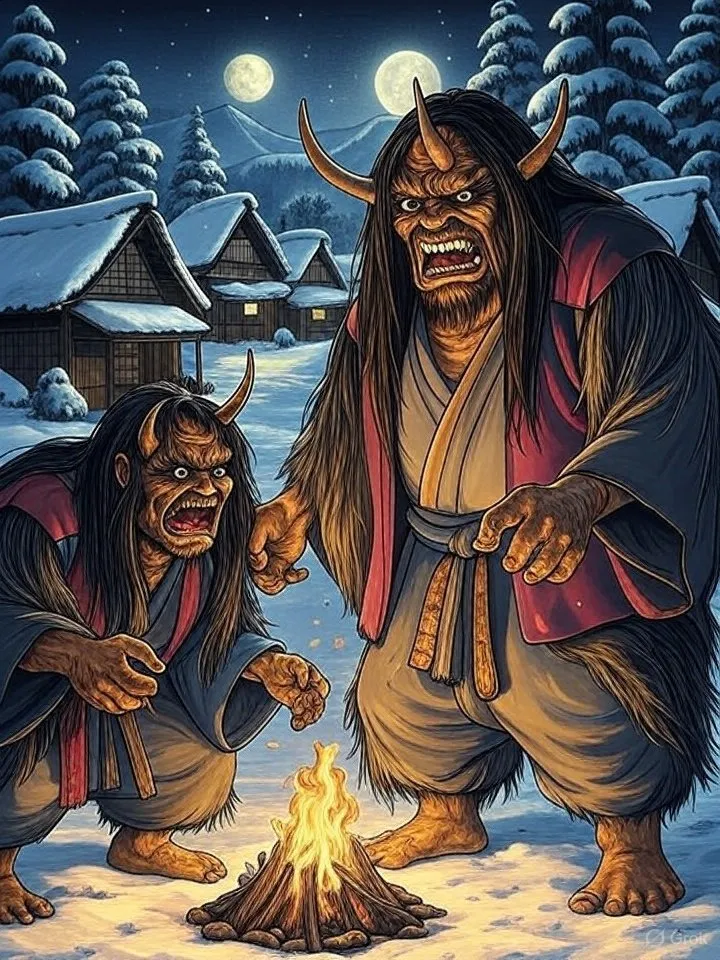
Namahage (生剥) refers to a traditional ogre figure from northern Japan. The name is derived from the practice of scolding lazy people by saying their blisters will be peeled (namasu).
- Nama (生) = raw/blistered
- Hage (剥) = to peel off
Origin
- Associated with Akita Prefecture, especially the Oga Peninsula.
- Part of traditional New Year’s rituals to ward off laziness and misbehavior.
- Derived from ancient beliefs involving mountain spirits or demons.
Appearance
- Oni-like beings with fearsome masks, wild hair, and straw garments.
- Often carry knives or buckets as part of the performance.
- Costumes vary by village but always invoke awe or fear.
Behavior & Myths
- Visit homes during the New Year shouting “Are there any lazy children?”
- Used to scare children and adults into proper behavior.
- Families prepare to receive them with ritual foods and offerings.
Symbolism
- Embodies discipline, morality, and seasonal renewal.
- Acts as a social tool for reinforcing good conduct.
- Represents a blend of folk religion and community custom.

Illustrated folktale
The tale of Namahage

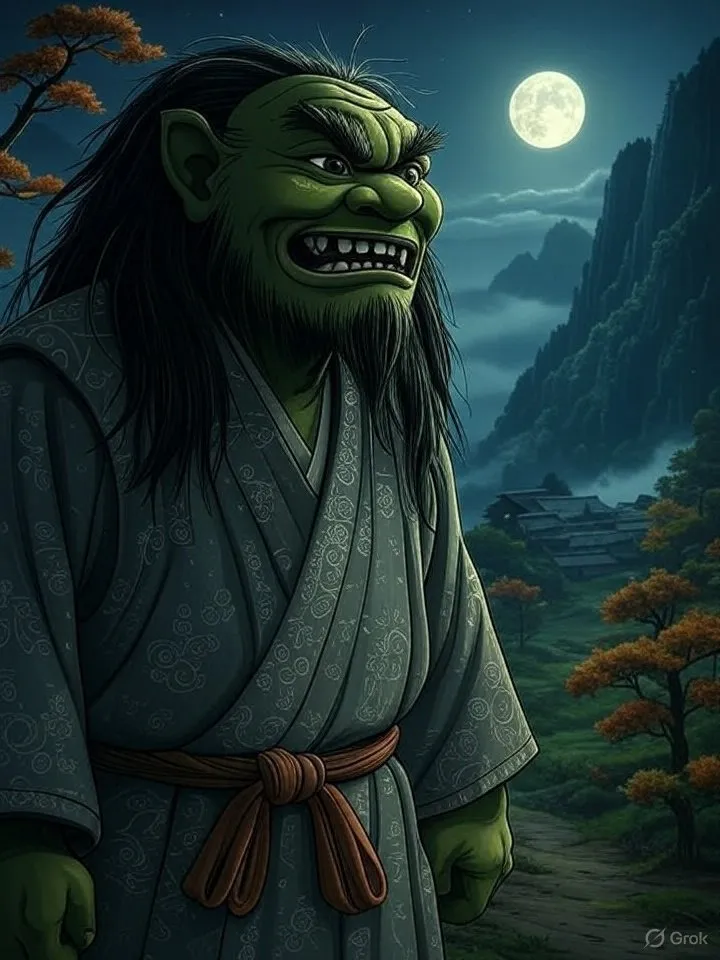
In the depths of winter, when snowflakes danced in the biting wind, the villagers of Oga prepared for the arrival of their visitors from beyond the mountains. It was said that on certain nights, the Namahage would descend upon their homes, knives at the ready, to inspect the behavior of those within.
Young Kenji had always been told stories about the fierce beings in straw garb, with wild hair and masks to strike fear into the hearts of the lazy. His family made offerings of sake and fish, carefully placed on the family altar, as a gesture of respect for their impending visit.
One evening, the air grew thick with an almost palpable presence. Kenji's ears perked up at the sound of rustling straw and creaking wooden staffs. He peeked through the sliding door, and there they were: three Namahage, their faces aglow with lantern light as they made their way up the path.
Their leader, the largest and most fearsome, halted before Kenji's home and bellowed in a voice that sent shivers down the boy's spine. "Are there any lazy children within?" The other two echoed his cry, like a chorus of restless spirits.
Kenji trembled as he called out from behind the door. "W-we have no lazy ones here!" He held his breath, hoping it was true.
The Namahage leader snorted, his mask twisting into a grotesque grimace. "We'll see about that." With a wave of his staff, the three beings pushed open the door and strode inside.
Kenji watched in awe as they inspected every room, their knives flashing in the dim light. In the kitchen, they found Kenji's mother busily preparing for the next day's meals. The Namahage nodded in approval at her hard work, accepting a bowl of warm rice from her hands.
Next, they entered the children's quarters, where Kenji and his siblings huddled together on their futon. The leader's gaze swept over them before coming to rest on Kenji. He glared intensely, as if daring the boy to reveal any hint of laziness. Satisfied that Kenji was genuinely hardworking, he nodded curtly.
The inspection complete, the Namahage returned outside, where they performed a brief ritual dance in honor of the season's renewal. As they departed into the snowy night, their laughter echoed through the village, banishing any lingering doubts about the coming year.
From that day forward, Kenji made it a point to be especially diligent in his studies and chores. He knew that the Namahage would return, and he wanted no part in their scorn. His family's offerings were well-received, and the villagers rejoiced at the thought of the fierce spirits keeping them on the straight path.
As winter slowly gave way to spring, Kenji felt a sense of pride knowing that his village was watched over by the vigilant Namahage. Their presence reminded him that discipline and hard work were essential to building a strong community, one where each member could thrive in harmony with nature's rhythms.