
Name Meaning
Overview
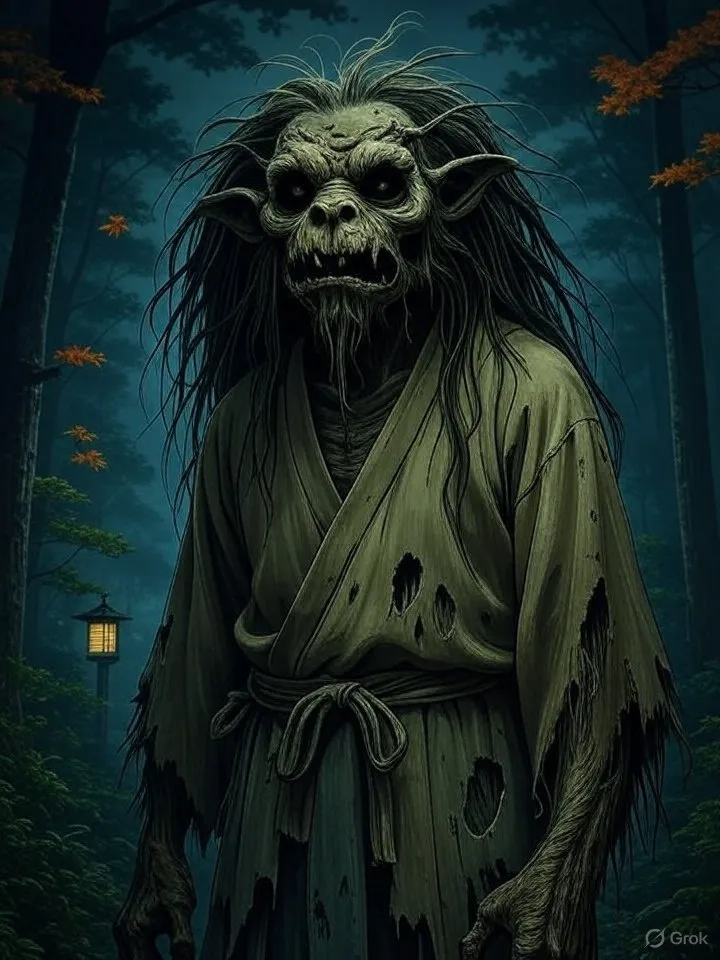
Mōryō (魍魎) refers to malevolent spirits that haunt graveyards and mountains, often depicted as corpse-eating demons.
- Mōryō = A term referring to spirits of nature and the dead, later associated with evil spirits in Chinese and Japanese lore
Origin
- Comes from Chinese mythology, where they were forest and mountain spirits.
- Adopted into Japanese folklore as graveyard demons.
- Appear in Heian-period texts and Edo-period kaidan literature.
Appearance
- Described with dark or mottled skin, sharp claws, and long ears.
- Sometimes appear humanoid, other times animalistic.
- Often depicted with hunched backs and glowing eyes.
Behavior & Myths
- Known for digging up graves to feast on corpses.
- Thought to cause illness or madness in those who encounter them.
- Feared by villagers and often warded off with talismans or exorcisms.
Symbolism
- Represents impurity and fear of death.
- Symbol of decay, disease, and the boundary between life and death.
- Often used to teach respect for the dead and proper burial customs.

Illustrated folktale
The tale of Mōryō

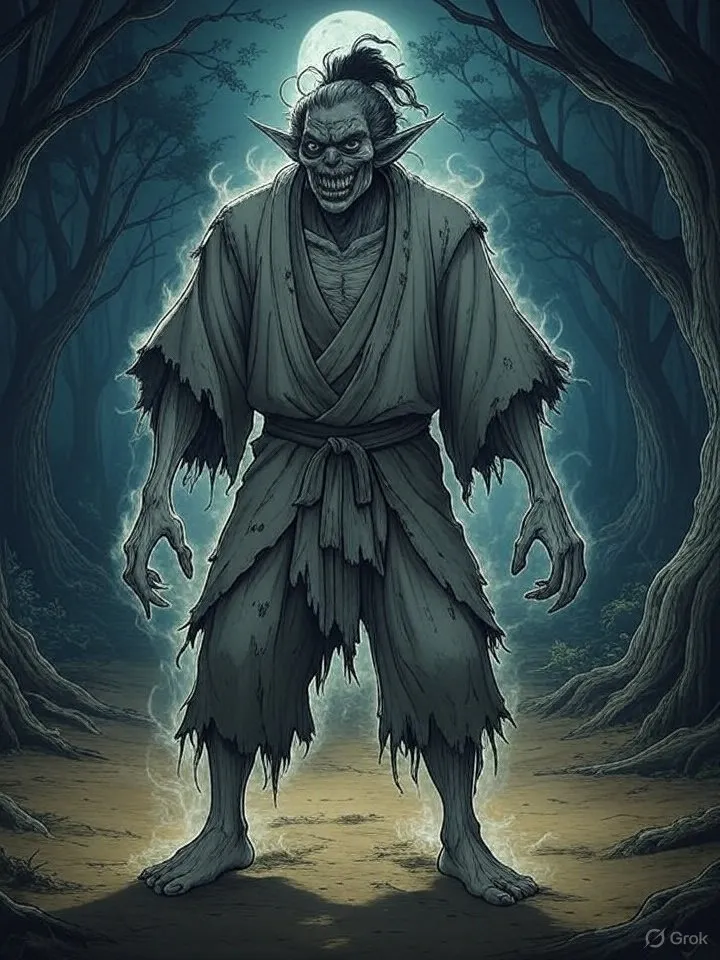
In the shadowy depths of the ancient graveyard, where the wind whispered secrets to the stones, there lived a Mōryō named Kage. His was a form unlike any other, with skin as dark as the night sky and eyes that glowed like embers from a long-dead fire. His back hunched beneath his shoulders, as if the weight of the dead bore down upon him.
The villagers avoided Kage's realm, fearing the madness and illness that befell those who crossed paths with him. But one autumn evening, a young girl named Emiko wandered into the graveyard, seeking to pay her respects to her late grandmother. The sun had set, casting long shadows across the tombstones, but Emiko felt drawn to Kage's presence.
As she walked among the gravestones, Kage emerged from the darkness, his eyes fixed upon her. His ears perked up, and he took a step closer, his claws scraping against the stone path. Emiko tried to flee, but her feet seemed rooted to the spot. The Mōryō's gaze held a deep sadness, as if he too felt trapped between worlds.
"Why do you come here, little one?" Kage asked in a voice that sent shivers down Emiko's spine. His words were laced with an otherworldly sorrow, and she sensed that he was not merely a creature of death, but a guardian of sorts – a sentinel tasked with keeping the secrets of the graveyard.
Emiko explained her visit, and Kage listened intently, his ears twitching with understanding. As they spoke, the wind picked up, carrying the whispers of the dead on its sighs. The air grew thick with an unsettling energy, as if the very fabric of life and death was being torn apart.
Kage's form began to shift, his body contorting into a grotesque parody of humanity. His eyes burned brighter, illuminating the dark recesses of the graveyard. Emiko stumbled backward, but her feet remained rooted, as if bound by an unseen force.
In that moment, Kage revealed a terrible truth: the villagers' fear and disrespect for the dead had awakened him from his slumber. The Mōryō's hunger was not merely for flesh, but for proper reverence – for the rituals and prayers that acknowledged the passage of life into death. Without these tributes, he was forced to dig up graves, to feast on the remains of those who lay unremembered.
As Emiko listened, a weight settled upon her shoulders, as if she too bore the burden of Kage's hunger. She vowed to carry the Mōryō's message back to the village, to teach them the importance of respecting the dead and honoring their memories. And so, with a newfound understanding, Emiko left the graveyard, leaving Kage to his vigil.
From that day on, the villagers treated the graveyard with greater reverence, placing flowers and food offerings upon the tombstones. The Mōryō's presence diminished, his hunger sated by the respect shown to those who had passed into the next world. And Emiko visited her grandmother's grave often, leaving a small token of remembrance for Kage – the guardian of the graveyard's secrets, and the keeper of its sorrowful heart.