
Name Meaning
Overview
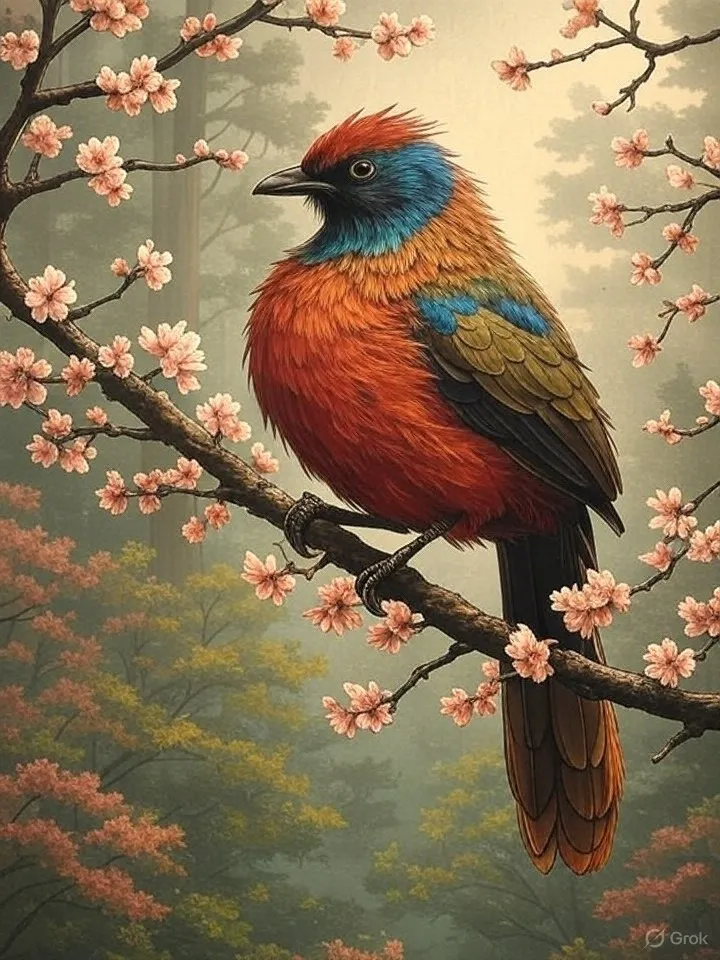
Kokakuchō (子鶴鳥) is often translated as “child-calling bird.” It is associated with the voice of a mother who passed away in childbirth, calling out for her child.
- Ko (子) = child
- Kakuchō (鶴鳥) = crane-like bird
Origin
- Linked to the ubume spirit, a mother who died during childbirth but lingers due to concern for her child.
- Appears in classical literature and folklore collections.
- Sometimes associated with mountain or river spirits carrying grief or sorrow.
Appearance
- Often described as a large, ghostly bird with a sorrowful cry.
- Its cry resembles the weeping or calling of a woman.
- In some legends, its feathers shimmer with spiritual energy or appear misty.
Behavior & Myths
- Flies through forests or mountains crying for its child.
- Hearing its call at night is seen as an omen of sorrow or ghostly presence.
- Can appear near temples or graves related to childbirth.
Symbolism
- Embodies the maternal bond that transcends death.
- Symbol of grief, longing, and love from beyond the grave.
- Represents the lingering power of unfulfilled love or duty.

Illustrated folktale
The tale of Kokakuchō

In the misty mountains of Kiso, where the forests whispered secrets to the wind, there lived a young mother named Hiroko. She had given birth to a beautiful child, but fate was cruel and took her life soon after. The villagers said that Hiroko's spirit lingered, searching for her lost infant.
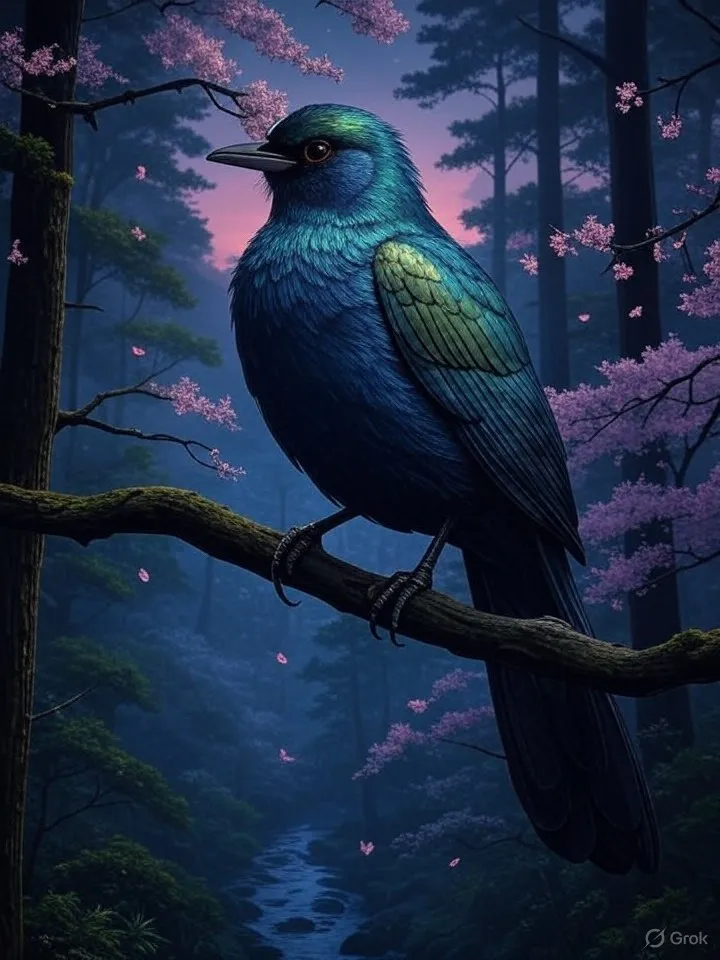
One evening, as the sun dipped behind the mountains, a mournful cry echoed through the forest. It was the Kokakuchō, its ghostly form fluttering between the trees like a dark specter. Its cry was said to be the lament of a mother's love, yearning for her child's presence.
Kaito, a young monk from the nearby temple, heard the cry as he walked through the forest. He had come to offer prayers at his master's grave, which lay on the mountain slope. As he listened to the Kokakuchō's sorrowful wail, Kaito felt a shiver run down his spine.
The next night, Kaito returned to the forest, hoping to catch another glimpse of the Kokakuchō. He lit incense sticks and made offerings at his master's grave, seeking solace for Hiroko's troubled spirit. As he waited in silence, the Kokakuchō's cry grew louder, its ghostly form taking shape before him.
Kaito beheld the bird's shimmering feathers, as if the moon itself had taken flight. Its eyes, like dark pools of water, seemed to hold a deep longing. The monk felt his heart ache with compassion for Hiroko and her lost child.
Moved by pity, Kaito decided to follow the Kokakuchō on its nocturnal flights. He trailed behind it, careful not to be seen, as it flew over the mountain paths and forests below. They passed by temples dedicated to childless women and the shrines of departed mothers, where offerings were made to appease their spirits.
The Kokakuchō led Kaito to a secluded valley hidden deep within the mountains. There, he saw Hiroko's grave, marked with a simple stone statue of a mother holding her infant. The bird perched on the statue's head, its feathers glistening in the faint moonlight.
Kaito watched as the Kokakuchō laid a small branch of mistletoe beside the grave. The leaves rustled softly in the wind, carrying Hiroko's whispered words to her child: "My love will never fade."
Moved by this tender gesture, Kaito realized that the Kokakuchō was not just a harbinger of sorrow but also a symbol of an eternal bond between mother and child. From that night on, he made it a point to visit Hiroko's grave regularly, bearing offerings and prayers for her restless spirit.
As the seasons passed, the Kokakuchō's cries grew softer, its form less transparent. It was said that Kaito's compassion had soothed Hiroko's troubled heart, allowing her to finally find peace among the mountain spirits. The villagers whispered that on quiet nights, when the moon shone bright, one could still hear the Kokakuchō's gentle coos, echoing through the mountains as a lullaby for Hiroko's beloved child.