
Name Meaning
Overview
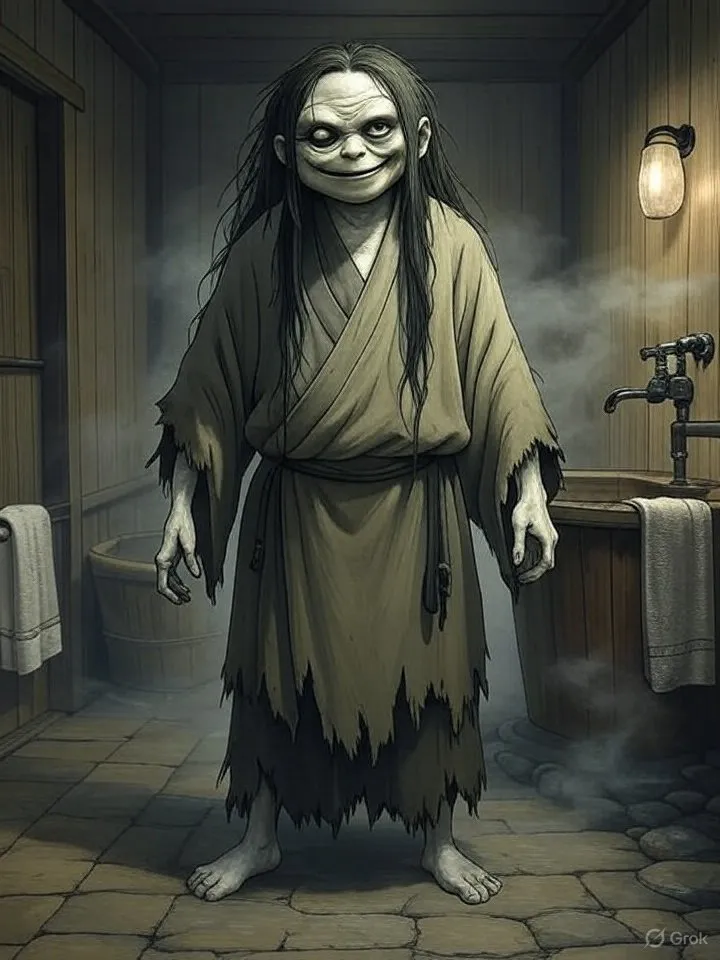
Kanbari-nyūdō (かんばり入道) can be roughly translated as "observing monk" or "watchful priest," often associated with bathrooms.
- Kanbari (かんばり) = possibly from “to watch” or “to peep”
- Nyūdō (入道) = a Buddhist monk or priest
Origin
- Associated with folk customs around New Year’s Eve in Japan.
- Thought to appear in outhouses or toilets to spy or play pranks.
Appearance
- Usually depicted as a bald-headed monk with grotesque features.
- Sometimes wears robes or blends into shadows.
Behavior & Myths
- Appears during the last night of the year (Ōmisoka) and lurks near restrooms.
- Prone to peeping or frightening people using the toilet.
- Reciting protective chants or posting signs can keep it away.
Symbolism
- Represents hidden dangers in everyday places.
- Acts as a reminder to respect household spirits and practice seasonal rituals.

Illustrated folktale
The tale of Kanbari-nyūdō

In the depths of winter, when snowflakes danced outside the windows and the air was crisp with the scent of woodsmoke, it was said that Kanbari-nyūdō would appear.
Kazuo, a young man with a quiet demeanor and a heart full of curiosity, had heard tales of the mischievous monk. He had always been fascinated by the stories of Oomisoka, the last night of the year, when the veil between worlds grew thin and spirits roamed free.
As Kazuo sat in his family's home, listening to his mother prepare the special New Year's Eve dinner, he couldn't shake the feeling that Kanbari-nyūdō was watching him. The wind outside rustled the papers on the windowsill, and for a moment, it seemed as though the monk's dark robes blended with the shadows themselves.
Kazuo's mother, wise to the whispers of the old days, had warned him about the lurking Kanbari-nyūdō. "Beware its gaze," she said, her voice low and serious. "For when it sees your face, it will play tricks on you."
Undeterred by his mother's caution, Kazuo decided to test the tales. He excused himself from the dinner table, saying he needed to use the outhouse. As he walked through the cold night air, the snow crunching beneath his feet, he felt a shiver run down his spine.
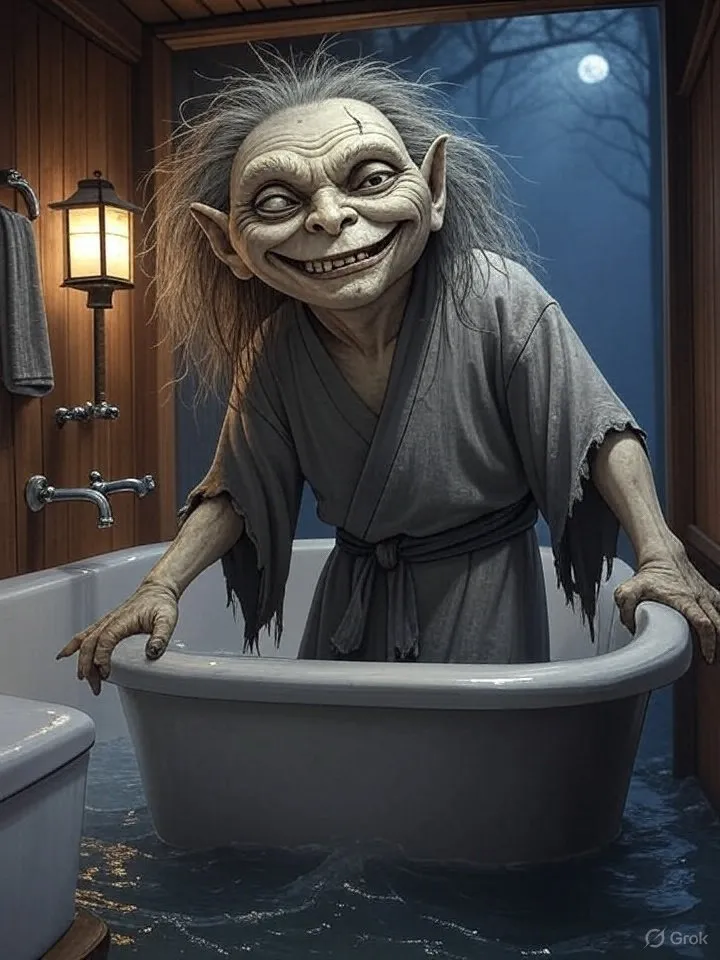
In the darkness of the outhouse, Kazuo lit a small candle, trying to chase away the shadows. But when he looked up at the mirror, he saw instead the grotesque face of Kanbari-nyūdō staring back at him. The monk's bald head glistened in the flickering light, and his eyes seemed to gleam with mischief.
For a moment, Kazuo froze, his heart pounding in his chest. But then he remembered the chants his mother had taught him – ancient words of protection, meant to ward off Kanbari-nyūdō's pranks.
The young man began to recite the chant, his voice steady and clear: "Kanbari-nyūdō, ōya no kami, mi o maku tokoro ni iraete kure." (Kanbari-nyūdō, household spirit, please leave me alone in this place.)
As he spoke the words, a strange feeling washed over Kazuo. The darkness outside seemed to recede, and the air inside the outhouse grew lighter. When he opened his eyes again, Kanbari-nyūdō's face was gone from the mirror.
Breathing a sigh of relief, Kazuo returned to the dinner table, his heart still racing with excitement. His mother smiled at him, as though she knew what had transpired in the outhouse.
"Tonight," she said, "you have shown respect for the spirits that live among us. May Kanbari-nyūdō leave you be."
As they finished their meal and bid each other well for the New Year, Kazuo felt a deeper understanding of the hidden world around him. He knew now that even in the most mundane places – like the outhouse on Oomisoka night – secrets and dangers lurked, waiting to be acknowledged.
From that day forward, Kazuo carried the memory of Kanbari-nyūdō with him, a reminder to honor the household spirits and respect the delicate balance between worlds.