
Name Meaning
Overview
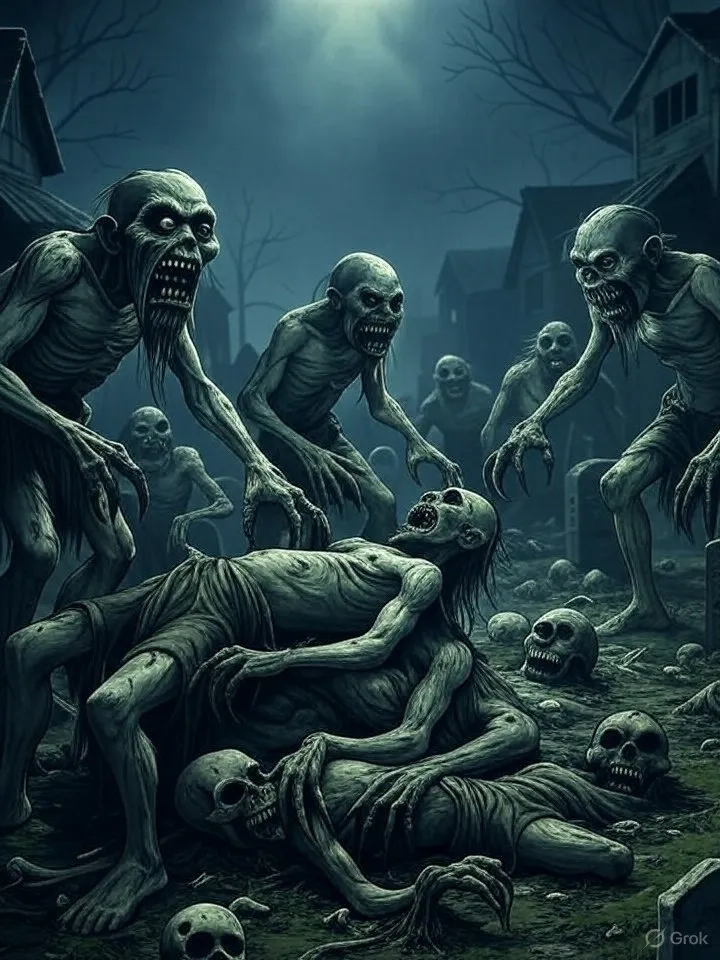
Jikininki (食人鬼) translates to “human-eating ghost.” These spirits are condemned to devour corpses as punishment for their selfishness or impiety during life.
- Shoku (食) = eat
- Hito (人) = human
- Ki (鬼) = demon or ghost
Origin
- Rooted in Buddhist ghost lore, especially in tales involving monks and funeral rites.
- Most famously described in Lafcadio Hearn’s story “Jikininki.”
Appearance
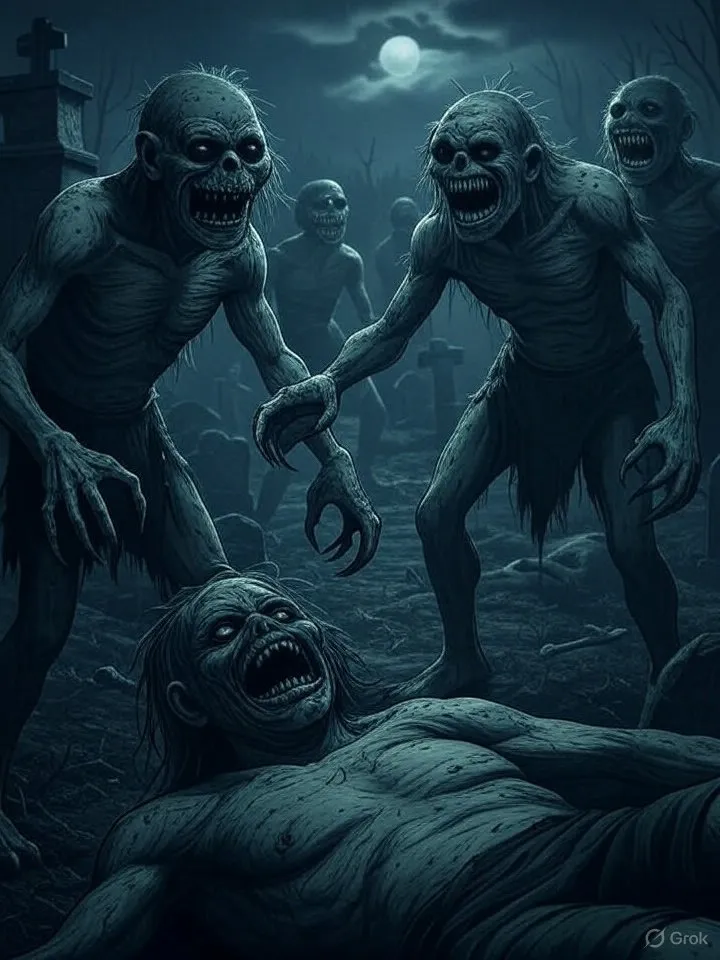
- Ghastly, decaying humanoid form with sunken eyes and foul stench.
- Sometimes appear as normal humans during the day, revealing their form at night.

Behavior & Myths
- Haunt places of death and prey on corpses during funerals or nighttime burials.
- Driven by endless hunger, yet tormented by their acts and ashamed of their form.
- Can only be released from their curse through prayers or the intervention of holy monks.
Symbolism
- Represents the karmic result of greed and ego.
- A cautionary figure in Buddhist teachings against attachment and pride.
- Symbolizes the grotesque extremes of spiritual punishment.
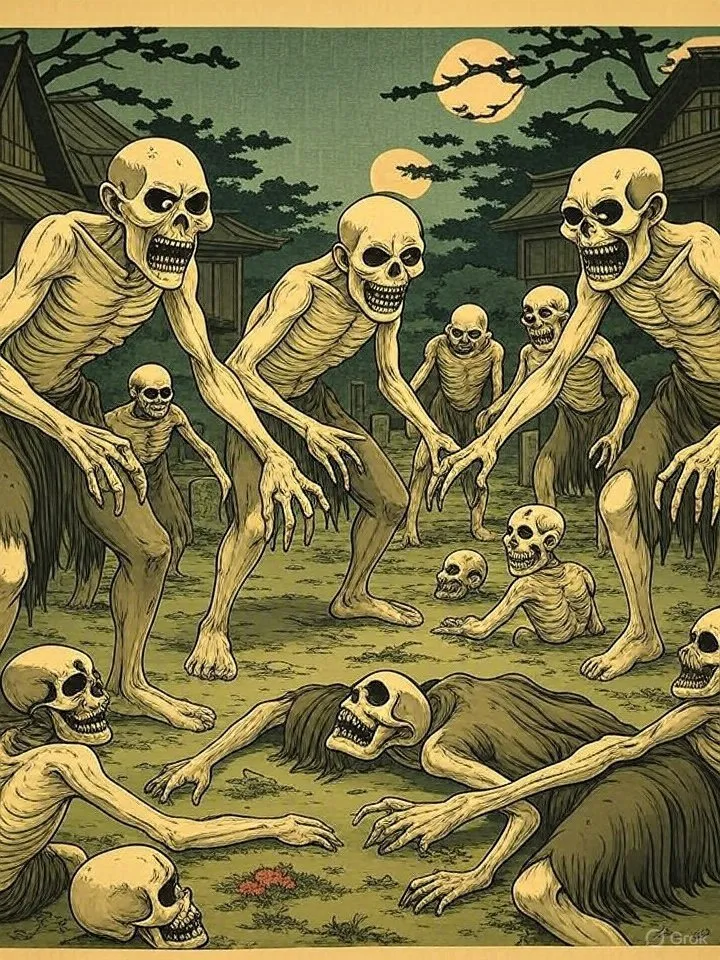
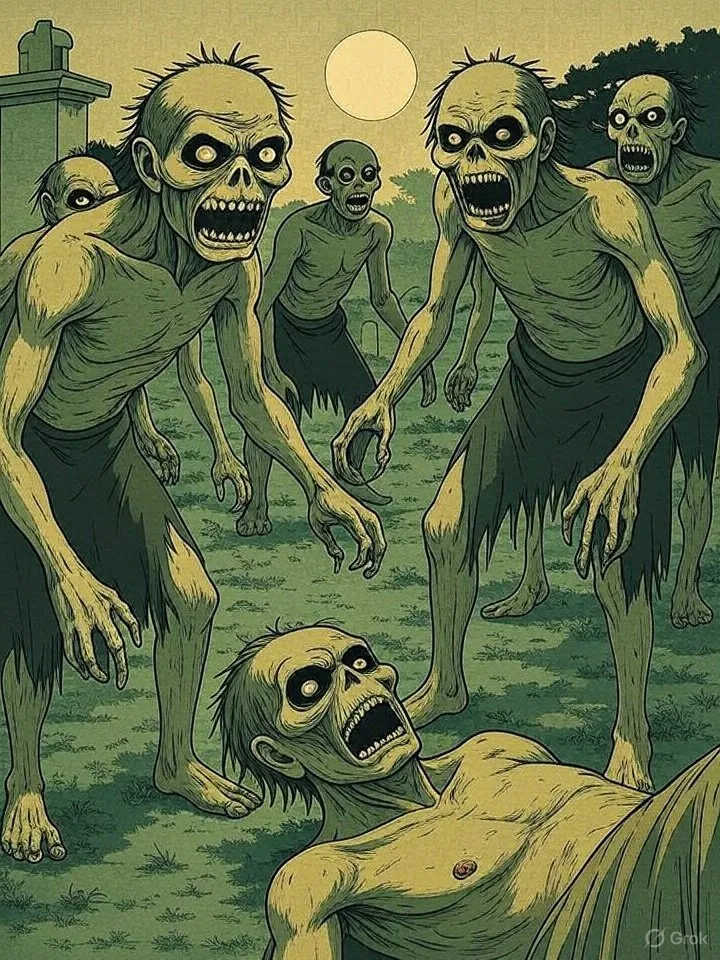
Illustrated folktale
The tale of Jikininki

In the depths of rural mountains, where mist-shrouded villages whispered secrets to the wind, there lived a young monk named Kaito. His days were filled with study and prayer, his nights illuminated by the gentle glow of candles in the temple's courtyard. But amidst this peaceful existence, an unsettling presence lurked.
Kaito had heard tales of the Jikininki, ghostly devourers who roamed funeral grounds under the cover of darkness, feasting on the bodies of the departed. He believed such stories to be mere superstition, a cautionary warning against the dangers of greed and ego. Yet, as he tended to the village's deceased in their final rest, he began to sense an unholy presence.
One autumn evening, while conducting rites for a deceased elder, Kaito noticed an unsettling chill in the air. The wind died down, and an eerie silence fell over the graveyard. He lit more candles, yet their light seemed to dance on shadows rather than banish them. As night deepened, the monk's senses became heightened. He detected the stench of decay wafting from a nearby grave.
Kaito hastened to investigate, his heart racing with unease. That was when he saw it – a figure shrouded in darkness, its presence like a cold draft on his skin. As he watched, the form began to take shape, revealing a grotesque, decaying humanoid with sunken eyes that seemed to bore into Kaito's soul.
The Jikininki spoke not a word, but its very being radiated an aura of endless hunger and despair. It glided closer, its stench overwhelming, as if the very essence of death itself had taken on a malevolent form. Kaito, transfixed by horror, yet compelled by compassion, approached the creature.
"Why do you haunt these sacred grounds?" he asked, his voice barely above a whisper.
The Jikininki's response was a mournful sigh that seemed to come from the very depths of its being. It spoke in a language Kaito couldn't understand, yet somehow comprehended the weight of its words: "I am bound by my own greed and pride. Forever cursed to feed on the bodies of those who have passed, tormented by the knowledge of what I have become."
Kaito listened intently, sensing the Jikininki's anguish was not unlike his own – a reflection of the darkness within himself that he had yet to confront. He recited prayers, calling upon the mercy of the divine, and as he spoke, a gentle breeze rustled through the trees.
The Jikininki seemed to shrink, its presence receding like a tide. For an instant, Kaito thought he saw a glimmer of hope in those sunken eyes – a chance for redemption. The creature vanished into the night, leaving behind only the faint scent of decay and a sense of sorrow that clung to Kaito's heart.
From that day on, the young monk tended the village's dead with newfound reverence and understanding. He realized that even in death, there existed a realm of consequences, where actions born from greed and ego could become one's eternal fate. And though he never encountered the Jikininki again, its presence lingered within him – a reminder to temper his own desires and walk the path of compassion.