
Name Meaning
Overview
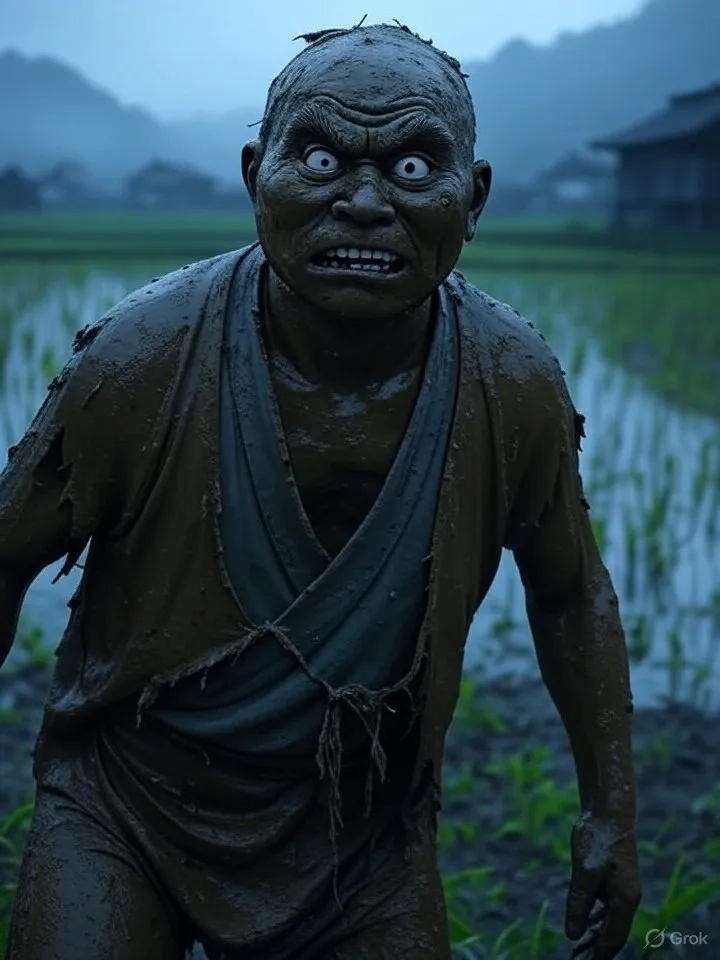
Dorotabō (泥田坊) translates to "muddy rice field monk" or "mud field man." This yokai is the spirit of a farmer who returns from the grave, sorrowful and enraged over the loss of his beloved fields.
- Doro = Mud
- Ta = Rice field
- Bō = Old man or monk-like figure
Origin
- Commonly featured in Edo-period ghost stories.
- Appears in rural folklore, especially in farming villages where land inheritance was vital.
- Symbol of ancestral resentment and rural decline.
Appearance
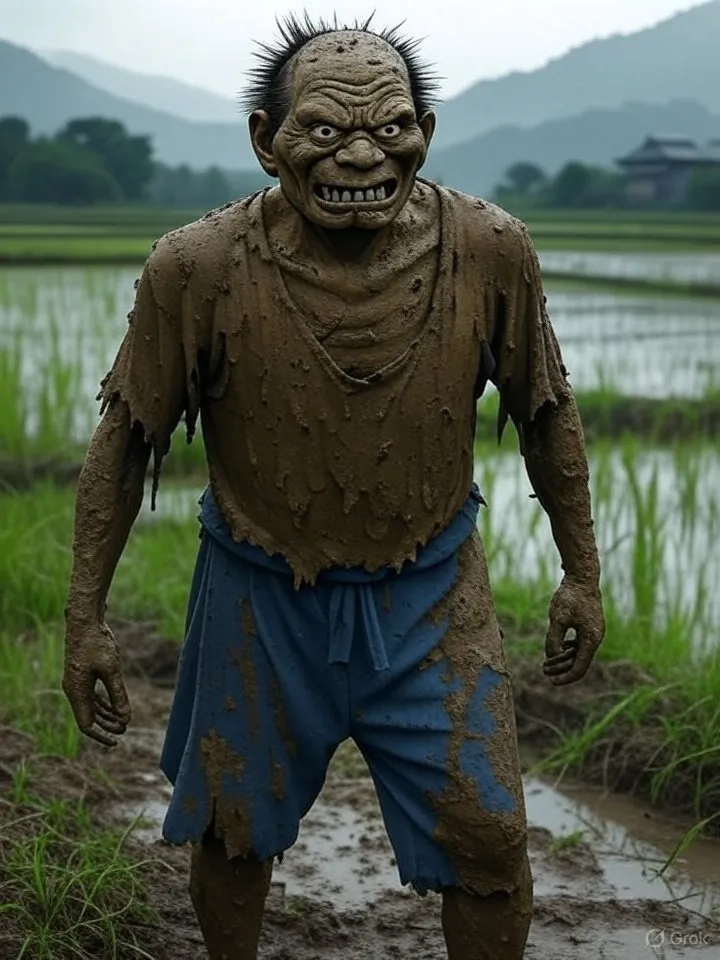
- Usually depicted as a mud-covered old man with one eye and clawed hands.
- Emerges from the fields at night, dripping with filthy water and croaking miserably.
- Shouts "Give me back my rice field!" into the darkness.

Behavior & Myths
- Only appears in neglected or cursed fields, particularly those sold off by irresponsible heirs.
- Haunts those who fail to respect their ancestors or maintain family land.
- His cry is said to bring misfortune or poor harvests.
Symbolism
- Represents the connection between land, ancestors, and tradition in rural Japan.
- A warning about neglect, greed, and failure to honor one's duties.
- Seen as a cautionary tale told to younger generations.
Illustrated folktale
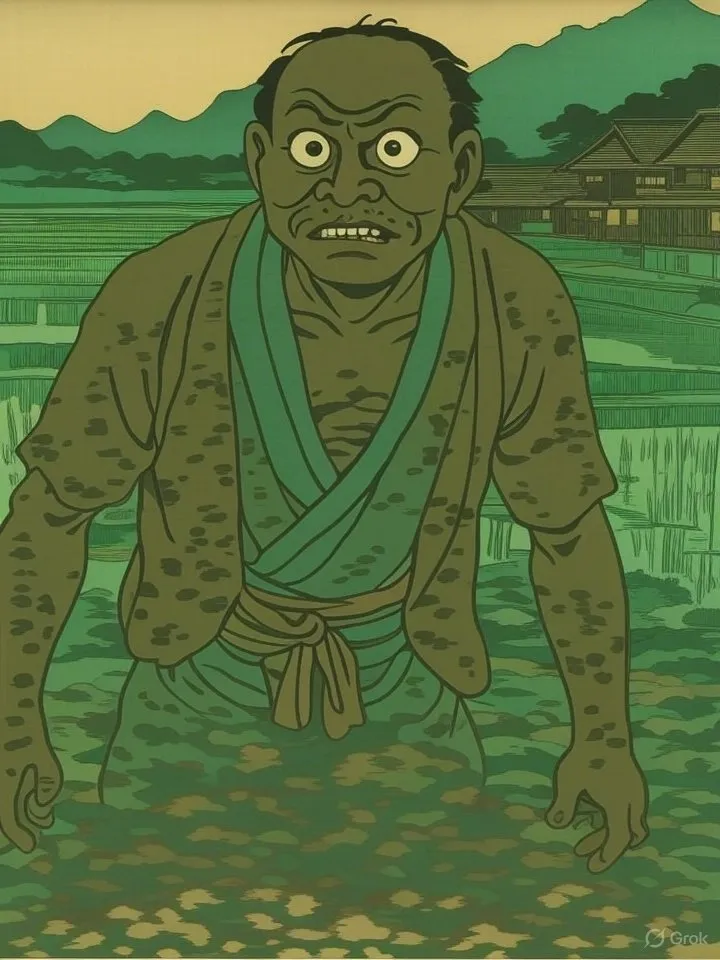
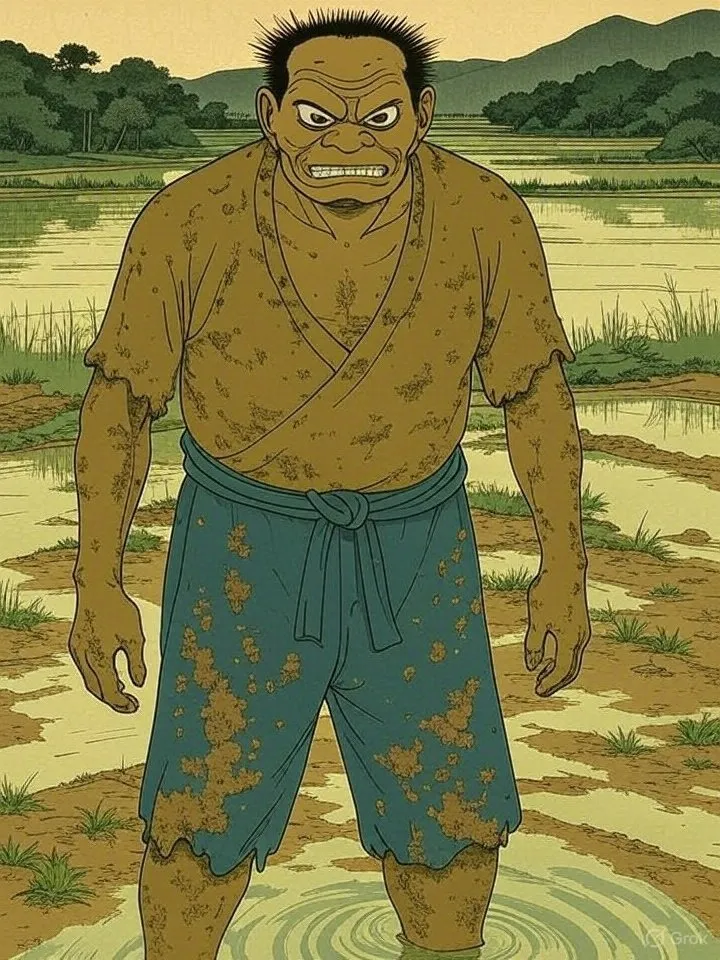
The tale of Dorotabō

In the sleepy village of Akakawa, where rice fields stretched as far as the eye could see, there lived a young farmer named Kaito. He was the eldest son of a respected family, but his thoughts were never on tilling the land or caring for his ancestors' legacy. Kaito's mind wandered to the city, where he longed to trade in his worn straw hat and calloused hands for the fine clothes and ease of a merchant's life.
One night, as the moon hung low over the fields, a faint cry pierced the darkness. The villagers stirred in their sleep, knowing the sound all too well. "Give me back my rice field!" Dorotabō's anguished wail echoed through the stillness, making even the bravest of men shiver.
Kaito, however, paid no heed to the warning. He continued to sell off parcels of his family's land, one by one, to feed his own desires. The villagers whispered among themselves that he was courting disaster, but Kaito just laughed, convinced of his own good fortune.
As the seasons passed, the once-fertile fields began to wither and die. Crops failed, and the harvests were meager. Kaito's family struggled to make ends meet, while their neighbors prospered beneath a benevolent sky.
One fateful evening, as the autumn moon hung low, Dorotabō emerged from the fields like a specter of old earth itself. His single eye glowed with a malevolent light, and his clawed hands grasped for Kaito's very soul. The young farmer stumbled upon the creature in the dead of night, too terrified to run.
"Why do you haunt me?" Kaito stammered, trying to hide his face behind his sleeve.
Dorotabō's wretched cry shook the air once more: "You have forsaken your land! You have turned your back on your ancestors' legacy!"
Kaito trembled beneath the weight of the old man's words. In that moment, he saw visions of his family's past: generations who toiled and struggled, only to be repaid with bountiful harvests and a deep connection to the land.
Moved by the sight, Kaito vowed to reclaim his family's honor and restore their lands to their former glory. Dorotabō, sensing the change within him, let out one final anguished cry before vanishing into the darkness.
As dawn broke over Akakawa, the villagers awoke to find their crops reviving beneath the touch of an unseen hand. The once-neglected fields began to flourish anew, and Kaito's family prospered alongside theirs. Though Dorotabō never appeared again, his spirit watched over the village, ever vigilant in its defense against those who would betray their ancestral bonds.
From that day on, young Kaito tended his lands with reverence, aware of the weight of tradition and duty upon him. His family's legacy lived on, nourished by a newfound respect for the land and the spirits that dwelled within it.