

Name Meaning
Overview
Bakezōri (化け草履) means “ghost sandal” or “transformed zōri.” It is a type of **tsukumogami**, an object that comes to life after being neglected for many years.
- Bake = to transform, ghost
- Zōri = traditional Japanese straw sandal
Origin
- Comes from tsukumogami folklore, where tools and objects gain spirits after 100 years.
- Rooted in Edo-period tales of haunted household items.
- Represents the spirits of forgotten things seeking attention.
Appearance
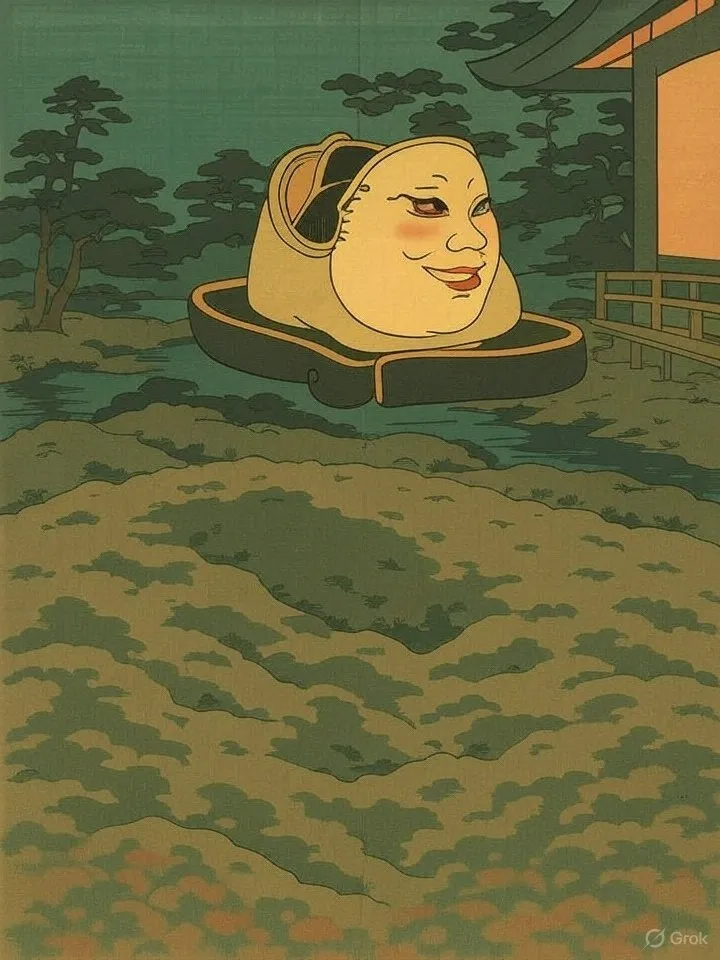
- Looks like an animated straw sandal with two arms, two legs, and a single eye.
- Often shown leaping around joyfully or mischievously.
- May wear a comical expression or tiny kimono.


Behavior & Myths
- Chants “kararin! kororin!” while running around the house at night.
- Does no real harm but causes annoyance and noise.
- Appears when zōri are discarded carelessly or forgotten.
Symbolism
- Embodies the idea of respecting belongings, even old or worn-out ones.
- Acts as a reminder to value household objects and not waste them.
- A playful expression of animistic beliefs in Shinto traditions.

Illustrated folktale
The tale of Bakezōri

In the quiet hours of dusk, when the sun's warmth had surrendered to the night's gentle breeze, the Okada household would stir with an otherworldly presence. It began with a faint rustling outside the kitchen door – a soft whispering that grew louder as the moon rose high in the sky.
Old Kanae, the family matriarch, would hear it first: "Kararin! Kororin!" The haunting chant echoed through the corridors, sending shivers down her spine. She'd peer into the darkness, squinting to make out the tiny figure darting across the tatami mats. It was always the same – a straw sandal with arms and legs, its single eye gleaming like a black onyx in the moonlight.
As the night wore on, the chanting grew more insistent, until it became a cacophony that shook the wooden pillars of their home. The zōri's tiny feet pounded out a rhythm on the floorboards, causing Kanae to chuckle with mixture of amusement and exasperation.
Her granddaughter, Emiko, would giggle at the sight, cooing "Kawaii!" as the Bakezōri performed its antics. But when morning broke, the sandal spirit vanished into thin air, leaving behind only a faint scent of damp straw and worn leather.
It was said that Old Kanae's great-aunt had once discarded an old zōri in haste, not realizing it would soon be imbued with a spirit from the Tsukumogami realm. The family never spoke of this incident aloud, but they knew better than to ignore the warning signs: a carelessly tossed household item could awaken the Bakezōri's restless energy.
One evening, Emiko – now grown and married – returned home to find her mother fretting over an old wooden box discovered in the attic. It was worn and dusty, its intricate carvings faded by time. Kanae urged Emiko to carefully restore it, lest they offend the spirits that dwelled within their household.
As the sun dipped below the horizon, the Okada family began to hear the familiar chant once more: "Kararin! Kororin!" This time, however, the Bakezōri's antics were accompanied by a series of soft knocks against the wooden box. Emiko, now wise to her family's traditions, gently opened the lid and revealed an assortment of worn zōri – remnants from long-forgotten festivals and forgotten days.
The spirits within those objects had found their kin, and with it, peace. As the chanting ceased, the Bakezōri settled into its new home, nestled among the restored sandals. The Okadas breathed a collective sigh, grateful for the reminder to cherish their belongings – each one imbued with stories, memories, and whispers from beyond.
And so, in the silence of night, when moonlight illuminated the household, they knew that the Bakezōri's playful spirit watched over them, guarding the line between worlds where the sacred and mundane entwined.