
Henge: the animals that change
Japanese has a word for this: henge (変化), a creature that has changed its form. The same idea sits in bakemono (化け物), “a changed thing”, from the verb bakeru (化ける), to transform or disguise oneself. In folklore it is usually animals that do the changing — and the older and cleverer the animal, the better the disguise.
- A leaf on the head. In countless tales and pictures, a fox or tanuki places a leaf on its head before it transforms.
- A tell-tale tail. The disguise slips when a tail peeks out, a shadow falls wrong, or the creature drinks too much.
- Tricks with a purpose. Some shapeshifters fool the greedy, some seduce, and some — like the tanuki in Bunbuku Chagama — repay a kindness.
Fox and tanuki
The two great shapeshifters of Japan could not be more different. The kitsune is elegant, clever and a little dangerous, often appearing as a beautiful woman; the tanuki is a round-bellied joker with a sake bottle whose pranks end in laughter.
Both are still part of everyday Japan. Pairs of stone foxes guard every Inari shrine as the messengers of the rice god — thousands of them at Fushimi Inari Taisha in Kyoto — and kitsune udon is named after the fried tofu foxes are said to love. Ceramic tanuki in straw hats stand outside shops and restaurants for luck, many of them made in the pottery town of Shigaraki in Shiga.
Below are ten animal shapeshifters of Japanese folklore, from the fox to the sea snail.
10 shapeshifting yokai
-
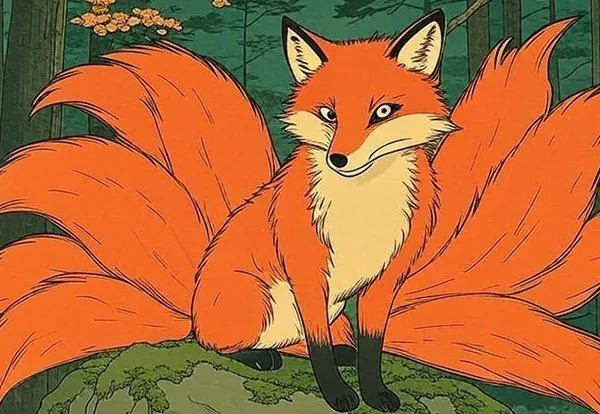 1.
Kitsune
狐
The fox spirit (狐): Japan’s great shapeshifter. It often becomes a beautiful woman to test or trick people, rewards those who treat it kindly, and serves as a messenger at Inari shrines. The more tails, the older and stronger it is.
Kitsune について読む →
-
 2.
Kyūbi-no-kitsune
九尾の狐
The nine-tailed fox (九尾の狐), the most powerful fox of all, gaining a tail over centuries. As Tamamo-no-Mae it lived at the imperial court in the form of a beautiful woman and cursed the emperor.
Kyūbi-no-kitsune について読む →
-
 3.
Hakuzōsu
白蔵主
A fox that disguises itself as a Buddhist priest (白蔵主) and preaches false sermons to fool hunters and travellers — a favourite of kyōgen comic theatre.
Hakuzōsu について読む →
-
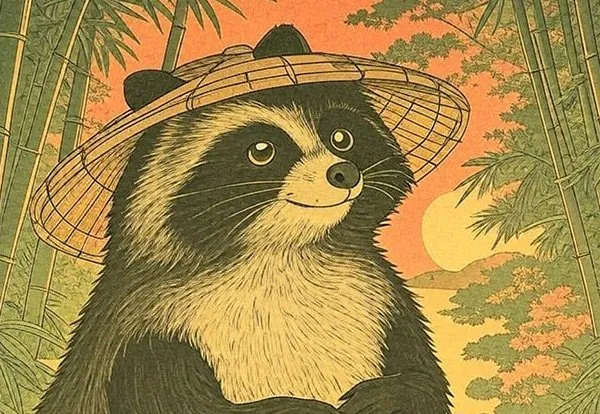 4.
Tanuki
狸
The raccoon dog (狸): a cheerful trickster that can become a person, a teapot or even a whole building. It loves sake and mischief, but its tricks usually end in a laugh rather than harm.
Tanuki について読む →
-
 5.
Bunbuku Chagama
分福茶釜
The famous folktale of a tanuki that turns itself into a tea kettle to repay a poor man’s kindness — and ends up earning him a fortune performing tricks.
Bunbuku Chagama について読む →
-
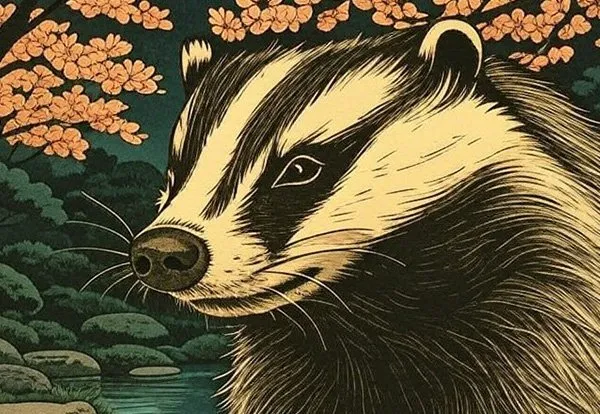 6.
Mujina
貉
The badger (貉), a night-time trickster that takes human form to fool travellers — sometimes as a person with no face at all.
Mujina について読む →
-
 7.
Kawa-uso
川獺
The river otter (川獺): it turns into an attractive young man or woman, imitates human voices and lures people to riverbanks, mostly for the fun of the trick.
Kawa-uso について読む →
-
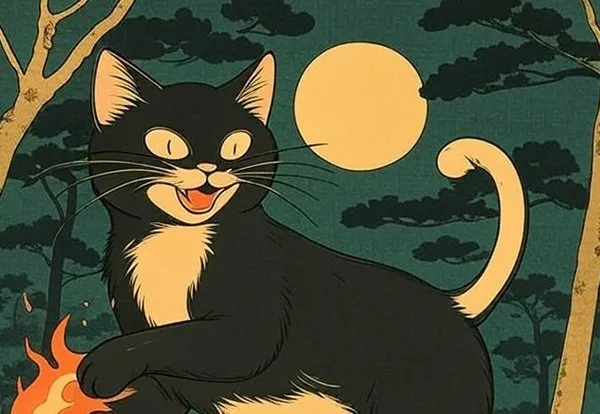 8.
Bakeneko
化け猫
The “changed cat” (化け猫): a pet that has lived too long and learned to talk, walk upright and take a woman’s form — the shapeshifter among Japan’s cats.
Bakeneko について読む →
-
 9.
Jorōgumo
絡新婦
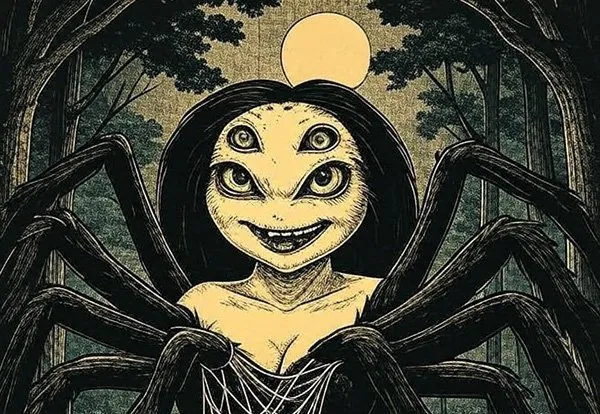
The spider woman (絡新婦): a spider that becomes a beautiful woman to lure men to her lair behind a waterfall or in a cave, then wraps them in silk.
Jorōgumo について読む →
-
 10.
Sazae-oni
栄螺鬼
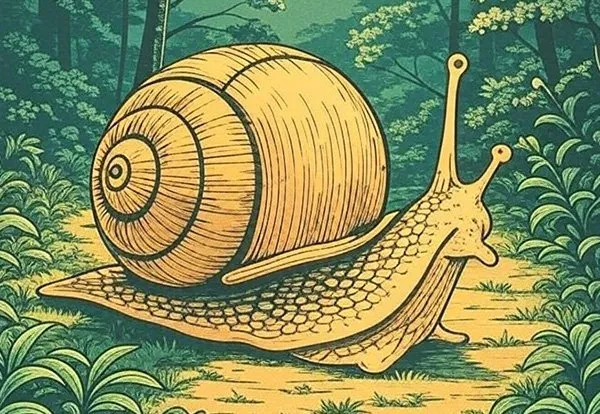
The turban-snail demon (栄螺鬼): a sea snail that appears on the shore as a lovely woman, is taken aboard by sailors — and then shows its true shell-and-demon form.
Sazae-oni について読む →
よくある質問
- Which animals can shapeshift in Japanese folklore?
- The best known are the fox (kitsune) and the raccoon dog (tanuki). Badgers (mujina), otters (kawa-uso), cats (bakeneko), spiders (jorōgumo) and even sea snails (sazae-oni) also take human form in Japanese tales.
- What is the difference between a kitsune and a tanuki?
- The kitsune is elegant and cunning, often appears as a beautiful woman and is linked to the god Inari. The tanuki is a jolly, pot-bellied trickster who loves sake and whose pranks usually end in comedy.
- Why are there fox statues at Japanese shrines?
- Foxes are the messengers of Inari, the god of rice and prosperity, so pairs of stone foxes guard Inari shrines across Japan — most famously at Fushimi Inari Taisha in Kyoto.
- What is a “fox’s wedding”?
- Kitsune no yomeiri, the fox’s wedding, is the Japanese name for rain falling while the sun shines — said to be the moment foxes hold their wedding processions.
日本語を学ぶ
日本語で妖怪を読む
The Japan Shopの読み物・本・学習セット。
-
 Learn Japanese with Yokai
Japanese readers about yokai, with furigana and native audio (JLPT N4 level).
The Japan Shopで見る →
-
 Hikoichi: A Japanese Folktale Reader
Four short tales about the trickster Hikoichi, written for learners of Japanese.
The Japan Shopで見る →
-
 Japanese Culture Bundle
Digital books on Japanese culture, with the vocabulary to go with it.
The Japan Shopで見る →
スポンサーリンク。購入された場合、当サイトが手数料を受け取ることがあります(追加料金はかかりません)。