
Name Meaning
Overview
Shinigami (死神) literally means “death god” in Japanese and refers to spiritual beings that lead or lure people toward death.
- Shi (死) = Death
- Kami (神) = God or spirit
Origin
- Concept introduced during the Edo period under Western influence.
- Blended with traditional beliefs about spirits and ghosts.
- Popularized in kabuki theater and later manga and anime.
Appearance
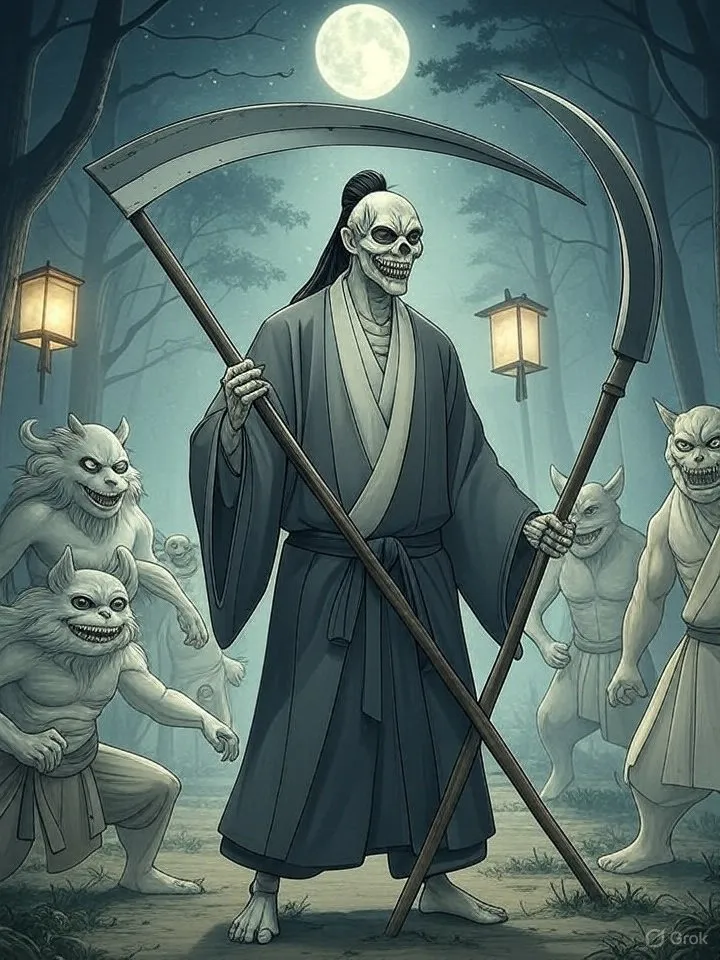
- Depicted as shadowy, hooded figures resembling the Western Grim Reaper.
- Sometimes appears as a mirror image of the deceased person.
- Invisible to most, but felt during final moments.
Behavior & Myths
- Influences thoughts of death or suicide in the living.
- Drawn to places with strong negative energy, like suicide spots or abandoned homes.
- May linger to claim wandering souls or possess vulnerable individuals.
Symbolism
- Embodies inevitability, the passage of life, and fate.
- Also seen as a guide rather than a punisher—one who fulfills the cycle of existence.
- Serves as a reminder of mortality and the unseen forces surrounding death.

挿絵付き昔話
Shinigami の物語

In the autumnal twilight, when the wind whispers secrets through desolate streets, there lived an old woman named O-ku. Her village lay shrouded in mist, its residents bound by tradition and superstition. It was said that on nights like these, the Shinigami walked among them, their presence felt but unseen.
O-ku dwelled alone in her humble abode, surrounded by dusty scrolls and faded tapestries. Her life had been one of quiet devotion, tending to her ailing mother until her passing many years prior. Since then, O-ku's thoughts often strayed to the concept of monrō: the inevitability of fate that awaits us all.
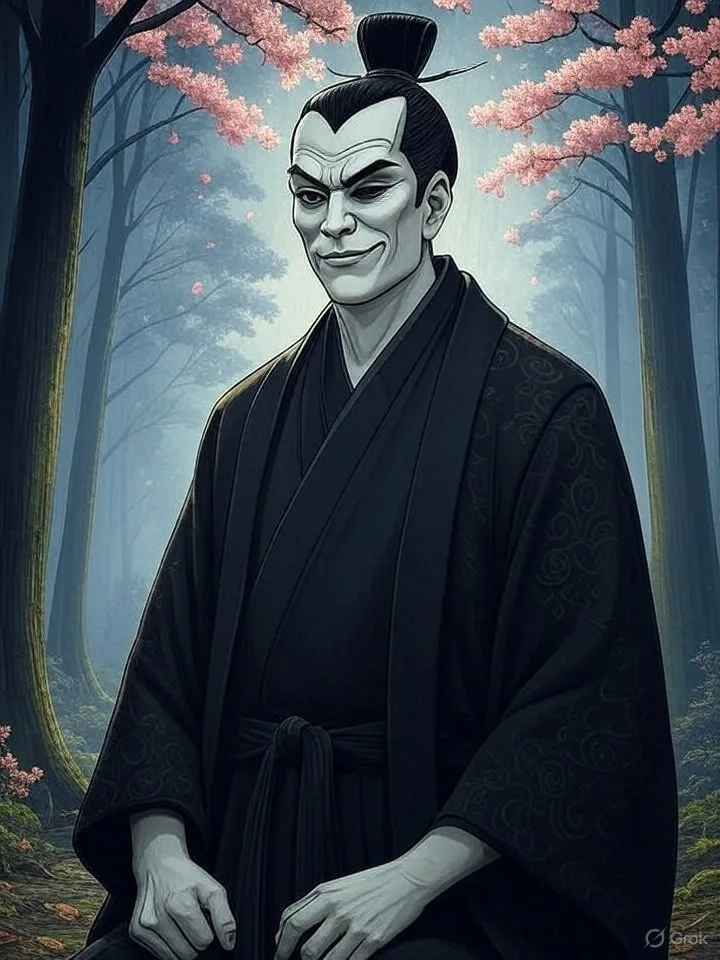
One evening, as the moon dipped below the hills, O-ku sensed an oppressive presence in her home. She lit candles, casting flickering shadows on the walls, and offered a prayer for protection. However, the weight only intensified, like an unseen burden settling upon her shoulders. It was then she felt it – a mirror-like reflection of herself standing beside her.
The figure remained still, yet O-ku detected the faint scent of incense carried on its breath. A shiver ran down her spine as she recognized the unmistakable aura of the Shinigami. This encounter meant one thing: her time was drawing near.
Days passed, and O-ku found herself increasingly drawn to a place on the outskirts of the village – a spot where, rumor had it, numerous souls had abandoned their bodies in despair. The wind howled through these desolate streets like a chorus of restless spirits. As she walked among the crumbling homes, O-ku began to feel an unsettling kinship with those who had gone before her.
The Shinigami's presence followed her, always remaining just beyond perception. It was as if the creature willed O-ku to confront the shadowy realms that existed alongside their own world. With each passing night, she felt herself becoming one with the darkness – a part of the grand tapestry where lives were woven and unwoven.
In this liminal state, O-ku began to sense the Shinigami's true nature: not as an executioner, but as a harbinger of balance and order. Her encounters with the creature became less about fear and more about acceptance – an acknowledgment that her own life was but a strand in the intricate web of existence.
One autumn night, beneath a canopy of flickering candles, O-ku's time finally came. As she closed her eyes, surrounded by the echoes of lives past, the Shinigami appeared beside her once more. This time, it stood not as a mirror image, but as a guardian – a witness to her passing.
In that instant, O-ku understood: death was not an end, but a passage into another realm where lives continued their ebb and flow. As the darkness closed in, she felt no fear, only gratitude for having lived and for the Shinigami's role in guiding her through the veil of mortality. And so, surrounded by the echoes of what had been and what would be, O-ku's spirit slipped into the eternal dance of existence.