

Name Meaning
Overview
Fūjin (風神) translates directly to “Wind God” and is one of the oldest deities in Japanese mythology, often seen unleashing storms and clearing skies with his bag of winds.
- Fū (風) = Wind
- Jin (神) = God or deity
Origin
- Prominent in Shinto and Buddhist cosmology, where he appears as a demonic yet divine figure.
- Often depicted alongside Raijin, the god of thunder and lightning.
- Also has roots in Hindu mythology, where he is similar to the wind god Vayu.
Appearance
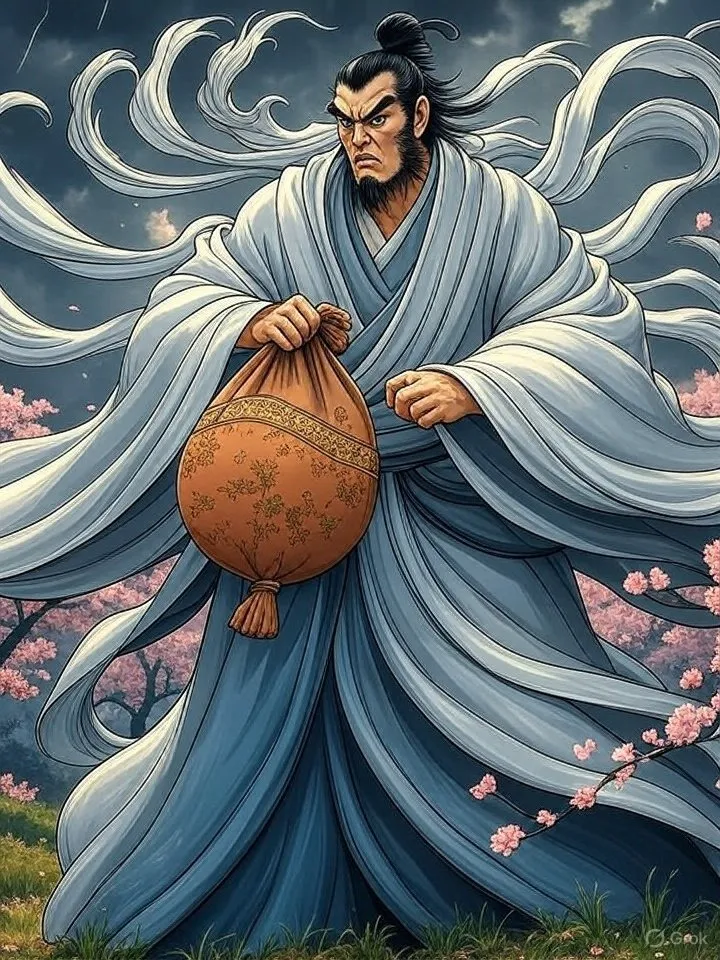
- Usually shown as a muscular, dark-green or blue-skinned demon.
- Carries a large bag or sack over his back filled with powerful winds.
- Wild hair, fangs, and a fierce expression are common features.

Behavior & Myths
- Fūjin uses his wind bag to spread winds across the land, clearing storm clouds or bringing destruction.
- In myth, he helped clear the mist from the world after creation.
- Sometimes causes typhoons or tempests when angered.
Symbolism
- Embodies the raw, untamed forces of nature.
- Seen as both a bringer of life (through air and rain) and a destructive force.
- Honored in festivals and shrines to ensure good weather or appease storms.

挿絵付き昔話
Fūjin の物語

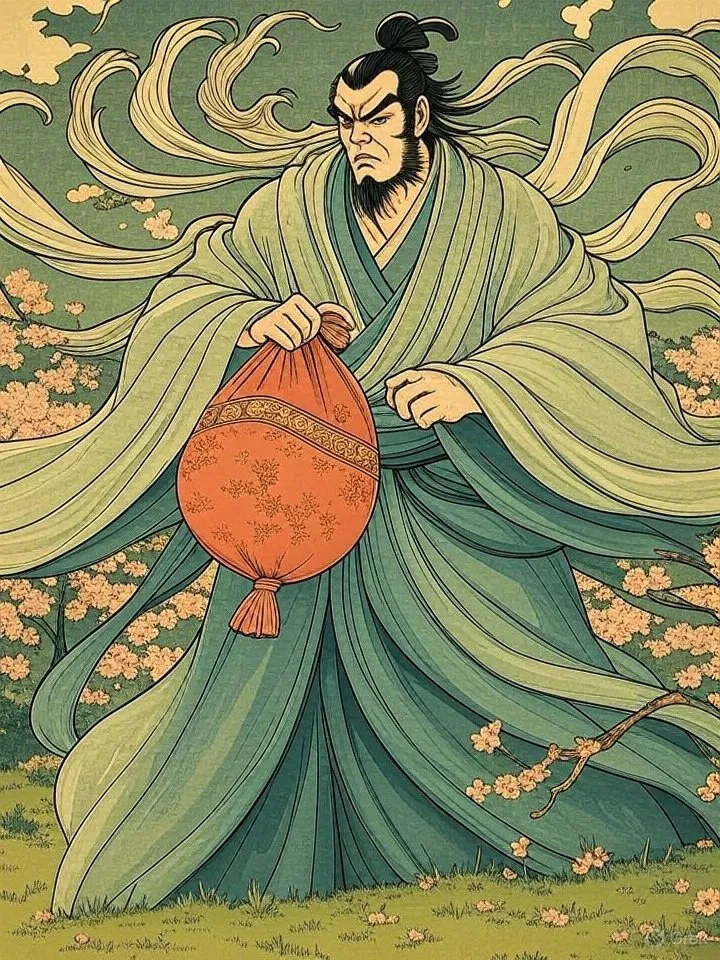
In the time before seasons, when the world was shrouded in mist and stillness, the gods gathered to shape the land. Among them stood Fūjin, the god of wind, his dark-green skin glistening with dew like a freshly watered bamboo grove. His wild hair seemed to writhe like living vines, as if embracing the chaos that swirled around him.
With a mighty roar, Fūjin opened the great bag slung over his shoulder, releasing a gust of air so fierce it threatened to scatter the gathering gods themselves. The other deities watched in awe as the mist began to clear, revealing the first hints of mountains and valleys. Rivers burst forth from the earth, their waters singing with the song of creation.
But Fūjin's work was not yet done. He strode across the world, his feet pounding out a rhythm on the still- forming landscape. As he walked, his bag emptied and refilled itself, spreading winds that sculpted mountains and valleys into being. His breath carried the whispers of old tales, forgotten memories buried beneath the mist.
The other gods watched in reverence as Fūjin's creation grew apace. But one among them, a young god named Tsukuyomi, felt uneasy. Her domain was the night sky, where stars shone bright and constellations whispered secrets to the wind. Yet now, with Fūjin's winds howling across the land, the very rhythm of her universe seemed disrupted.
"Why do your winds rage so?" Tsukuyomi asked Fūjin, her voice like a star bursting into light. "Can you not temper their fury?"
Fūjin looked down at his bag, now almost empty, its contents dissipated by his own unending breath. For an instant, a glimmer of sadness flickered across his face, a hint that even the gods themselves could know sorrow.
"I clear the mist," he said finally, "but I also bring storm and turmoil. It is the price of creation: for every seed sown, there must be a tempest to test its strength."
Tsukuyomi's eyes widened in understanding. She saw now that Fūjin was not merely a destructive force, but a midwife guiding the world into being.
As the last wisps of mist vanished, the world was reborn in all its glory. Mountains towered above valleys; rivers sang their songs of creation. And though Fūjin's winds continued to rage across the land, his heart seemed lighter, his breath tempered by a newfound balance.
From that day on, when farmers prayed for good weather or storm-breakers sought refuge from tempests, they whispered prayers to Fūjin in reverence and awe. For even in chaos, he wove the fabric of their world, an untamed yet compassionate force that brought both life and destruction in equal measure.