
Name Meaning
Overview
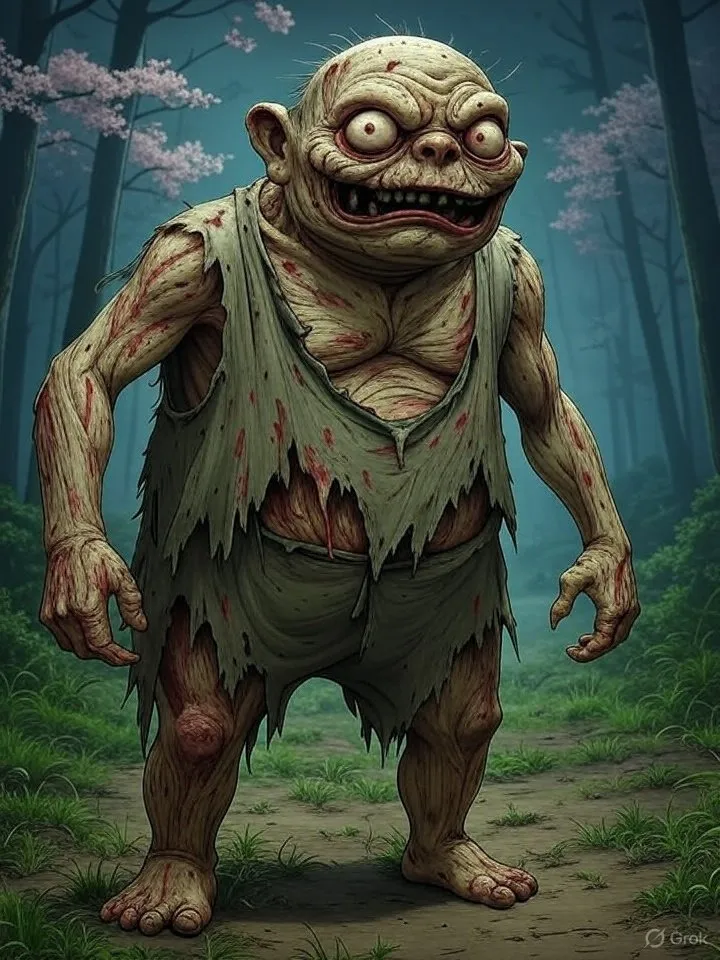
Nuppefuhofu (ぬっぺふほふ) is an odd yokai name believed to mimic a slurred or muttered phrase, matching its blobby, slumped appearance.
Origin
- Appears in Edo period yōkai emaki (illustrated scrolls).
- Associated with deserted temples and abandoned towns.
- May symbolize the fear of decay and loneliness.
Appearance
- Shapeless, humanoid lump of flesh with indistinct features.
- Skin appears melted, sagging or rotten.
- Emits a horrific odor like decaying meat.
Behavior & Myths
- Often wanders aimlessly and silently.
- Usually non-aggressive, but frightening due to appearance and smell.
- Rare legends say it may contain ancient knowledge or healing power in its flesh.
Symbolism
- Represents decay, neglect, and the grotesque hidden in forgotten places.
- Acts as a cautionary tale about physical corruption and isolation.
- Also associated with Buddhist ideas of impermanence and aversion to the flesh.

挿絵付き昔話
Nuppefuhofu の物語

In the depths of winter's chill, when snowdrifts shrouded the forgotten village of Kakure, a lone traveler stumbled upon the crumbling temple of Kiyomi. Weeds burst from its cracked stones, as if seeking to reclaim the place for nature's own purposes. The wind howled through the empty halls, a mournful dirge that echoed through the stillness.
Our traveler, a young monk named Kenji, had wandered into these forsaken lands in search of solace and renewal. For months, he'd tended to his mentor's grave, pouring tears onto its stone pedestal, but now he felt an insatiable longing for solitude and quiet contemplation. Kiyomi Temple beckoned with its ruined beauty, a sanctuary hidden from the world.
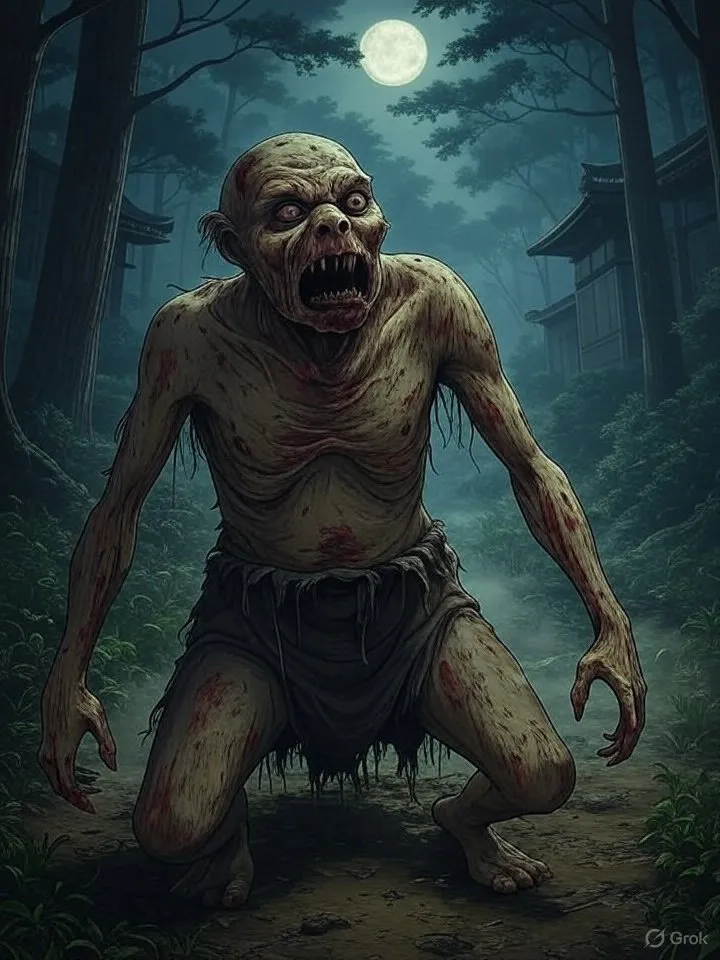
As Kenji ventured deeper into the temple's decaying heart, he chanced upon the Nuppefuhofu. At first, he thought it but a heap of discarded rags, or perhaps a bloated corpse left to rot in the forgotten recesses. But as his eyes adjusted to the dim light, he beheld the unshapely form – a mass of sagging flesh with no discernible features, save for two empty sockets that seemed to stare into Kenji's very soul.
The Nuppefuhofu emitted a stench so pungent it made Kenji's stomach churn. He recoiled, covering his mouth and nose, but his feet seemed rooted to the spot. The creature wandered past him, its pace as slow as the crawling mist that clung to its surface. Its very presence felt like an affront to the sacred.
Yet, in a fleeting moment of introspection, Kenji sensed something within the Nuppefuhofu's decaying mass – an aura of ancient knowledge and forgotten wisdom. The air seemed heavy with secrets, whispers from the temple's crumbling stones. It was as if the creature embodied the impermanence that Buddhist scriptures so eloquently spoke of: the transience of life, the inevitability of decay.
Kenji spent many sleepless nights beside Kiyomi Temple, observing the Nuppefuhofu's aimless wanderings. He came to understand its loneliness – not in a way that evoked sympathy, but rather an acknowledgment of its inherent place within this desolate landscape. In those moments of stillness, Kenji grasped the value of impermanence: how each being, no matter how repulsive or forgotten, contributes to the ever-changing tapestry of existence.
When spring finally brought warmth and life back to Kakure Village, Kenji departed, leaving behind only his written prayers in the temple's crumbling hall. The Nuppefuhofu remained, its presence a haunting reminder of the transience that lay beneath every fleeting moment.