
Name Meaning
Overview
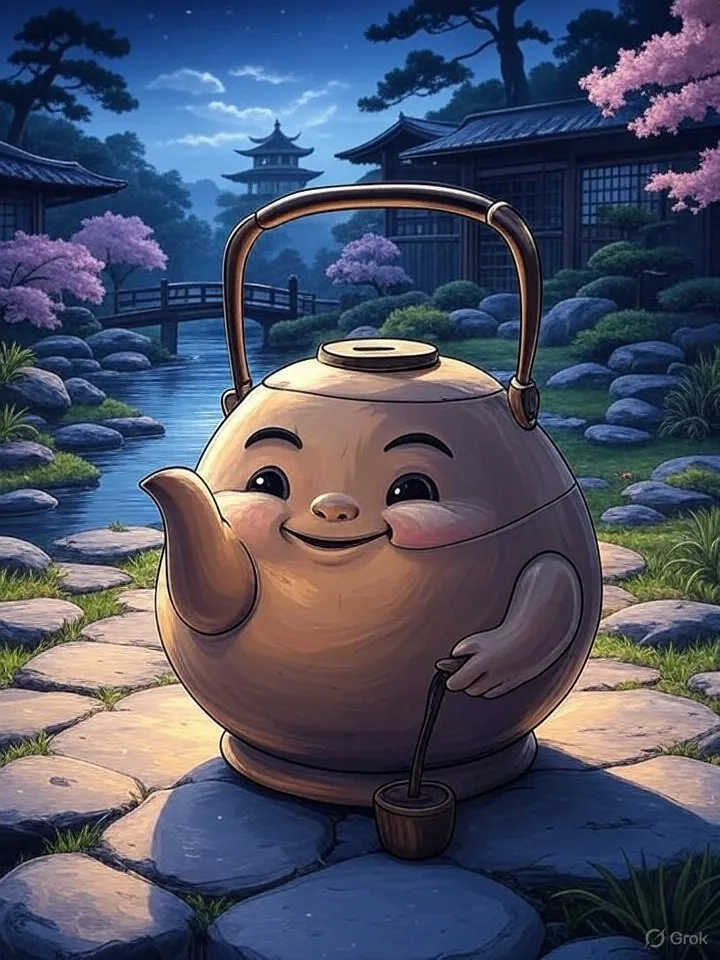
Narikama (鳴釜) translates to “ringing kettle” and is associated with an enchanted cooking pot or kettle that produces mysterious or prophetic sounds.
- Nari (鳴) = Ring or sound
- Kama (釜) = Kettle or cauldron
Origin
- Appears in shrine rituals and local folklore throughout Japan.
- Associated with the divine oracles of the gods, especially in Shinto practices.
- Legends say the kettle’s sound was used for divination or to confirm sacred truths.
Appearance
- Usually appears as a traditional iron kettle or cauldron.
- May glow, rattle, or shake when supernatural forces are nearby.
- Can be imbued with the presence of a deity or spirit.
Behavior & Myths
- Emits a distinct ringing sound, often without being touched.
- Used in rituals to divine fortunes or receive messages from the gods.
- A good omen, especially when its ringing occurs during ceremonies.
Symbolism
- Symbolizes divine communication and spiritual clarity.
- Represents the power of humble household tools in religious contexts.
- A harbinger of good luck and sacred awareness.

挿絵付き昔話
Narikama の物語

In the misty hills of Aizu Province, where the air is crisp and the cherry blossoms bloom in silence, there lived an old Shinto priest named Kaito. For generations, his family had tended to the shrine at Fudo-san, the Mountain of Unwavering Faith. The priest's days were filled with rituals and ceremonies, all centered around communing with the divine.
One autumn evening, as the sun dipped behind the mountains, a strange sound echoed through the forest. At first, it was just a faint humming, like the buzzing of cicadas on a warm summer day. But as the night deepened, the noise grew louder, taking on a rich, resonant tone that seemed to vibrate through every cell in Kaito's body.
He knew at once what it was: the Narikama, the divine kettle, had begun to ring. For centuries, the people of Aizu Province believed that when the Narikama spoke, the gods were whispering secrets to those who listened with an open heart and mind. It was said that during ceremonies, a clear, resonant sound would signal the presence of a deity or spirit, guiding the priest in his rituals.
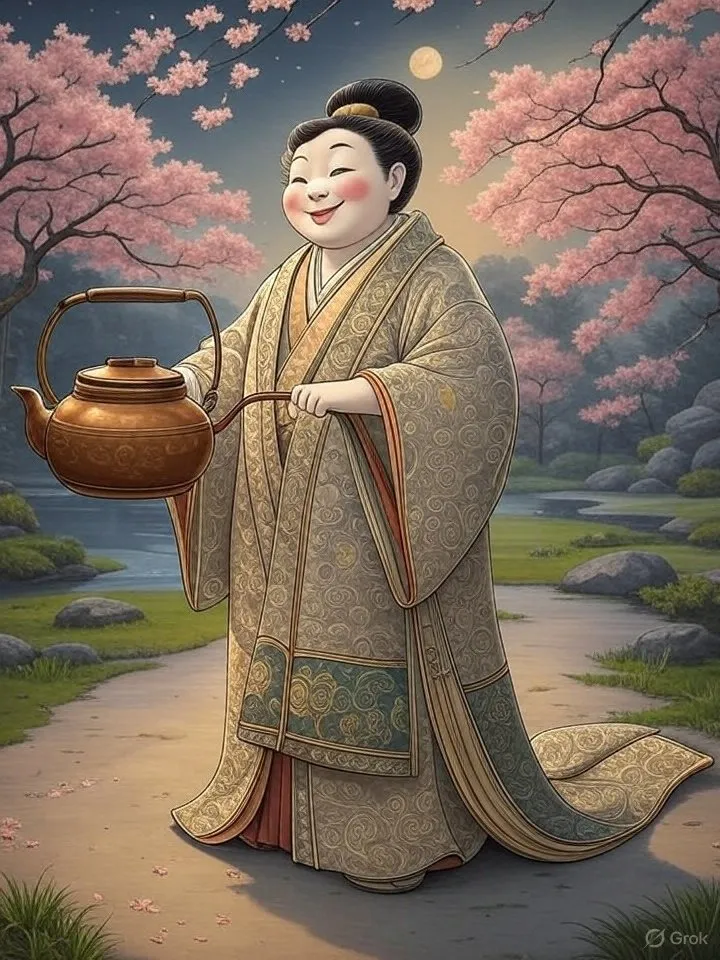
As Kaito hastened toward the shrine, the ringing grew louder still, filling the air with an otherworldly music. The moon had risen high overhead, casting a silver glow on the forest floor. In this mystical light, the old priest saw a figure standing before the Narikama: a young woman in a white kimono, her face serene and peaceful.
"Who are you?" Kaito asked, his voice barely above a whisper.
The woman didn't respond, but instead beckoned him closer to the kettle. As he approached, the ringing ceased, leaving behind an unsettling silence. Kaito felt the weight of the world settle upon him: in this moment, he was not just a priest, but a vessel for the divine.
Without warning, the Narikama began to shake and rattle, its metal body vibrating with a deep, primal energy. The woman reached out, placing her hand on Kaito's shoulder. He felt a surge of power course through his being, as if the gods themselves were speaking through him.
"What is the will of the kami?" Kaito asked aloud, his voice clear and steady.
In response, the Narikama let out a single, piercing ring. It was a sound that seemed to shatter time itself, leaving behind only the present moment. As the reverberations faded away, the old priest felt a strange sense of clarity wash over him: he knew what he must do to guide his people toward spiritual enlightenment.
The woman vanished as suddenly as she appeared, leaving Kaito alone before the Narikama. The ringing had ceased, but its echo still lingered within him, a reminder that sometimes, it is in silence that we hear the whispers of the divine.