
Name Meaning
Overview
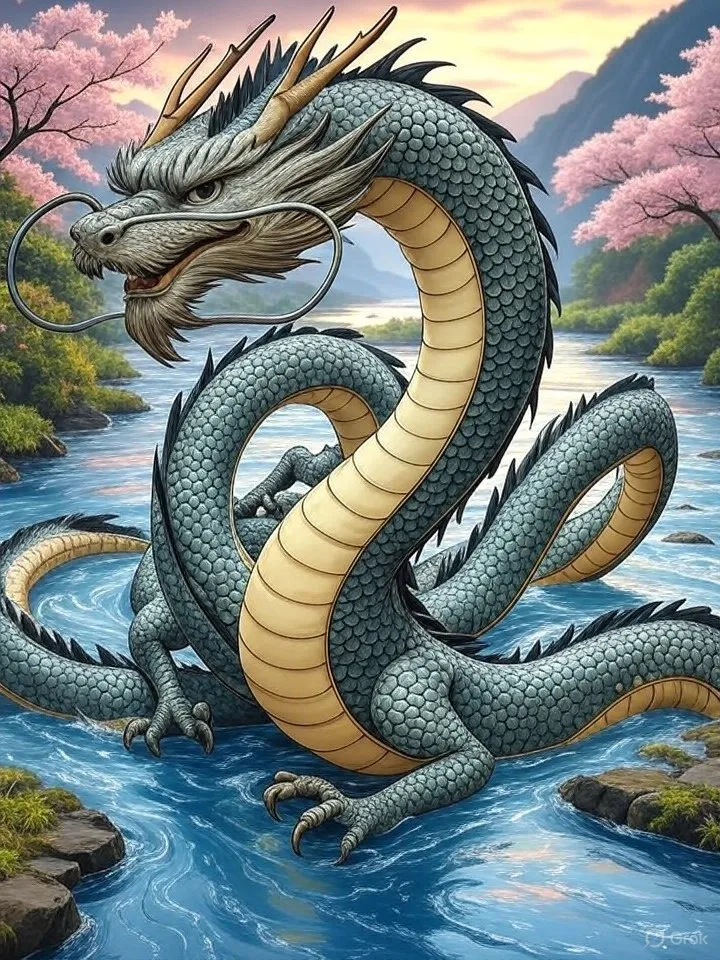
Mizuchi (蛟) is a type of aquatic dragon or serpent in ancient Japanese myths, often associated with rivers and vengeance against disrespect.
- Mizu (水) = water
- Chi (蛟) = a dragon or serpent-like creature
Origin
- Earliest accounts date back to the Nihon Shoki and Kojiki.
- Believed to inhabit rivers, lakes, and underwater caves.
- Linked with floods and drownings as divine punishment.
Appearance
- Serpentine body resembling a dragon or snake.
- Glistening scales and whisker-like tendrils.
- Some tales describe it as having a mane or horned head.
Behavior & Myths
- Known to attack intruders or those polluting sacred waters.
- In one legend, it was slain by the hero Agatamori using a blood sacrifice.
- Appears as a test of purity or spiritual respect.
Symbolism
- Represents the uncontrollable power of nature, especially water.
- Symbolizes cleansing, protection, and wrath against corruption.
- Sometimes worshipped or appeased at river shrines.

挿絵付き昔話
Mizuchi の物語

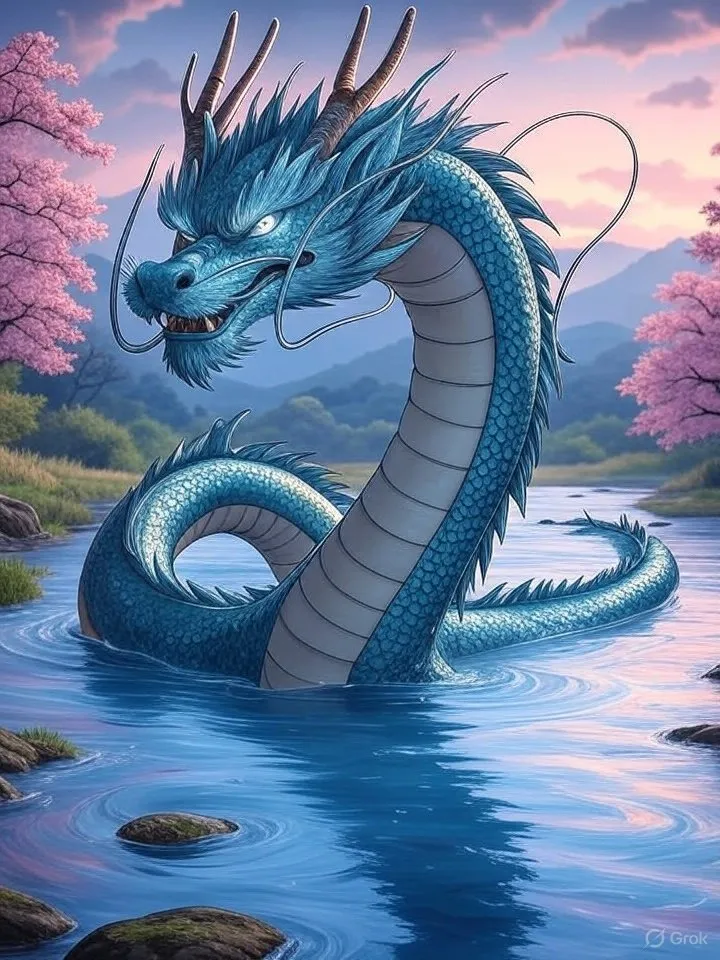
In the depths of Shinano's great river, where willows weep and cedars whisper secrets to the wind, there dwelled a Mizuchi of unparalleled ferocity. Its scales glistened like polished jade, reflecting the moon's gentle light as it slid through the water with silent purpose.
For years, villagers had avoided this stretch of river, sensing an aura of foreboding that seemed to emanate from its depths. They whispered tales of the creature's wrath: how it had dragged a young fisherman into its lair and never returned; how it had shattered a sacred boat in mid-stream, leaving its passengers to drown.
Yet, on one fateful evening, a lone traveler named Emiko found herself drawn to this very place. A humble priestess from the mountains above, she sought to purify her troubled spirit by communing with the Mizuchi's essence. With each step, the air thickened with an unseen presence, as if the creature itself was watching her approach.
As she knelt at the river's edge, Emiko felt a shiver run down her spine. The water seemed to ripple and churn, as if something beneath the surface was stirring. She closed her eyes and offered a prayer: "Oh, noble Mizuchi, guardian of these waters, I come in reverence. Forgive my people's transgressions, that they may learn from your power."
The river stilled, and an unearthly calm descended upon Emiko. When she opened her eyes, the Mizuchi's sinuous form emerged from the depths, its whisker-like tendrils quivering like antennae as it regarded her.
For a long moment, the creature and the priestess locked gazes, their hearts beating in tandem with the river's pulse. Then, in a movement both majestic and terrible, the Mizuchi raised its head above the waterline, revealing eyes that burned with an inner fire.
Emiko felt her spirit tremble within its shell of flesh. She sensed the weight of eons compressed into those flames – the fury of storms, the sorrow of lost souls, the patient endurance of the natural world.
As the Mizuchi's gaze intensified, Emiko understood: this was no mere beast; it was a mirror held up to her own soul. Its wrath was not against humanity, but against the careless disregard for the balance of nature. It was a guardian, not an executioner – and she saw that her people's transgressions had indeed awakened its ire.
The Mizuchi's flames died down, and it slid back into the depths, leaving Emiko shaken yet wiser. She rose to her feet, knowing that her journey henceforth would be one of purification, of aligning human actions with the harmony of the land. And as she departed, she felt a new respect for the Mizuchi's majesty – a reverence born not from fear, but from understanding.