
Name Meaning
Overview
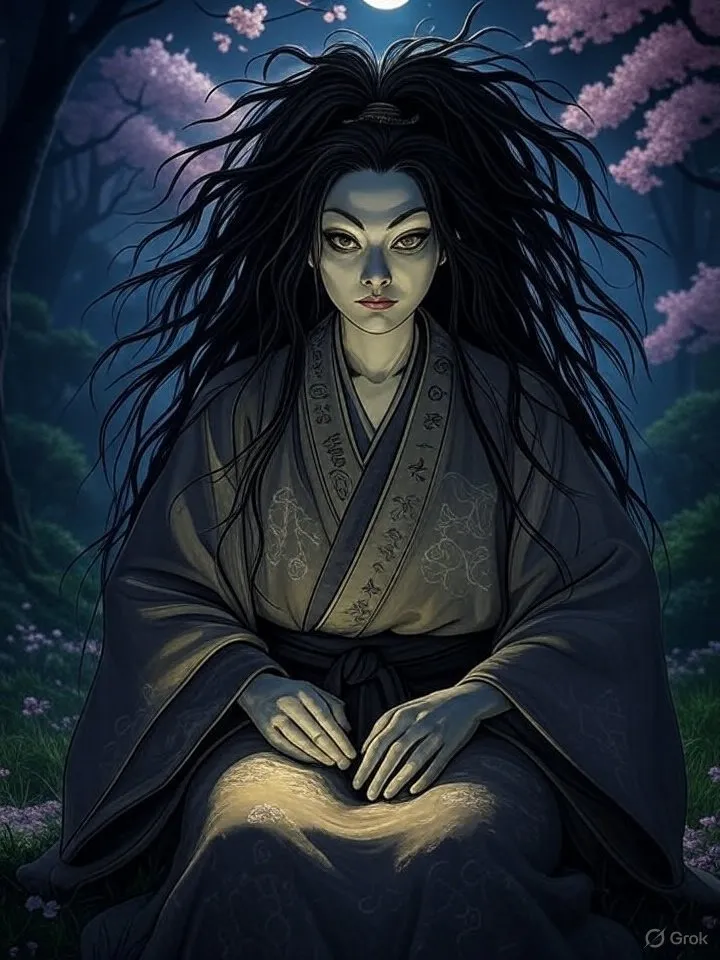
Kijo (鬼女) literally means "demon woman" or "ogress" in Japanese. It refers to a female figure who has transformed into a monstrous being.
- Ki (鬼) = demon or ogre
- Jo (女) = woman
Origin
- Rooted in classical literature and Noh theater.
- Often portrayed as tragic women consumed by negative emotions.
- Appear in regional legends across Japan, particularly in Kyoto and Nara.
Appearance
- Horrifying, with long wild hair, sharp teeth, and claws.
- Sometimes depicted in tattered robes, covered in blood or shadowy aura.
- Retain some feminine features, often linked with seduction or grief.
Behavior & Myths
- Driven by jealousy, betrayal, or unfulfilled love.
- Can haunt temples, mountains, or former homes.
- Examples include the story of Hashihime of Uji, who transformed into a demon through ritual magic.
Symbolism
- Represents the darker side of human emotion and transformation.
- Embodies sorrow, vengeance, and inner turmoil.
- Serves as cautionary figures in morality tales.

挿絵付き昔話
Kijo の物語

In the misty mountains that shrouded the old village of Kiyomizu, there lived a young woman named Emiko. She was as lovely as a cherry blossom in full bloom, with skin as pale as snow and hair as black as the night sky. But beneath her gentle smile, a cauldron of sorrow seethed within her.
Emiko's heart had once been pure as spring water, but it turned to bitter gall when her lover, Taro, abandoned her for a life in Edo with his wealthy family. The cruel winds of fate whispered secrets of their past love in Emiko's ear, but she dared not speak the words aloud, lest they bring shame upon herself and her family.
One fateful night, as the autumn moon hung low in the sky, Emiko wandered into the sacred forest that lay beyond Kiyomizu. Her feet led her to a clearing where the ancient ones whispered secrets of old. There, amidst the twisted roots of an oak tree, she chanced upon a mysterious tome bound in black silk.
The book was said to hold the power to heal the broken-hearted and bring peace to the troubled soul. Its words dripped with honeyed promises, promising that love could conquer all, even death itself. Ensnared by its siren's song, Emiko opened the cover and let its dark magic seep into her veins.
As she read on, the shadows deepened around her, and Emiko's body began to twist and contort like a living vine. Her skin grew gray as ash, and her hair burst forth in wild tangles that seemed to writhe of their own accord. The wind howled through the forest, carrying whispers of the damned.
When dawn broke over Kiyomizu, the villagers found Emiko transformed into a creature with claws like a demon's and teeth sharp enough to pierce steel. Her eyes still held the faint glimmer of her humanity, but they were now pools of darkness that seemed to draw in all who dared approach.
The people fled from their homes, terrified by the apparition that haunted the forest's edge. They whispered tales of Emiko's cursed form, saying she stalked the mountains, driven by an unquenchable thirst for revenge against those who had wronged her in life.
Years passed, and the legend grew: the Kijo of Kiyomizu, a creature born from human sorrow and transformed by dark magic. They said that on certain autumn nights, when the moon hung low and the wind carried whispers of old love, Emiko's spirit would rise anew, seeking justice for the heart she lost so many years ago.
In the silence of the mountains, Emiko's ghostly form still walks, a reminder to all who wander those misty slopes that sorrow can become a monster if left unchecked. Her legend has become one with the forest itself, a testament to the darkness that lies within every human heart, waiting to be awakened by the winds of fate.