
Name Meaning
Overview
Kashanbō (かしゃんぼう) is a name for a mountain-dwelling variant of the kappa that emerges in certain regions of Japan during wintertime.
Origin
- Reported in Japanese rural legends, especially in colder mountain regions.
- Seen as a seasonal form of the kappa that avoids the freezing waters of winter.
- Linked to folk tales about strange wintertime visitors or noises in the mountains.
Appearance
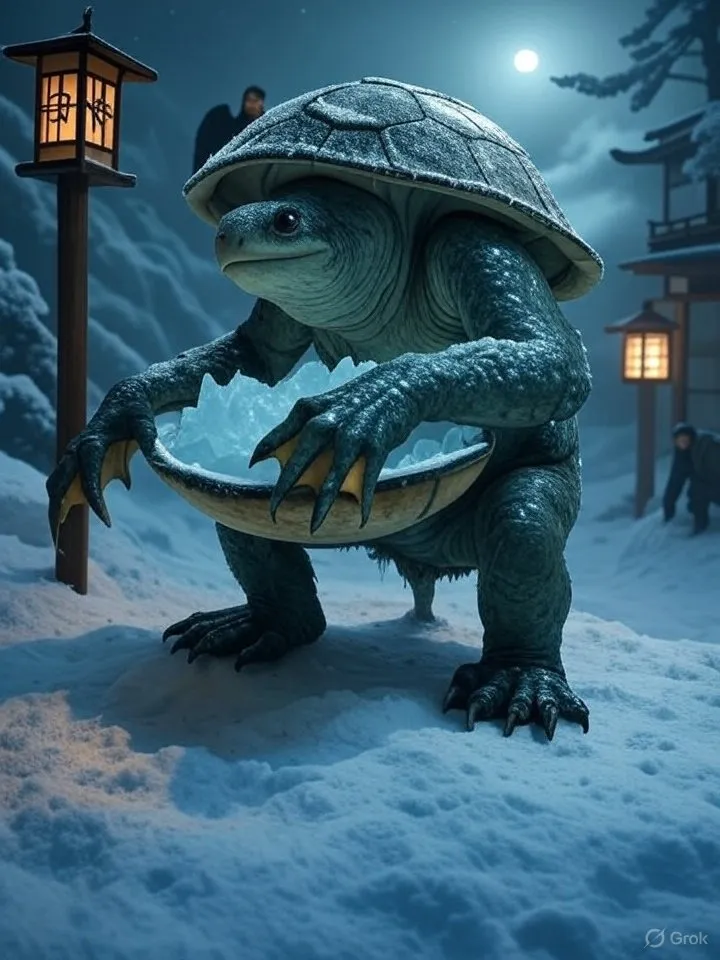
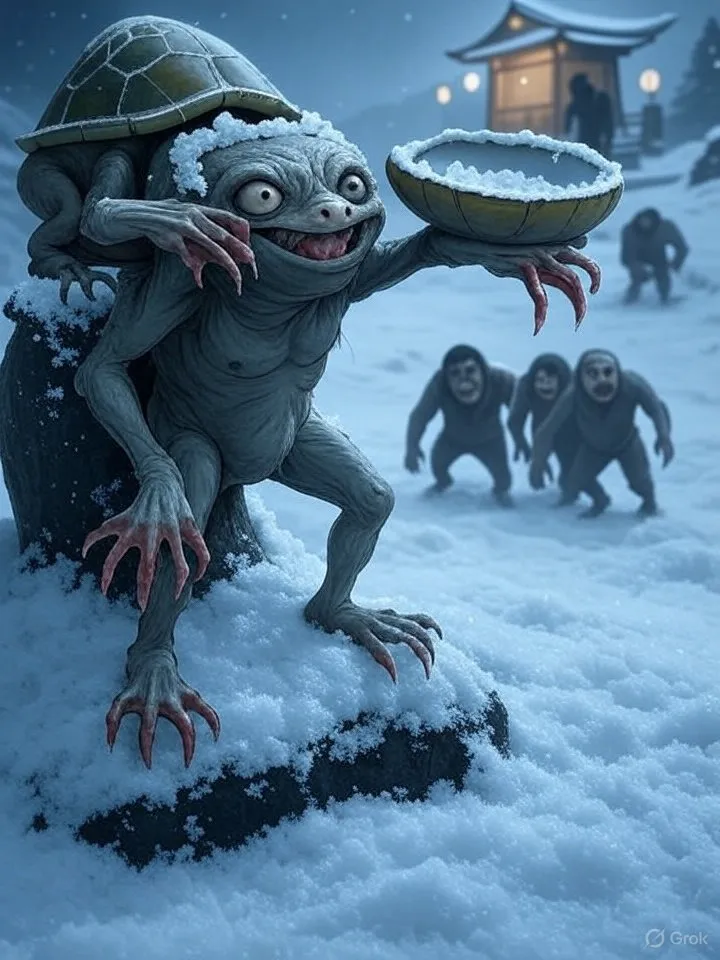
- Resembles a kappa but dressed in makeshift winter clothing or fur.
- May have a partially frozen or covered water dish on its head.
- Sometimes depicted with snow-dusted features and pale skin.
Behavior & Myths
- Climb into the mountains to hibernate or forage during winter.
- May cause mischief for hunters and mountain villagers.
- Legends describe them knocking on doors or making strange noises at night.
Symbolism
- Represents seasonal change and nature’s adaptability.
- A fusion of kappa folklore with mountain kami traditions.
- Seen as an omen of unusual weather or warnings from the mountains.

挿絵付き昔話
Kashanbō の物語

In the depths of winter, when snowflakes danced in the village's streets and fireplace smoke swirled in the air, rumors began to spread about strange happenings on the mountain peaks. It was said that the kashanbō had descended from their icy strongholds, seeking warmer climes and sustenance for the lean months ahead.
Old Man Matsumoto, a veteran hunter of these mountains, scoffed at such tales. "Folks are just spooking themselves," he'd say, his eyes crinkling with amusement as he sipped tea in the village inn. Yet, on certain nights, when the wind howled like a chorus of yūrei, Matsumoto couldn't shake off the feeling that something was amiss.
One evening, while out checking his traps, he caught a glimpse of a figure – or rather, the outline of one – trudging through the knee-deep snow. The moon was new, and the only light came from a scattering of stars above. As Matsumoto watched, transfixed, the creature paused beneath a wispy birch tree, its makeshift coat glistening in the faint starlight.
For an instant, their eyes met – the kashanbō's were like dark pools amidst the snow's gleam. Matsumoto felt a shiver run down his spine; it was as if the creature's gaze had pierced the very marrow of his bones. He froze, unsure whether to flee or stand his ground.
The kashanbō, seemingly aware of Matsumoto's presence, turned its head and let out a low, rumbling chuckle. The sound sent shivers coursing down the hunter's spine; it was as if the very mountains themselves were laughing at his foolishness. The creature ambled closer, its footsteps quiet in the snow.
Matsumoto noticed that the kashanbō carried a wooden bucket slung over one shoulder – its rim was covered with a thin layer of ice. A water dish on its head, usually a distinguishing feature of the kappa, now seemed fragile and vulnerable to the harsh winter air. It was as if this visitor from the mountains had adapted to the season's demands, donning makeshift clothes to brave the cold.
"Why do you come here?" Matsumoto asked, his voice barely above a whisper. The kashanbō cocked its head, regarding him with an almost curious expression. For a moment, it seemed as if the creature was about to speak, but instead, it let out another low chuckle and vanished into the darkness.
The next morning, Matsumoto shared his tale at the village inn, but few believed him – the stories of kashanbō were after all mere whispers from the mountains. However, when the wind picked up in the following days, and snowdrifts deepened, villagers began to notice strange occurrences: water sources frozen solid, and strange, unexplained noises echoing through the valleys at night.
Old Man Matsumoto smiled knowingly as he added another log to his hearthfire. The kashanbō had come to warn them of changing seasons – a message from the mountains themselves, reminding them that nature's adaptability was as much a part of the world as their own lives within it.