
Name Meaning
Overview
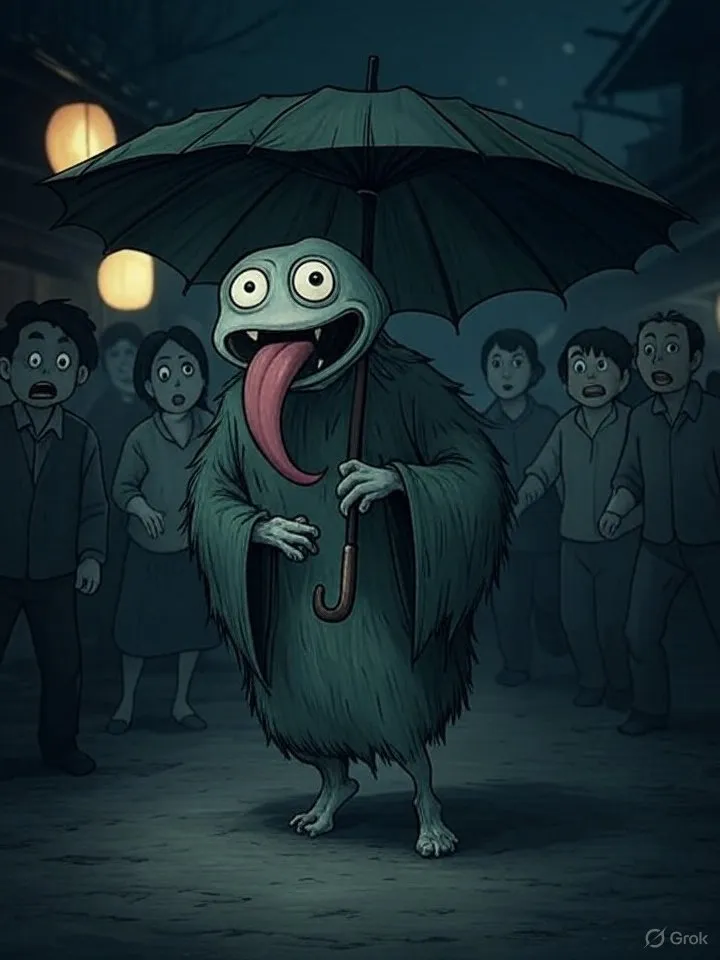
Kasa-obake (傘お化け) means “umbrella ghost” or “umbrella monster.” It is one of the most iconic tsukumogami — everyday items that gain life after a hundred years.
- Kasa (傘) = umbrella
- Obake (お化け) = ghost or monster
Origin
- Part of the tsukumogami tradition in Japanese folklore.
- Often used in children’s tales or as humorous depictions of yokai.
- First appeared widely in Edo-period prints and theater.
Appearance
- Usually depicted as a traditional paper umbrella with one large eye.
- Hops on a single leg, often with a sandal or foot.
- Features a long tongue sticking out from beneath the canopy.
Behavior & Myths
- More mischievous than malicious — startles people or plays pranks.
- Rarely featured in serious ghost stories.
- Often seen in yokai parades or as a comic relief character.
Symbolism
- Represents forgotten or abandoned household items gaining spirit.
- A reminder to respect and care for personal belongings.
- Common in festivals and yokai-themed decorations.

挿絵付き昔話
Kasa-obake の物語

In the village of Shinoda, where cherry blossoms bloomed in the misty dawn, there lived an old man named Kaito. He was known for his kindness and love of tales, often sharing stories of yokai and supernatural creatures with the children of the village.
One evening, as the sun set over the thatched roofs, Kaito stumbled upon a small, forgotten umbrella in the attic of his family's old house. It had been there for years, left behind by his mother when she passed away. He picked it up, blowing off the dust, and felt an unusual presence within its worn fabric.
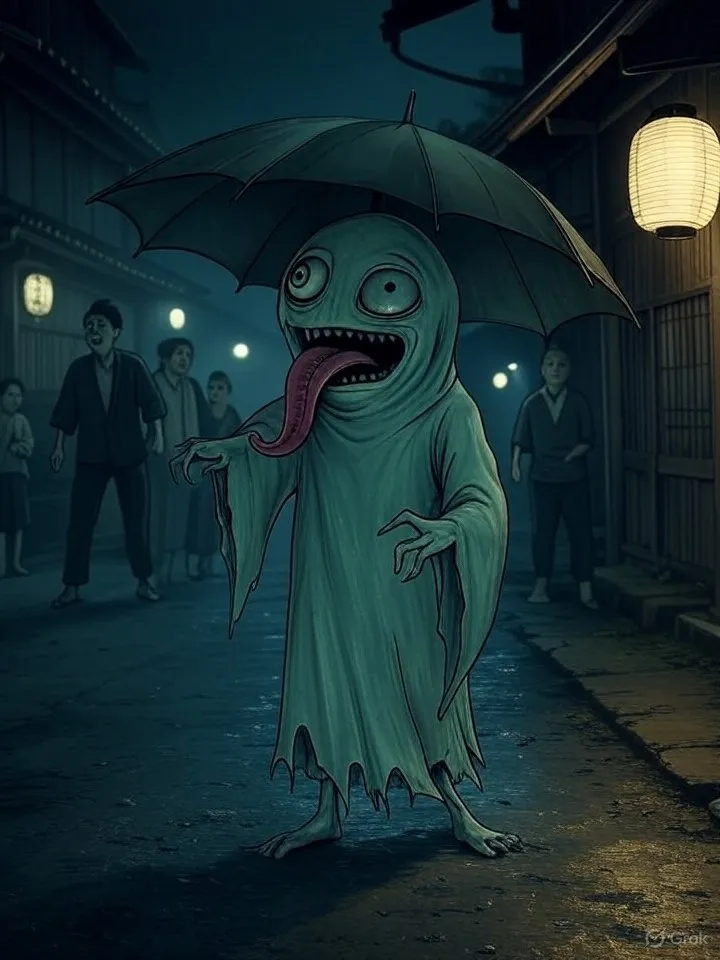
As he turned to leave, the umbrella sprang open with a faint creak, and Kaito gasped at the sight of its lone eye gazing back at him. A long tongue slipped out from beneath its canopy, flicking lazily against the air. Startled, Kaito stumbled backward, and the umbrella began to hop on one leg, its sandal slapping against the wooden floorboards.
Kaito watched in wonder as the kasa-obake danced before him, its movements awkward yet endearing. He recalled stories of these mischievous spirits, born from forgotten household items, now animated with a life of their own. The villagers would say they appeared during festivals and parades, bringing laughter and joy to those who beheld them.
The kasa-obake hopped closer, its eye fixed on Kaito's face. He felt no fear, only a sense of curiosity and playfulness. Without thinking, he picked up his flute from the nearby table and began to play a lively tune. The kasa-obake responded by bobbing its umbrella and tapping its sandal in time.
The old man laughed at the absurd scene unfolding before him, feeling as though his mother's spirit had awakened within the abandoned umbrella. Together, they danced through the evening, the music weaving a spell that drew in the other villagers from their homes and into the street. Children chased after the kasa-obake, attempting to catch its fluttering tongue.
As night deepened, Kaito gently closed the umbrella's canopy, and the kasa-obake settled at his feet. He knew it had come to stay with him, a reminder of his mother's love and a symbol of the importance of respecting household belongings. In return for its antics, he promised the kasa-obake that their home would never be without warmth or laughter.
And so, from that day on, the villagers looked upon Kaito's house as a beacon of joy, with the mischievous kasa-obake often seen hopping about its porch, its eye twinkling like a star in the evening sky. Its presence served as a gentle reminder to cherish the things left behind and to bring laughter into the lives of those around us.
In the mornings that followed, Kaito's flute would carry the sweet melodies of the kasa-obake's antics through the village, entrancing all who listened with its playful rhythm and whimsical tale of a forgotten umbrella, now imbued with life and spirit.