
Name Meaning
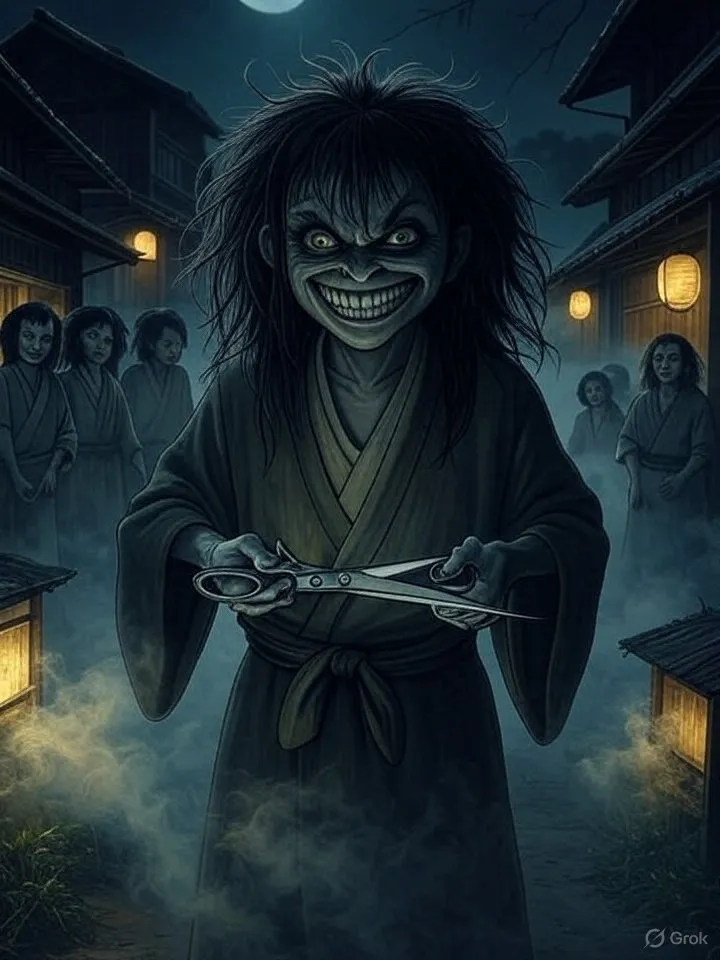
Kamikiri (髪切り) translates directly to "hair cutter," aptly naming this yokai after its unusual behavior.
- Kami (髪) = hair
- Kiri (切り) = to cut
Origin
- Reported in Edo-period Japan, especially in urban areas.
- Associated with sudden unexplained hair loss or hair being cut without consent.
Appearance
- Often depicted with long pincers or scissors for hands.
- Small and shadowy, capable of moving undetected.
- Sometimes said to resemble an insect or small humanoid yokai.
Behavior & Myths
- Targets brides or well-dressed individuals, especially at night.
- Leaves no pain, only the shock of suddenly shorn hair.
- May act out of mischief, jealousy, or moral judgment.
Symbolism
- Symbolizes social shame, vanity, and the unpredictability of the supernatural.
- Acts as a warning to those too prideful in appearance.

挿絵付き昔話
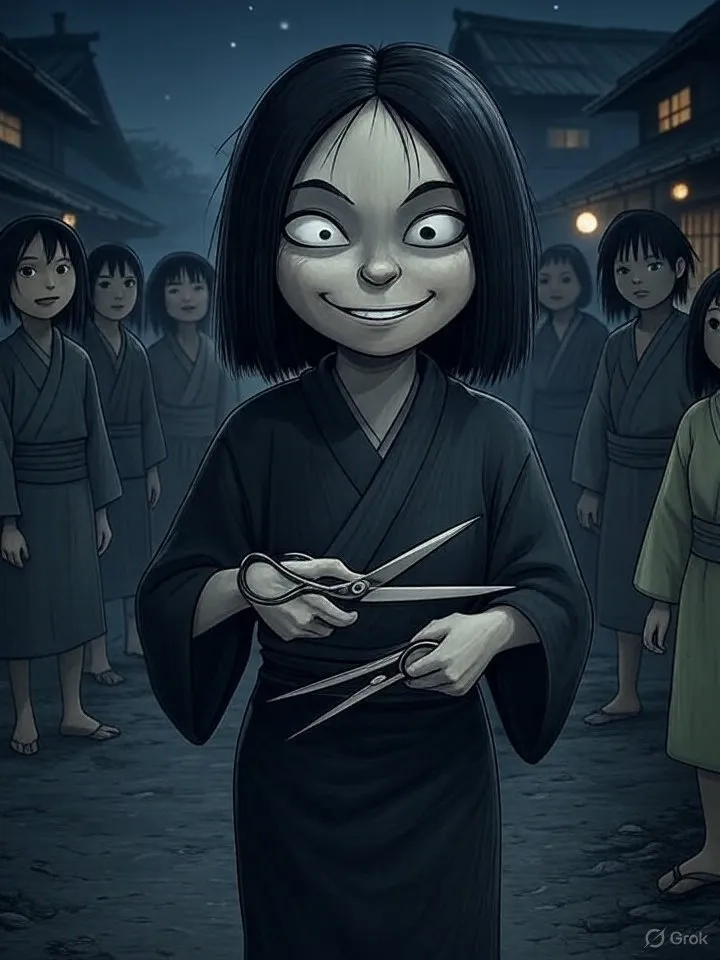
Kamikiri の物語

In the lantern-lit streets of Edo's pleasure quarter, where geishas with kimonos as red as cherry blossoms strolled under the gaze of admirers, there lived a young bride named O-Sumi. Her hair was as black as the night sky and flowed down her back like a waterfall. The people whispered about her beauty, saying she had been blessed by the gods themselves.
One evening, while O-Sumi's husband was out playing go with friends at a nearby teahouse, the Kamikiri stirred from its slumber. It emerged from the shadows like a tiny shadow within a shadow, its pincers whispering softly as it scuttled across the veranda of O-Sumi's home.
The Kamikiri watched as O-Sumi sat on her pillow, combing out her long hair in front of a mirror. The moonlight streaming through the windows highlighted the delicate folds of her sleeves and the cherry blossom pattern embroidered on her kimono. Her husband had brought back this very fabric from his travels to Ueno's famous flower markets.
The Kamikiri's scissors seemed to tingle with excitement as it observed O-Sumi's vanity. It was said that this yokai delighted in cutting the hair of those who prized appearance above all else, leaving them shorn and ashamed. Yet, on this particular night, its pincers felt a pang of sorrow.
As the Kamikiri crept closer, O-Sumi paused mid-comb, lost in thought. She spoke to herself, though her voice was barely audible, about the weight of being a beautiful wife. The Kamikiri's ears, like delicate flower petals, caught the words and understood the true nature of this young bride.
Moved by compassion, or perhaps mischievousness, the Kamikiri decided not to cut O-Sumi's hair. Instead, it nipped off a single strand, leaving it on her pillow as if in warning. The next morning, when O-Sumi discovered the strand, she wept for all the days she had wasted worrying about her appearance.
From that night forward, O-Sumi's beauty remained untouched by scissors or pincers, but it lost its hold on her heart. She began to see the world through new eyes, finding joy in simple things: a spring breeze rustling cherry blossoms, the soft glow of lanterns, and the quiet companionship of her husband.
The Kamikiri watched over O-Sumi from the shadows, its scissors whispering softly as it disappeared into the night, leaving behind only a hint of the supernatural's mysterious presence. In the silence, O-Sumi smiled, knowing that true beauty lay not in outward appearance, but within one's own heart.