
Name Meaning
Overview
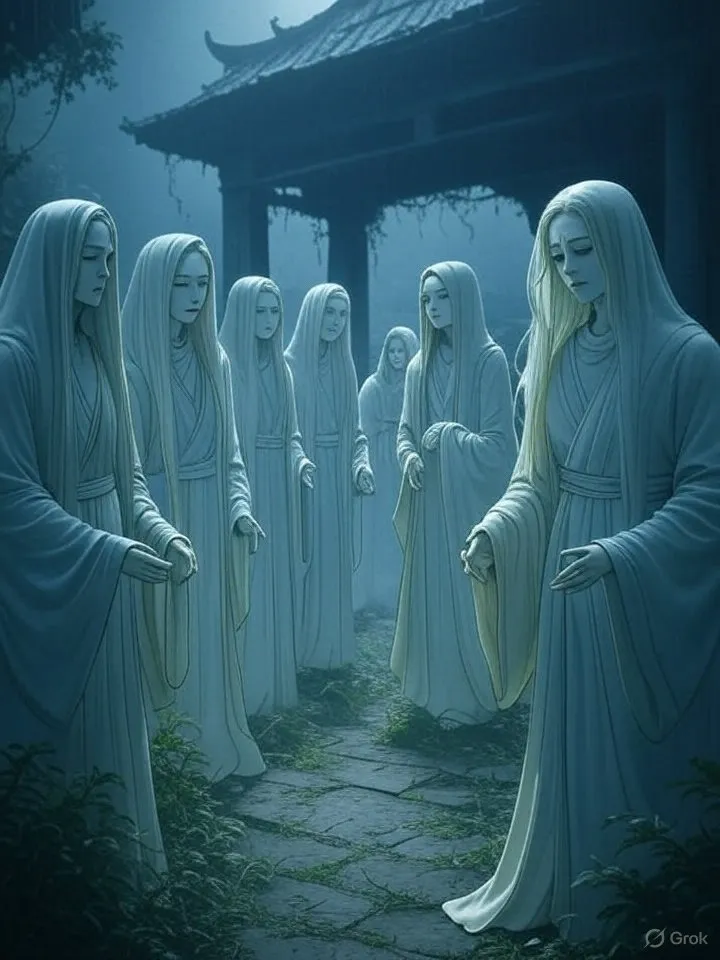
Jibakurei (地縛霊) refers to a spirit that is “bound to the earth.” These are ghosts stuck in a specific location, unable to move on due to trauma, regret, or unfinished business.
- Ji (地) = ground / earth
- Baku (縛) = bind
- Rei (霊) = spirit / ghost
Origin
- Commonly found in Buddhist and folk beliefs throughout Japan.
- Frequently tied to murder scenes, suicides, or tragic events.
- Stories often focus on haunted hospitals, schools, or temples.
Appearance
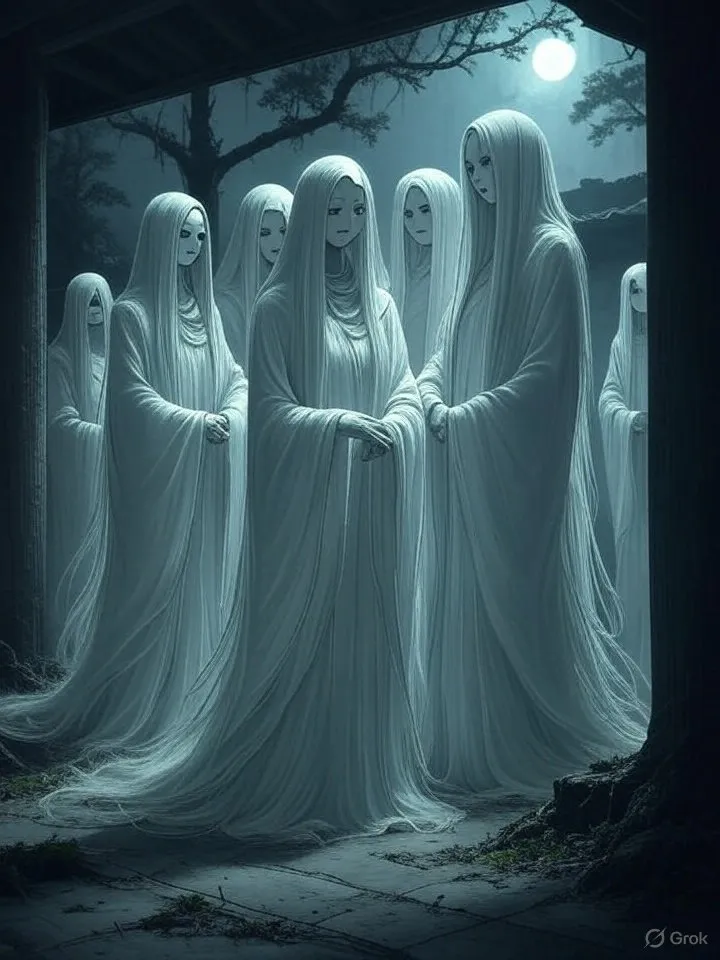
- Usually depicted in pale, traditional funeral garb with a sorrowful or angry expression.
- Some manifest as shadows, floating figures, or ghostly lights.

Behavior & Myths
- They appear repeatedly at the same location, often reenacting moments from their death.
- Can become aggressive if their presence is ignored or their pain is mocked.
- Exorcisms or religious rites may help release them from their bind.
Symbolism
- Symbolizes the weight of unresolved emotion and spiritual unrest.
- A warning to respect the dead and sacred spaces.
- Often used in horror stories to explore trauma and memory.
挿絵付き昔話
Jibakurei の物語

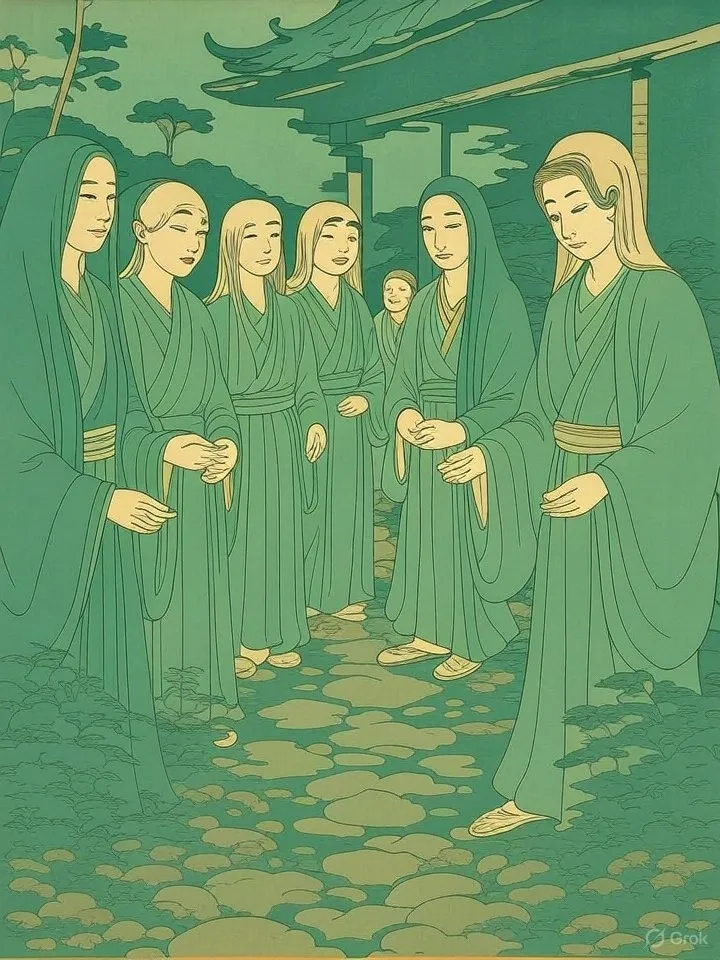
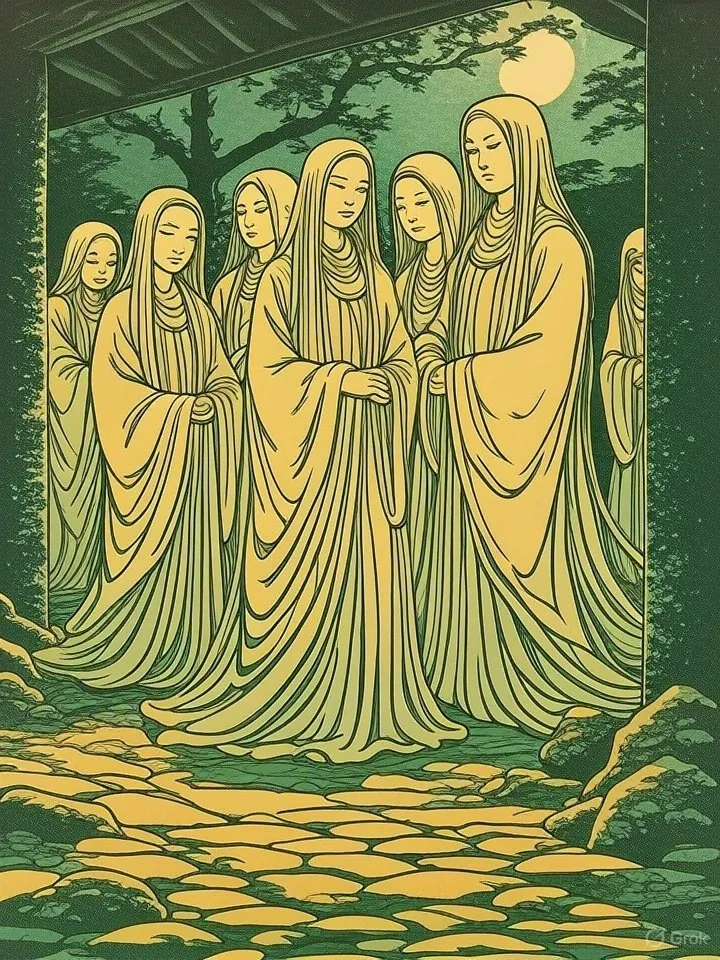
In the depths of autumn's haze, when sunlight filtered through cherry blossoms like bloodstained fingers, a hospital on the outskirts of town whispered tales of a Jibakurei.
Kazue, a young nun, was tasked with ministering to the dying and guiding their souls into the afterlife. But one spirit refused to be set free: a woman named Otsuru, whose fate had become inextricably tied to the hospital's dark past.
Years ago, Otsuru's husband, a soldier, had perished on the battlefield, leaving her heartbroken and alone. Seeking solace, she had wandered into these very halls, where doctors and nurses would later attest that they heard a soft whispering in the night, a gentle lullaby echoing down corridors.
As Kazue tended to patients by day, Otsuru's presence began to manifest at dusk: a fleeting shadow, a whispered melody on the wind. The nun, sensing the Jibakurei's anguish, offered prayers and lit incense to calm the restless spirit. But Otsuru would not be still.
One evening, as Kazue prepared for the night's vigil, she stumbled upon an old logbook hidden within the hospital's dusty archives. The entries told of Otsuru's repeated visits, her desperate attempts to reconnect with a love lost in battle. In the final entry, a doctor's scrawled handwriting conveyed a terrible truth: the soldier who had died was not Otsuru's husband.
The revelation shook Kazue to her core. As she poured over the logbook, Otsuru began to make her presence known more forcefully – whispers turned to screams, shadows solidified into spectral apparitions. It seemed the Jibakurei's pain would not be contained.
Kazue spent the night in fervent prayer, appealing to Otsuru's spirit for peace and release. But as morning broke, she discovered a new message scrawled on the logbook's final page: "I will wait... here... until they tell me who I am."
With a heavy heart, Kazue realized that Otsuru's fate was not one of sorrow alone, but also of identity lost in a sea of tragedy. The nun retreated to the hospital's chapel, where she spent days meditating on the Jibakurei's plight. Only when the autumn winds had died down, and cherry blossoms dropped their final petals, did Otsuru finally release her hold.
As Kazue watched the spirit vanish into a ray of sunlight, she understood that some wounds – like those inflicted by time and deceit – might take years to heal. But with compassion and truth, even the most sorrowful Jibakurei could find solace and peace, their restless spirits finally set free from the world's sorrows.