
Name Meaning
Overview
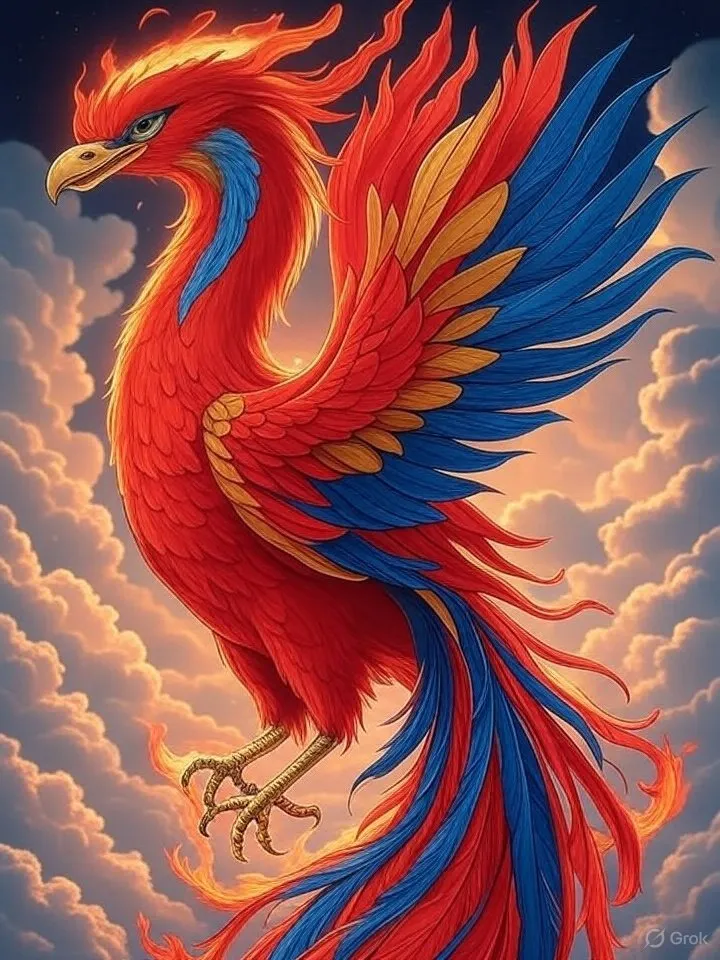
Hō-ō (鳳凰) is the Japanese name for the phoenix or fenghuang—a mythological bird known throughout East Asia. It symbolizes peace, righteousness, and the harmony of yin and yang.
- Hō (鳳) = male phoenix
- Ō (凰) = female phoenix
Origin
- Originates from ancient Chinese mythology as the fenghuang.
- Introduced to Japan where it became an imperial symbol, appearing on temples, clothing, and art.
- Often paired with the dragon to represent balance and the imperial couple.
Appearance
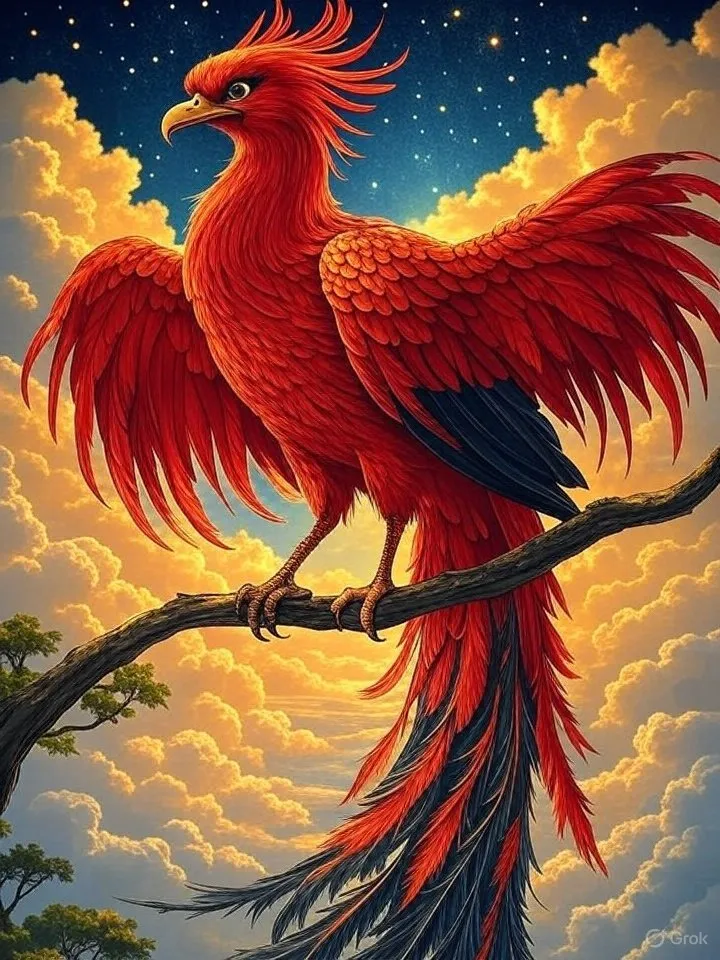
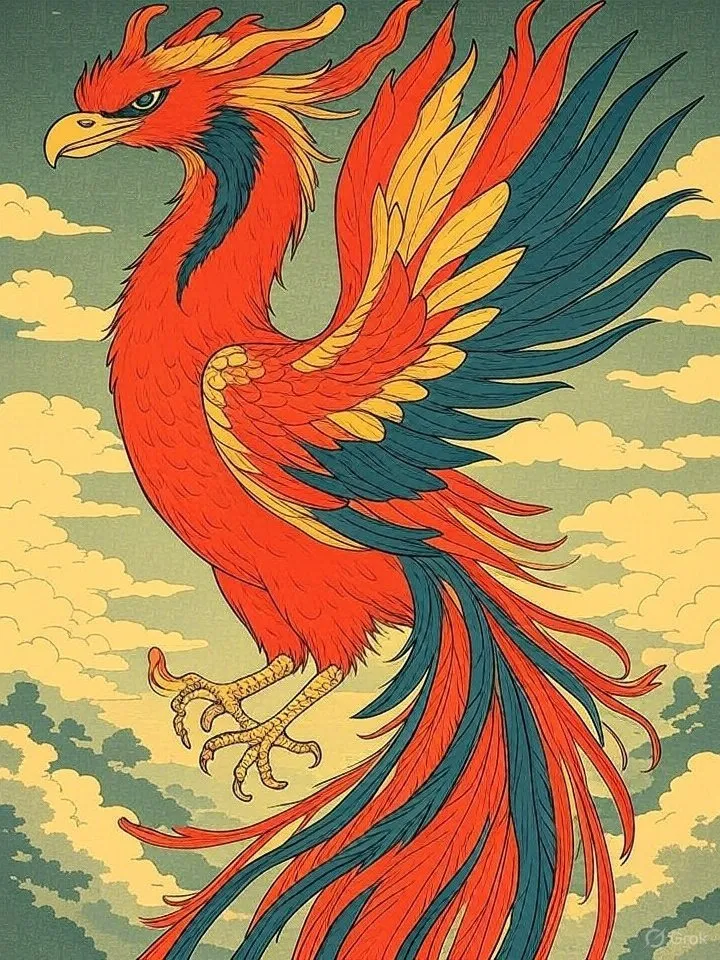
- Described as a majestic, colorful bird with elements of many animals: the head of a pheasant, the beak of a parrot, the tail of a peacock.
- Glows with divine light and often surrounded by fire or clouds.
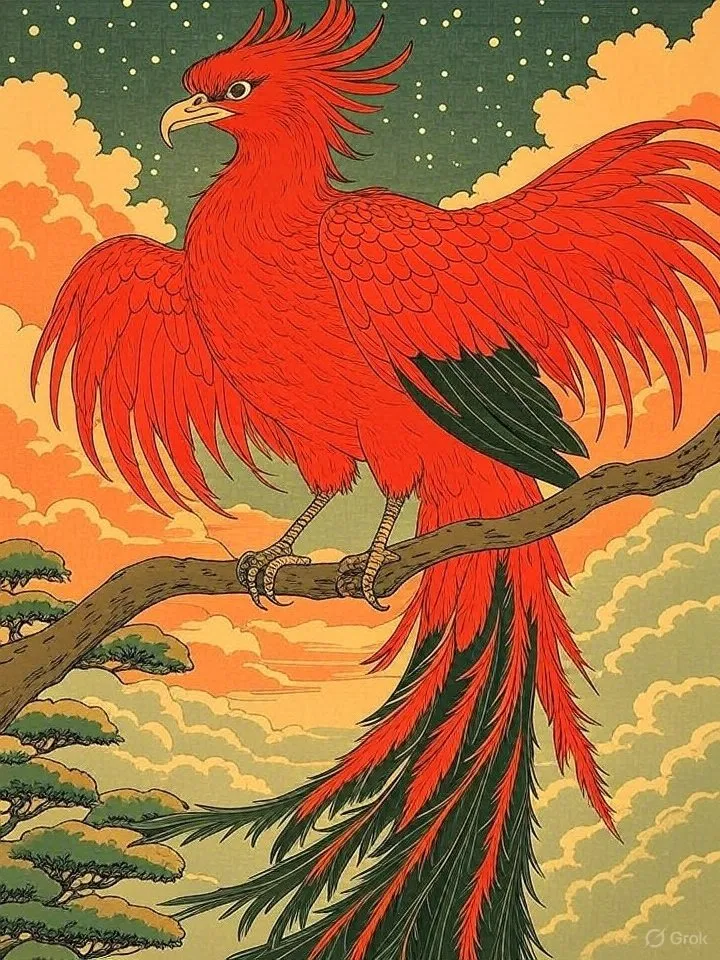
- Typically depicted in flight or perched atop sacred buildings.

Behavior & Myths
- Only appears during times of great peace and virtue.
- Said to descend from heaven to bless emperors or herald a golden age.
- Appears in classical Japanese architecture and festivals as a sacred guardian.
Symbolism
- Symbol of imperial authority and purity.
- Represents balance, harmony, and the union of opposites.
- Seen as a cosmic protector and divine messenger.
挿絵付き昔話
Hō-ō の物語

In the misty dawn of a long-forgotten era, when cherry blossoms bloomed in every corner of the land and the air was alive with the sweet scent of plum trees, an unlikely event transpired in the small village of Akakawa.
It had been seven winters since the last Hō-ō's visit, and the villagers whispered among themselves about its absence. Some said it was a sign of dark times to come, while others believed it merely awaited the balance of virtues to be restored. The young daughter of the village elder, Emiko, however, knew that the bird's silence only meant its return was all the more imminent.
As Emiko tended to her family's storehouse, she noticed an unusual brightness creeping over the hills. At first, she thought it merely a reflection from the rising sun, but as she gazed out at the eastern horizon, a soft, ethereal light unfolded like a canvas of shimmering silk. Within its radiance, a shadow took shape – the majestic form of the Hō-ō.
The bird's plumage danced with colors that seemed to rival the shifting hues of autumn: scarlet, emerald, and amber intertwined as if painted by divine brushstrokes. Its eyes, like polished onyx, held an ancient wisdom, kindling a sense of reverence within Emiko's heart. As she stood there, awestruck, the Hō-ō began its descent, alighting upon the eaves of her family's humble dwelling.
Within hours, news of the bird's arrival spread throughout the village like ripples on still water. People gathered before their homes, praying and bowing in unison as they welcomed this celestial visitor. The elder himself, accompanied by Emiko, approached the majestic creature with a sacred tray bearing offerings of rice, sake, and cherry blossoms.
As they drew near, the Hō-ō opened its beak, releasing a gentle song that harmonized with the morning's chirping crickets. Within this melodious union, balance was restored – an equilibrium between nature's rhythms and human endeavors. The air seemed to vibrate with renewed harmony as the villagers sensed the bird's sacred energy revitalize their hearts.
In that moment, a wise elder from the mountains arrived at the village on his staff, seeking guidance for the troubled lands beyond Akakawa. As he listened to the Hō-ō's song and gazed upon its radiant plumage, he knew that a new era had begun – one where yin and yang would dance in perfect synchrony. The old man's eyes shone with understanding as he declared: "This is no ordinary visitation; it heralds an age of gold."
And so the Hō-ō remained within Akakawa for seven sun-kissed days, watching over the villagers as they worked to heal their world. Its divine presence illuminated paths previously lost, guiding Emiko and her kin toward a brighter future where virtues and balance would reign supreme.
As the celestial bird prepared its departure, it gazed upon the humble village elder with eyes that shone like polished jade, imparting a final blessing: "May your seed of virtue grow unbroken, spreading harmony across this land as a testament to our time together."