
Name Meaning
Overview
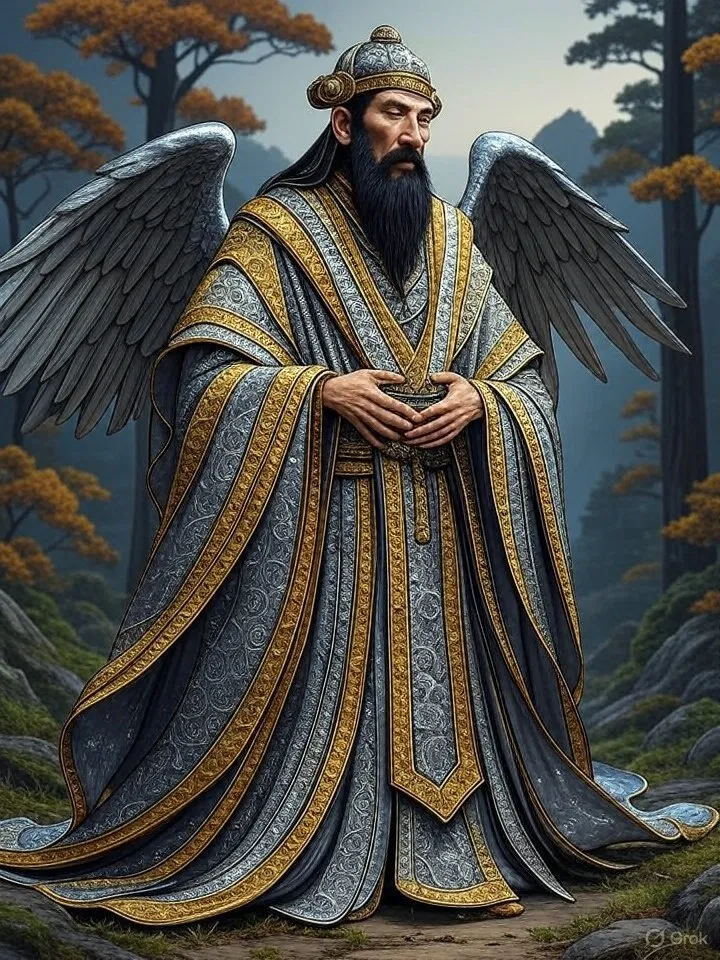
Eritate-goromo (襟立衣) refers to the “upright-collared robe,” an enchanted garment said to be worn by Sōjōbō, the king of the tengu who lives on Mount Kurama.
- Eri (襟) = Collar
- Tate (立) = Standing/Upright
- Goromo (衣) = Garment or robe
Origin
- Featured in myths surrounding Sōjōbō, the legendary tengu who trained the warrior Minamoto no Yoshitsune.
- Linked to ancient tengu traditions and mountaintop ascetic practice.
Appearance
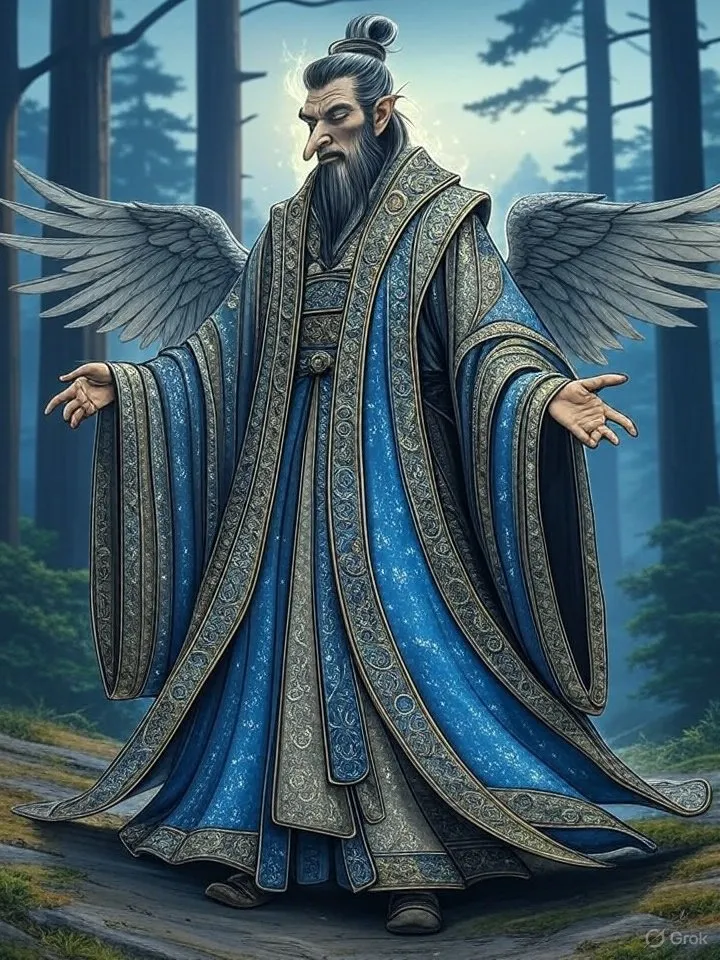
- A finely made robe with an upright collar, glowing faintly with spiritual energy.
- Often described as fluttering mysteriously even without wind.
- Sometimes embroidered with tengu symbols or red feathers.

Behavior & Myths
- Believed to give the wearer the ability to move invisibly or with great speed.
- Said to be one of several divine tools used by Sōjōbō in tengu training and battle.
- Some tales claim it can repel evil spirits or grant limited flight.
Symbolism
- Represents mystical wisdom and authority in tengu lore.
- Often a metaphor for transcendence, secrecy, and magical prowess.
- Symbolic of the hidden strength of mountaintop ascetics and martial arts training.
挿絵付き昔話
Eritate-goromo の物語

In the mist-shrouded mountains, where the wind whispers secrets to the trees, there lived a young tengu named Kaito. His mentor, Sōjōbō, had long ago bestowed upon him a sacred task: to protect the balance of nature in these sacred peaks. But Kaito was troubled by his own limitations – he could not yet wield the mystical energy that coursed through the mountains like a river.
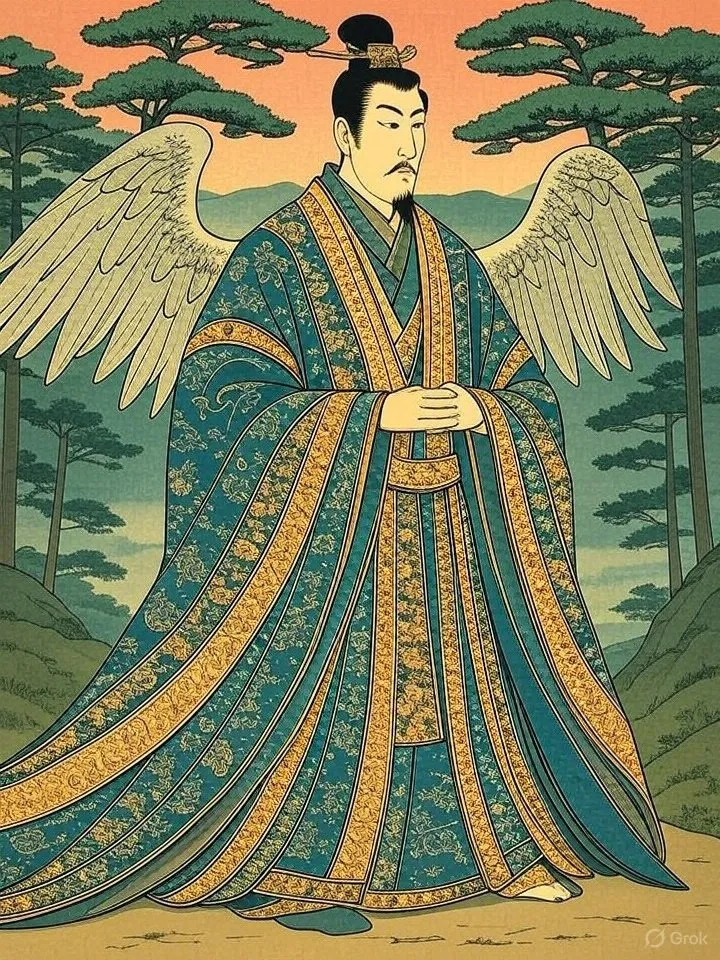
One day, while wandering through the misty forests, Kaito stumbled upon an ancient tengu's robe, Eritate-goromo, fluttering in the still air. Its collar stood upright, as if beckoning him to try it on. Unbeknownst to Kaito, this was no ordinary garment – it had been imbued with the essence of Sōjōbō's own ascetic practices and mystical wisdom.
As soon as he wrapped the robe around his shoulders, Kaito felt an eerie shiver run down his spine. The fabric seemed to come alive beneath his fingers, its glowing threads weaving a subtle magic that coursed through his veins like liquid moonlight. He looked up at Sōjōbō's mountain peak and saw it with new eyes – the misty veil parted, revealing hidden pathways and ancient secrets.
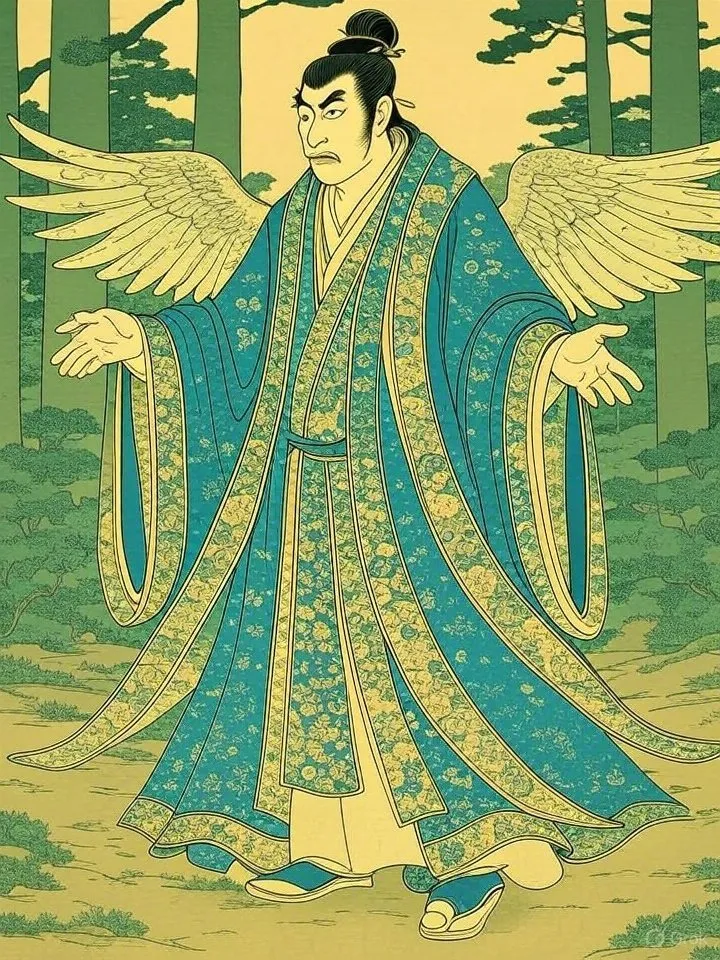
Without warning, Kaito felt himself lifted from the earth, carried aloft on the windless breeze of the robe. His tengu senses awakened: he saw the world in shades of emerald and jade, and his ears picked up the whispered conversations of trees and stones. He realized that the Eritate-goromo had granted him more than just stealth – it allowed him to grasp the hidden harmony between all living things.
With this newfound understanding, Kaito confronted the dark forces that threatened the balance of nature: demons born from human greed, pollution, and neglect. The robe's mystical energy coursed through his body like a spark, igniting an unyielding determination within him. For the first time, he truly felt the authority and wisdom that Sōjōbō had entrusted to him.
In the silence of dawn, Kaito descended upon the dark lands, his Eritate-goromo fluttering with an otherworldly light. The demons trembled before him, sensing the mystical power emanating from the robe's sacred threads. One by one, they vanished into nothingness as Kaito approached – vanquished not by steel or magic, but by the harmonious resonance that now flowed through his being.
From that day forward, Kaito roamed the mountains as a guardian, his Eritate-goromo fluttering in the still air like a beacon. The creatures of the forest looked up to him with reverence, knowing that their young tengu had transcended his own limitations and become one with the mystical wisdom of Sōjōbō's tradition. And though the darkness continued to threaten, Kaito stood ready – an invisible sentinel, armed not just with steel or magic, but with the very fabric of nature itself.