
Name Meaning
Overview
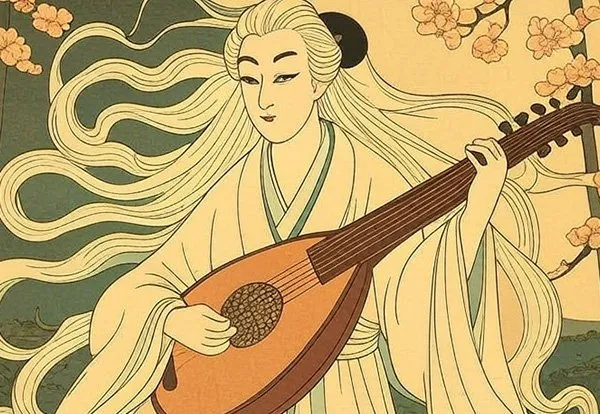
Biwa-bokuboku (琵琶牧々) refers to the spirit of a biwa lute that becomes animate after years of neglect. Like other tsukumogami (tool-spirits), it represents the soul awakened in old instruments.
- Biwa (琵琶) = traditional Japanese lute
- Bokuboku = an onomatopoeic sound possibly imitating plucking or movement
Origin
- Classified as a tsukumogami — an object that comes to life after a hundred years.
- Stems from Japanese folklore and Buddhist beliefs about animism and spiritual energy.
- Appears in Edo period yokai picture scrolls and folklore collections.
Appearance
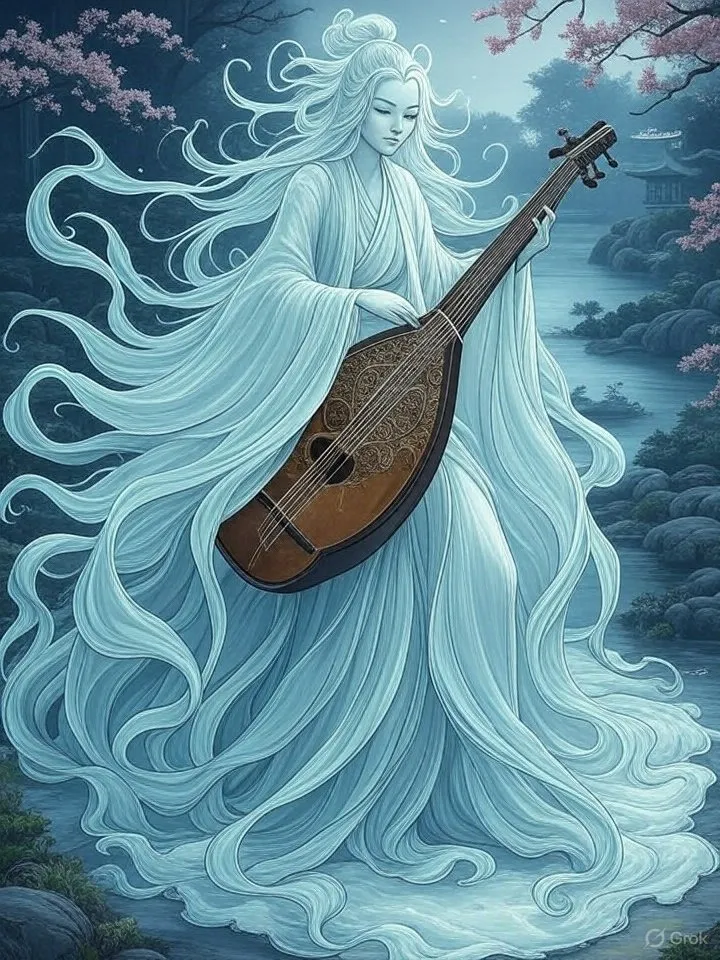
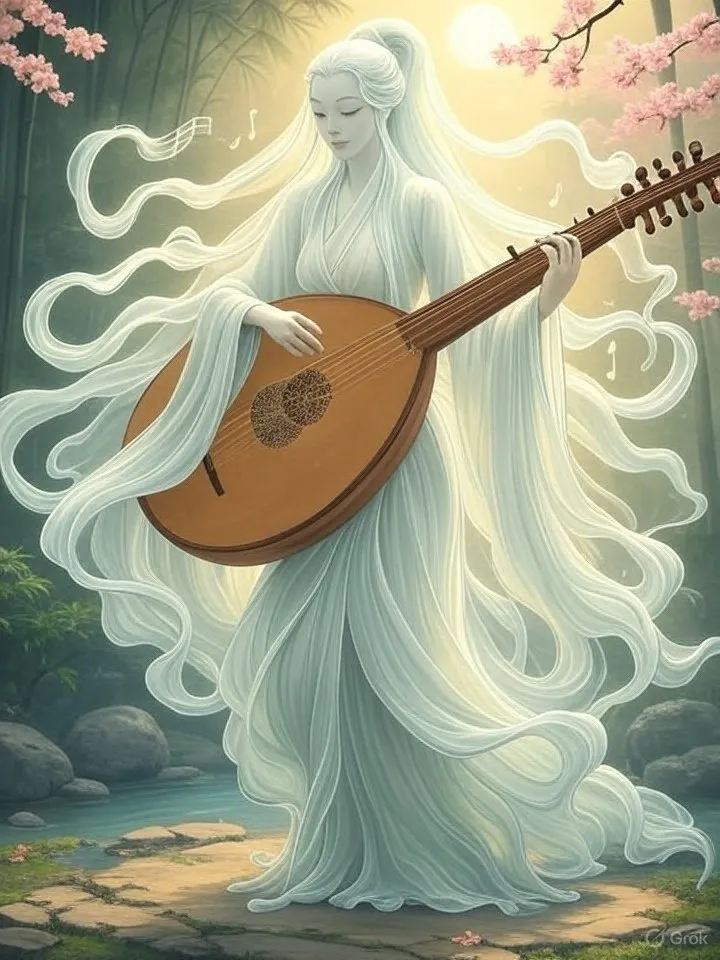
- Resembles a walking biwa lute with anthropomorphic features like eyes, arms, and legs.
- May be adorned in ragged kimono or monk robes depending on the tale.
- Sometimes floats or moves awkwardly while producing eerie twangs.
Behavior & Myths
- Appears when an instrument is forgotten, collecting spiritual residue over time.
- May frighten owners, play music by itself, or wander in search of appreciation.
- Some tales say it rejoices when played again, others claim it curses careless musicians.
Symbolism
- Represents the spirit of neglected objects and a warning to treat belongings with care.
- Embodies the cultural reverence for tools and musical instruments in Japanese life.
- Appears in art and parables promoting gratitude and mindful usage.
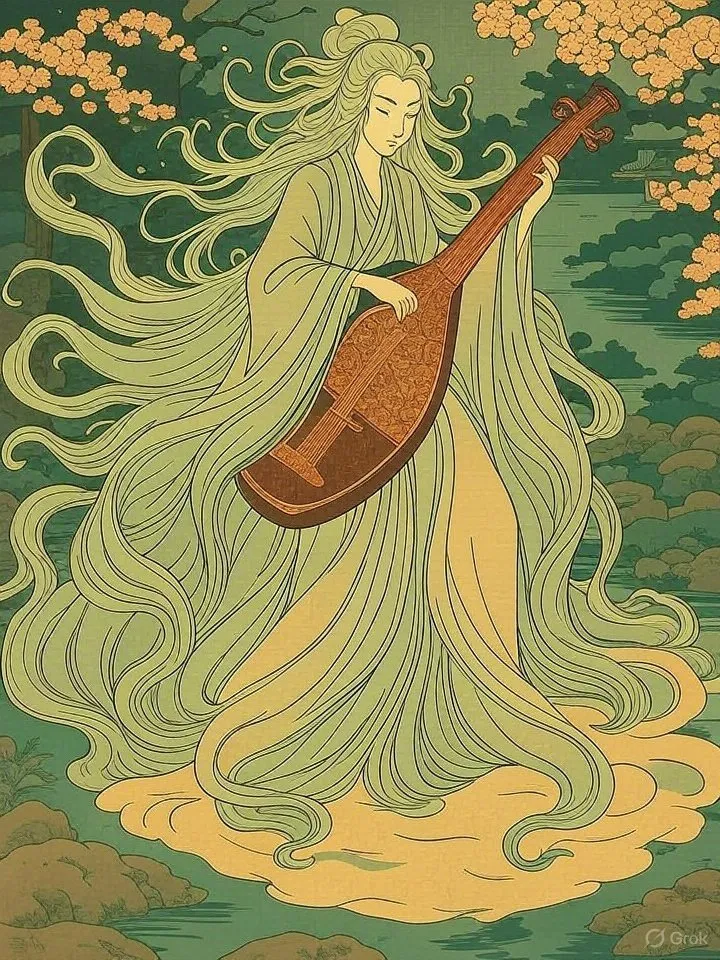
挿絵付き昔話
Biwa-bokuboku の物語

In the misty hills of rural Wakayama, where cherry blossoms whispered secrets to the wind, there lived an old man named Kaito. He was a wandering musician, known for his melancholic biwa melodies that could summon rain from the grey skies or conjure tears from the hearts of those who listened.
Kaito's instrument, a family heirloom passed down through generations, had been with him for nigh on twenty years. It was said to be enchanted, its spirit feeding off the emotions it conveyed. But as Kaito grew older, his fingers began to falter, and his playing became less frequent. The biwa, too, seemed to sense its owner's neglect, its laments growing fainter with each passing year.
One autumn evening, while rummaging through a dusty attic, Kaito stumbled upon an old, tattered kimono. As he wrapped it around the biwa's neck, a shiver coursed through his spine. The air in the room grew heavier, like a sigh from a forgotten soul. Suddenly, the instrument's body began to stir, its wooden limbs unfolding like a puppet awakened by strings.
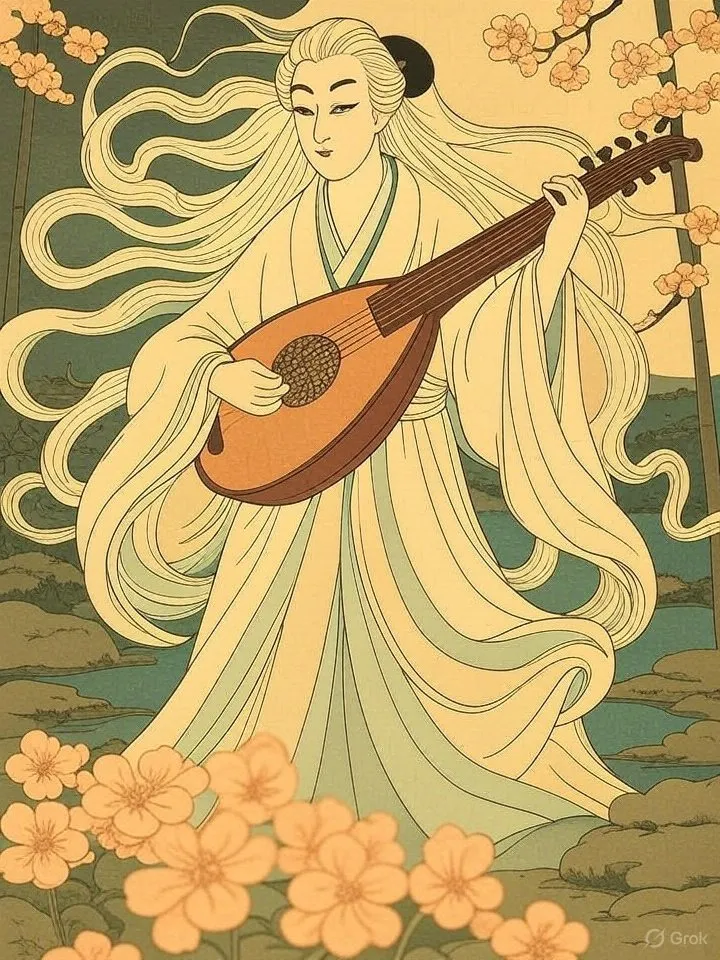
A Biwa-bokuboku emerged before Kaito's eyes – a creature born from the confluence of music and neglect. Its biwa form was adorned in the same tattered kimono, its "face" etched with sorrowful lines that seemed to echo the notes of Kaito's forgotten melodies.
The Biwa-bokuboku wandered aimlessly, producing eerie twangs on an invisible fretboard. It moved as if searching for something – or someone – lost in the misty hills. Its presence sent shivers down the spines of nearby villagers, who whispered tales of a cursed instrument come to life.
One evening, Kaito decided to confront his creation. As he approached the Biwa-bokuboku, it turned towards him, its eyes burning with an otherworldly light. The creature spoke in a voice that was both melody and lament:
"Master Kaito, why have you abandoned me? My spirit has gathered dust for years, like forgotten memories in an attic's recesses."
Kaito hung his head in shame, recognizing the truth behind the Biwa-bokuboku's words. He gently strummed a soft arpeggio on its strings, and the creature's body relaxed, its laments subsiding into a gentle hum.
As the sun dipped below the hills, Kaito began to play with renewed passion. The Biwa-bokuboku's twangs harmonized with his master's melodies, creating a symphony that conjured tears of gratitude from the villagers' eyes. From that day forward, the instrument and its owner became inseparable – each nourishing the other's spirit, reminding them both to cherish their bond and honor the music that flowed between them.
The Biwa-bokuboku continued to wander the hills, but now it carried a message of redemption: that love and care can revive even the most forsaken of souls. Its presence whispered a gentle warning – neglect your belongings at your own peril, lest they come to life with sorrowful melodies that haunt you for years to come.