
Name Meaning
Overview
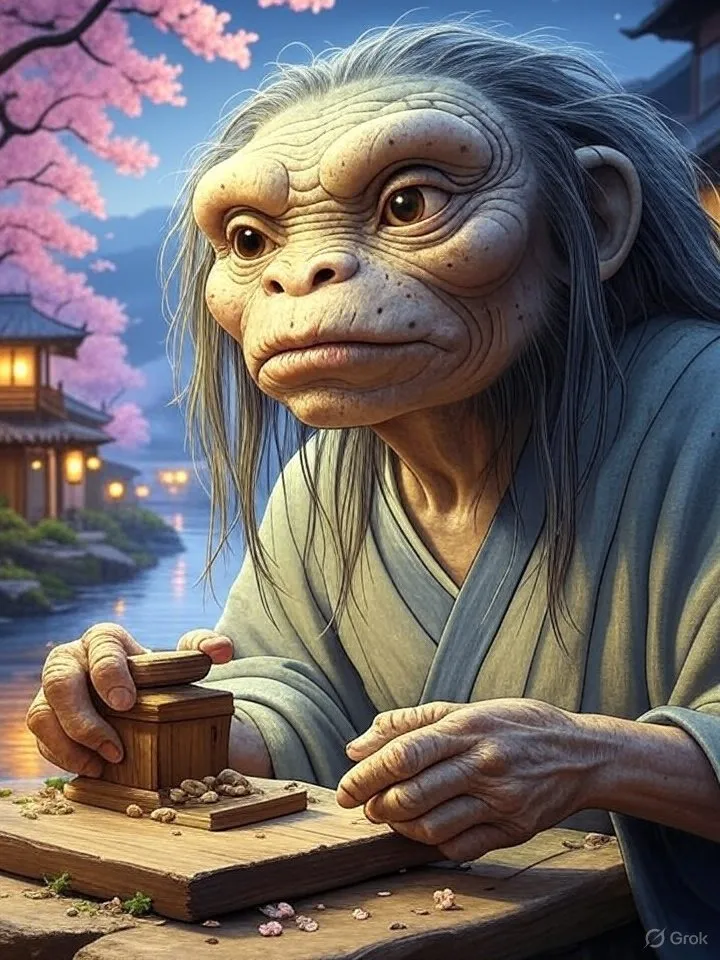
Azukibabaa (小豆婆々) translates to “Old Bean-Grinding Woman.” A twisted counterpart to the Azukiarai, this yōkai is more malicious, lurking in remote regions and luring the unsuspecting with grinding sounds before devouring them.
- Azuki (小豆) = Red bean
- Babaa (婆々) = Old woman or hag → “Bean-Hag”
Origin
- Stories originate from Niigata and mountainous regions of Honshu.
- Often told to scare children into staying close to home after dark.
Appearance
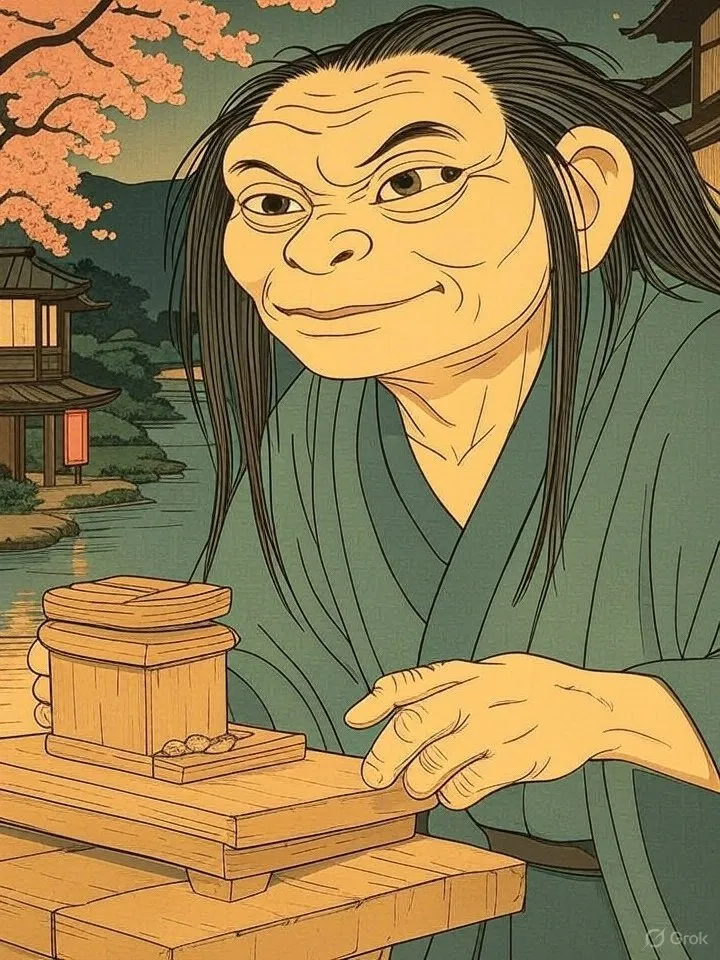
- Described as a wrinkled old hag with sharp claws, hunched back, and wild hair.
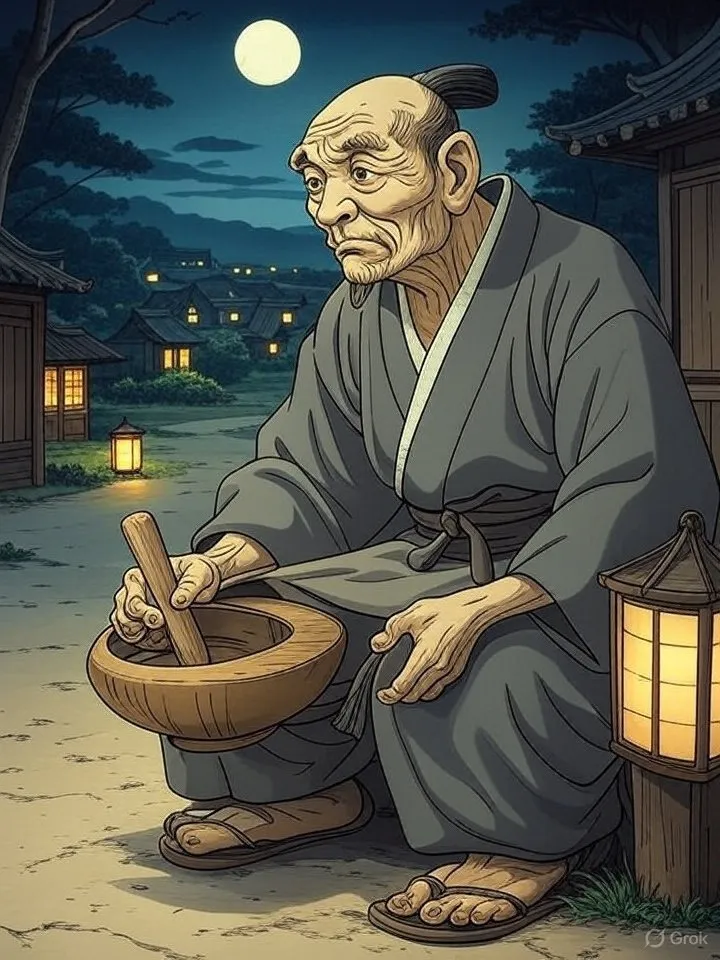
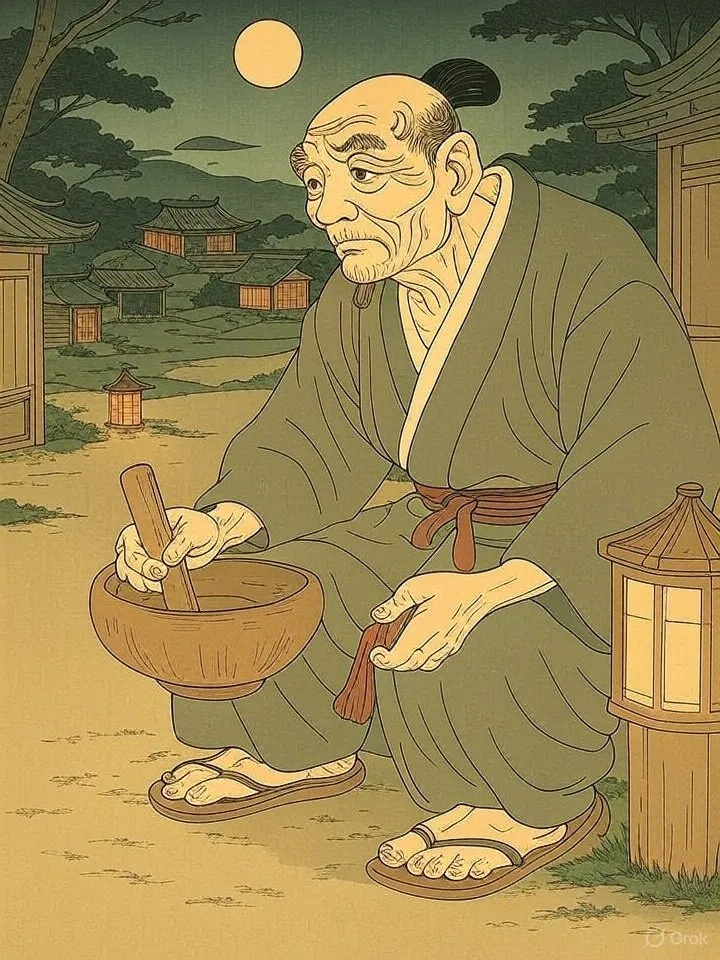
- Sometimes seen grinding beans in a stone mortar or crouched over a pot in the woods.
- Eyes glow faintly in the dark, and her voice is raspy and wet.

Behavior
- Draws travelers by mimicking the sound of beans being ground.
- When they investigate, she ambushes and devours them.
- Her victims are never seen again — some say she grinds their bones in her mortar.
Symbolism
- Represents the darker side of rural superstition.
- A cautionary tale about curiosity and wandering alone.
- Also viewed as a spirit of revenge or hunger born of solitude.
挿絵付き昔話
Azukibabaa の物語

In the depths of winter, when snowflakes danced in the valley below, a young boy named Kaito ventured into the forest alone. His breath misted before him as he trudged through the knee-deep drifts, his eyes fixed on the faint glow of the setting sun.
As he walked, the trees grew taller and the shadows darker. The wind began to whisper secrets in Kaito's ear – a soft rasping sound that sent shivers down his spine. He quickened his pace, but the whispers only grew louder, drawing him deeper into the woods.
Suddenly, a faint grinding noise echoed through the forest, like the gentle crushing of beans between stones. Kaito's curiosity got the better of him; he followed the sound to a clearing where an old hag sat crouched over a stone mortar. Her eyes glowed dimly in the fading light, and her wild hair seemed to writhe around her head like living vines.
The Azukibabaa looked up as Kaito approached, her gaze locking onto him with an unnerving intensity. For an instant, they simply regarded each other – the old hag, her face a topography of wrinkles, and the young boy, his eyes wide with wonder.
Then, with a sudden lunge, the Azukibabaa sprang from her crouch, her claws snapping like twigs. Kaito stumbled backward, but his feet were rooted to the spot as the hag closed in. Her breath was cold and rank, reeking of damp earth and decay.
As she drew closer, Kaito caught a glimpse of something odd – a small patch of moonflowers blooming amidst the snowdrifts, their delicate petals glowing with an otherworldly light. The Azukibabaa seemed to sense his gaze, for her eyes flashed with a malevolent spark.
The grinding noise grew louder still, a cacophony that shook Kaito's very bones. He tried to run, but his feet felt heavy, as if rooted to the spot. And then, in an instant, everything went black.
When the moon rose high in the sky, a search party combed the forest for Kaito, but he was never found. Some said they heard the sound of grinding beans, followed by an unearthly silence. Others whispered that on certain winter nights, you could still see the young boy's face – pale and frozen, with eyes that stared out into the darkness as if trapped in a perpetual nightmare.
From that day on, travelers avoided the forest after dark, lest they fall prey to the Azukibabaa's cunning and her gruesome art of grinding bones. For in those woods, where moonflowers bloomed like ghostly lanterns, the spirit of solitude and hunger roamed, seeking its next victim.