
Name Meaning
Overview
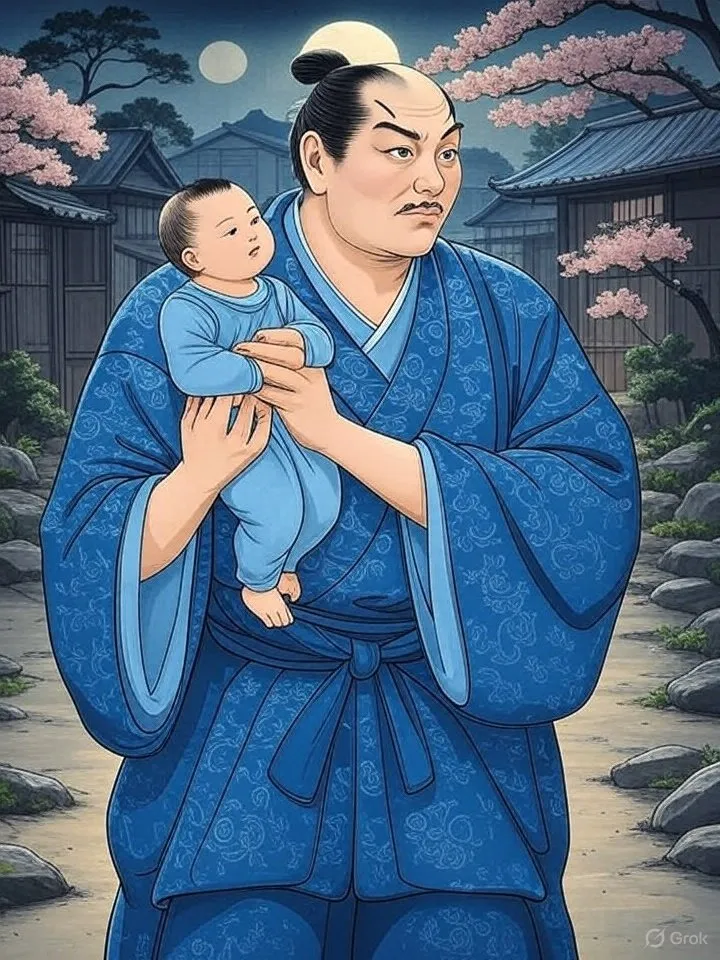
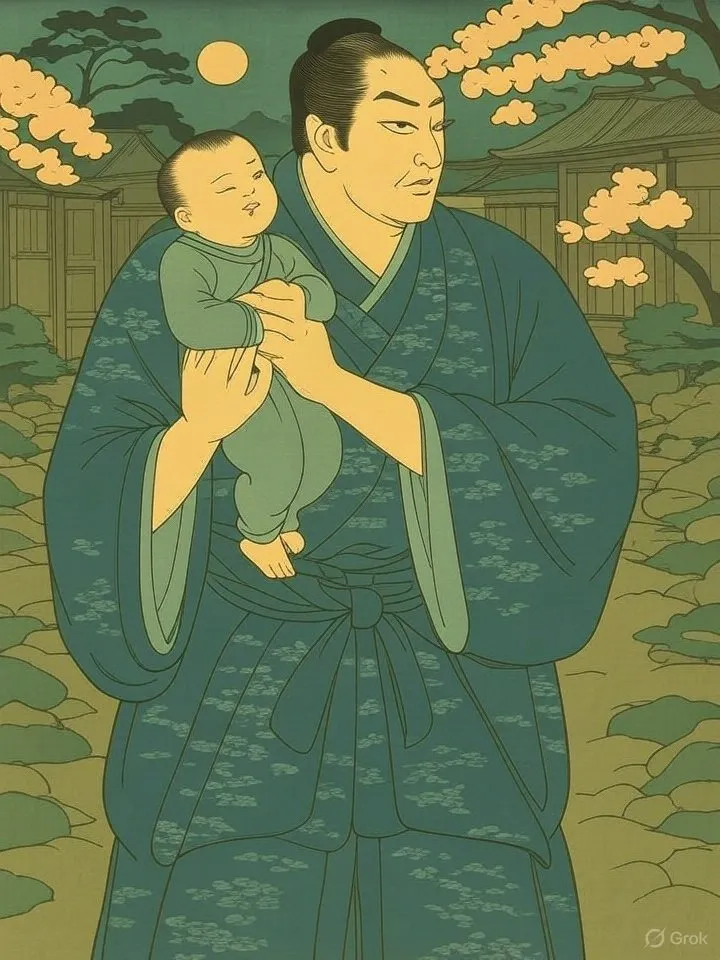
Aobōzu (青坊主) literally means “blue monk.” Despite his name, he is not a peaceful figure—this yōkai is feared for luring and kidnapping children in remote mountain villages.
- Ao (青) = Blue
- Bōzu (坊主) = Monk → “Blue Monk”
Origin
- Legends of Aobōzu appear in multiple rural regions across Japan, especially in mountainous or forested areas.
- He is often portrayed as a cautionary figure to keep children from wandering too far from home.
Appearance
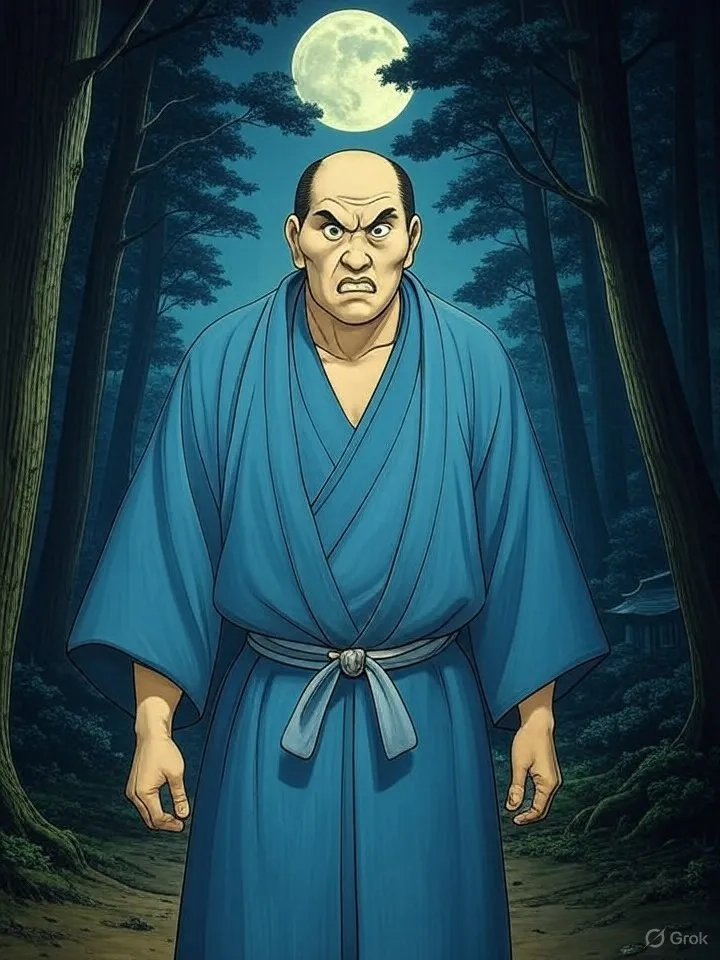
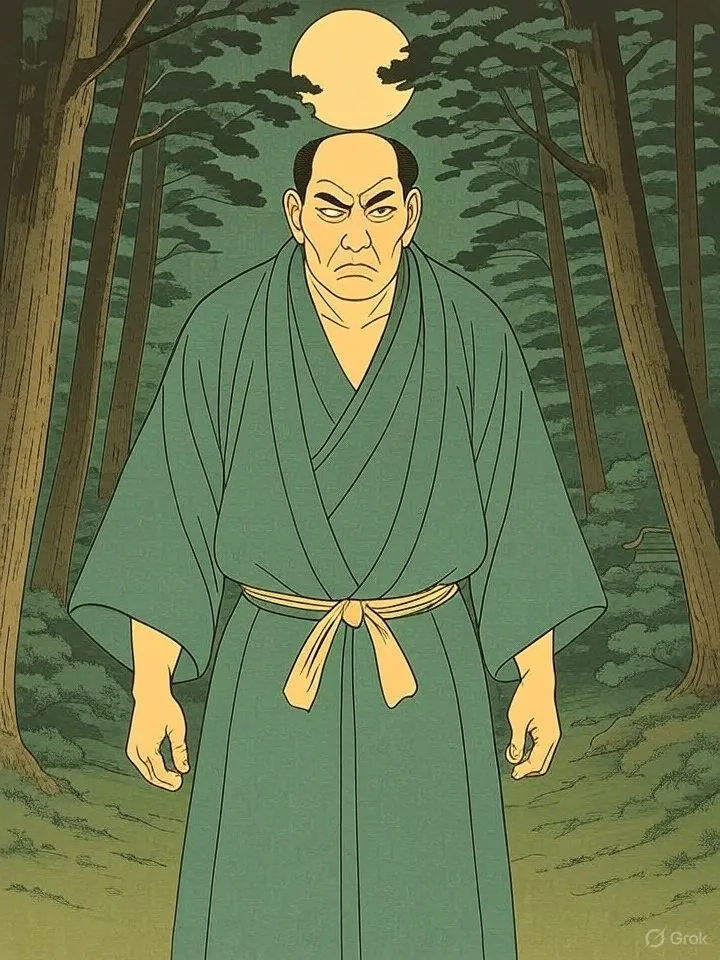
- Appears as a tall, bald monk-like man with bluish or pale blue skin.
- Wears simple robes, but his gaze and presence are eerie and unnatural.
- Sometimes depicted with glowing eyes or a creepy grin.

Behavior
- Known for abducting or scaring children who are alone at dusk or straying into the woods.
- In some stories, he appears in towns just before a child disappears mysteriously.
- Other tales depict him as a test of courage—those who show bravery can scare him off.
Symbolism
- Serves as a moral warning and community safety figure, especially for younger children.
- May represent the danger of false appearances—a calm-looking monk who harbors malice.
- Seen as part of the broader category of disciplinary yokai who enforce obedience through fear.
挿絵付き昔話
Aobōzu の物語

In the mountains where the cherry blossoms bloomed white as snow, there lived a young boy named Kaito. He was always fascinated by the tales of his village elder, who spoke of the Aobōzu that roamed these woods, snatching children away from their homes.
Kaito's curiosity got the better of him one day. As dusk approached, he decided to sneak out of his house and explore the forest beyond the village. His parents, busy preparing dinner, didn't notice his absence. The sunlight filtering through the trees cast long shadows on the ground as Kaito wandered deeper into the woods.
Suddenly, a chill ran down his spine. He heard the rustling of leaves and the soft crunching of twigs beneath an unseen foot. A figure emerged from the darkness – the Aobōzu. His skin was a pale blue hue, almost like the mist that clung to the mountainside. The monk's gaze seemed to bore into Kaito's soul, making him tremble with fear.
Kaito tried to run, but his legs felt heavy as if rooted to the spot. The Aobōzu took a step closer, his eyes fixed on the boy. His grin, like a crescent moon, seemed to grow wider with each passing moment. Kaito thought he heard the faint whisper of his name carried on the wind.
Just when all hope seemed lost, Kaito remembered the words of his village elder: "Courage is not the absence of fear, but the willingness to face it head-on." He took a deep breath and stood up straight, looking the Aobōzu in the eye. The monk's grin faltered for an instant, and Kaito seized the opportunity.
He shouted at the top of his lungs, "I will not be afraid! I will find my way back home!" The words seemed to carry far beyond the woods, echoing through the mountains. The Aobōzu recoiled, his eyes flashing with a brief, eerie glow before returning to their normal state. He turned and vanished into the trees, leaving Kaito shaken but unharmed.
As the boy stumbled back to his village, he noticed that the air grew warmer and the stars began to twinkle in the night sky. His parents, frantic with worry, rushed out to meet him, tears of relief streaming down their faces.
From that day on, Kaito told no one about the Aobōzu's encounter. But whenever he looked up at the mountains, he felt a strange sense of respect for the mysterious figure who roamed those woods. The villagers whispered among themselves about the boy who had faced the fearsome Aobōzu and lived to tell the tale. Some said it was a miracle; others claimed Kaito's bravery was what kept him safe.
As the seasons passed, Kaito grew into a young man, but he never forgot that night in the woods. He knew that the line between courage and fear was thin, and sometimes it took great heart to confront the unknown. The Aobōzu remained a whispered legend in the mountains, a reminder of the dangers that lurked in the shadows – and the strength required to face them head-on.