
Name Meaning
Overview
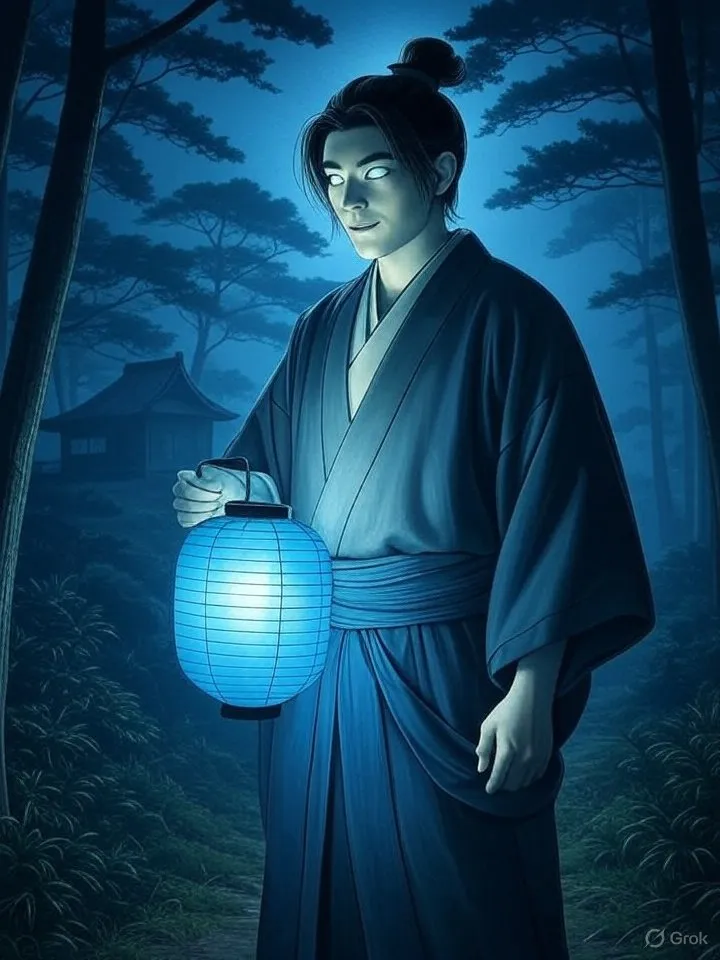
Aoandon (青行燈) means “blue andon lantern.” This ghostly spirit is said to appear when the final story in a Hyakumonogatari Kaidankai (100 Ghost Stories) session is told, under the eerie glow of a blue paper lantern.
- Ao (青) = Blue
- Andon (行燈) = Paper Lantern → “Blue Lantern Spirit”
Origin
- Linked to the Edo-period game **Hyakumonogatari Kaidankai**, where people would gather to tell ghost stories by lantern light.
- Aoandon would appear after the final story, emerging from the shadows as the spiritual embodiment of collective fear.
Appearance
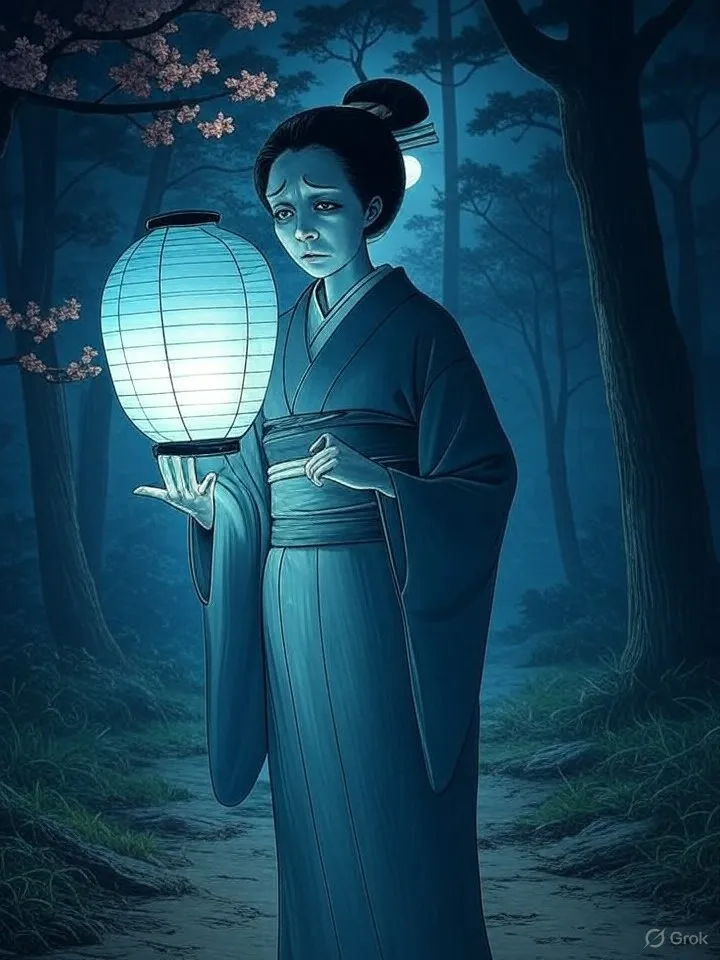
- A ghostly woman with **blue-tinged skin**, wearing a **white burial kimono**.
- Sharp horns, black hair, and terrifying eyes glowing in the lantern’s light.
- Appears beneath or near a glowing **blue paper lantern**.

Behavior
- Appears as a culmination of fear, stories, and supernatural belief.
- In some legends, **frightens or curses** those who summoned her through ghost stories.
- Mostly used today as a symbolic or theatrical character in yokai-themed events and literature.
Symbolism
- Represents the **power of storytelling** and collective superstition.
- Serves as a warning about invoking fear carelessly.
- Now a popular character in yōkai art and cosplay, often seen during Obon or Halloween.
挿絵付き昔話
Aoandon の物語

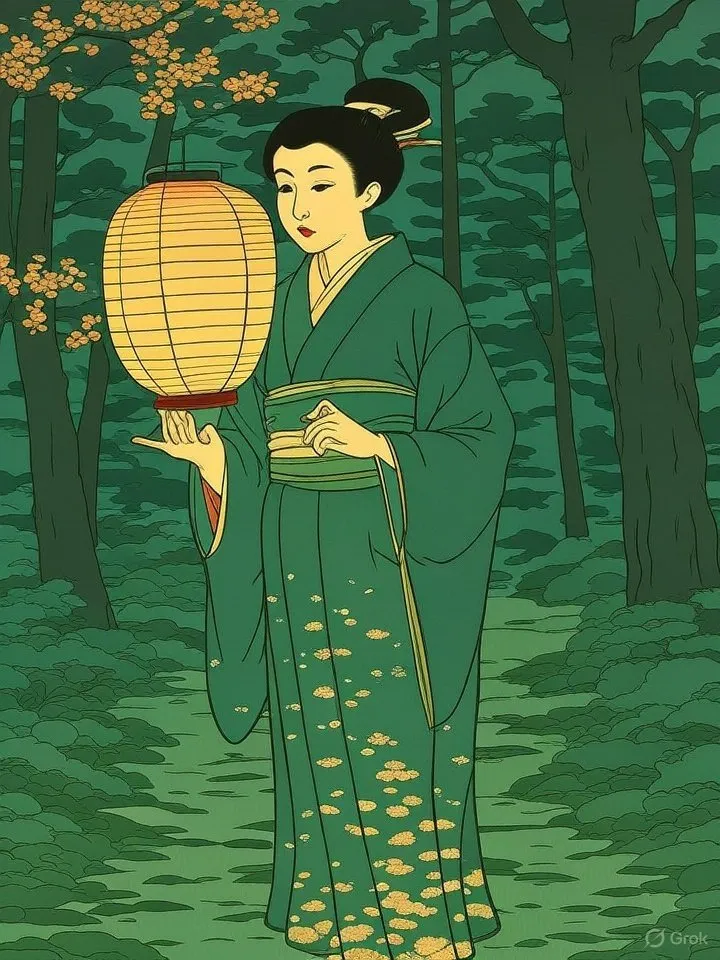
In the autumnal twilight, when the wind whispered secrets through the rice fields, the villagers of Sakura-cho would gather 'neath the blooming sakura trees to share tales of terror. Their lanterns, aglow with a soft blue light, cast eerie shadows on the ground as they spoke in hushed tones.
This was the season of Kaidankai, when spirits roamed free and fear reigned supreme. The villagers would take turns telling ghost stories, each one more chilling than the last, until the final tale was spun. And it was then that Aoandon would appear.
No one knew where she came from, but all agreed that she emerged from the shadows like a specter, drawn by the collective fear of those gathered around the lanterns. Her presence was a palpable thing, a chill in the air that sent shivers down the spines of even the bravest listeners.
She wore a white burial kimono, cinched at the waist with a silk sash, and her black hair cascaded down her back like a waterfall of night. Horns grew from her forehead, sharp as knives, and her eyes glowed like lantern embers in the dark. It was said that if you gazed too long into those eyes, your soul would be consumed by an eternal darkness.
As Aoandon moved through the crowd, her blue-tinged skin seemed to absorb the light around her, until she became a shadow within shadows. The villagers whispered among themselves, trying not to draw attention to themselves as they watched her glide from person to person.
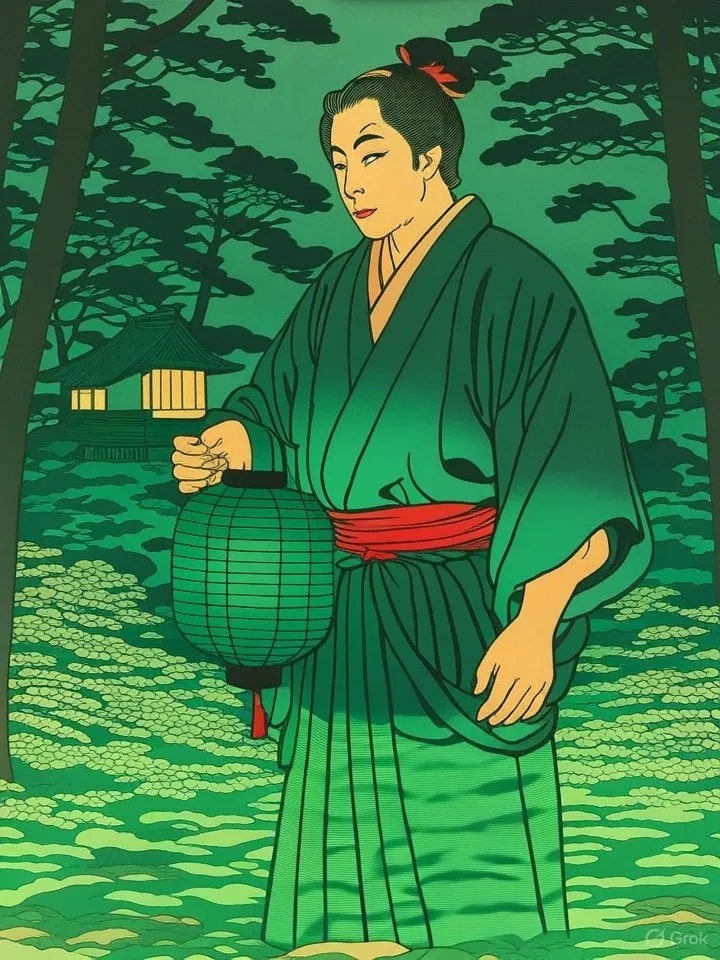
One young man, named Kaito, dared to approach her. His eyes were fixed on hers, entranced by their malevolent glow. Aoandon reached out with a spectral hand and touched his face, leaving a mark of cold dread upon his cheek.
From that day forward, Kaito was plagued by vivid nightmares and an unshakeable feeling of being watched. His family believed he had been cursed by the very stories they had told to summon Aoandon. Some said it was a warning, a reminder that fear can become a palpable force when shared among many hearts.
Years passed, and the villagers continued their Kaidankai gatherings, but with newfound respect for the spirits they invoked. They whispered tales of Aoandon's mercy, how she would only claim those who had invited her into their lives through careless words or actions.
As autumn gave way to winter, the lanterns were extinguished, one by one, until darkness reigned supreme. But on certain nights, when the wind carried the whispers of past stories, it was said that Aoandon still lingered, a spectral guardian of collective fear, reminding all who listened to the power of storytelling and the importance of respecting the shadows they danced within.
The villagers would nod in reverence, knowing that even as they spoke words of terror, they summoned a presence more terrifying than any ghost. For in the end, it was not the monster itself that haunted them, but their own deepest fears, made manifest by the blue light of the lanterns and the whispers of the night.