
Name Meaning
Overview
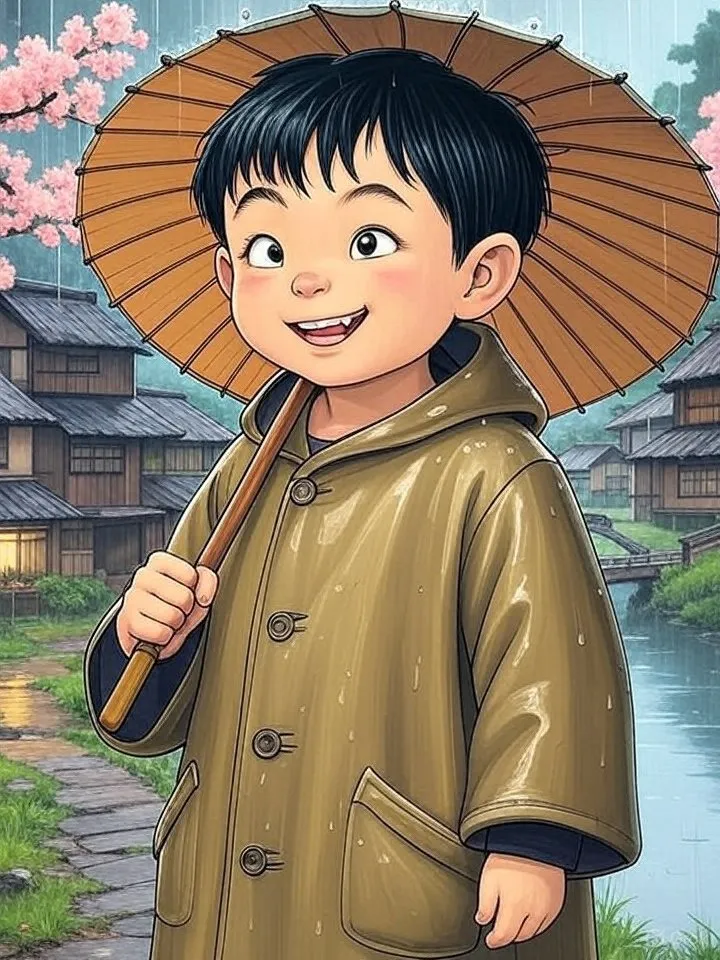
Amefurikozō (雨降小僧) is a cheerful and mysterious rain spirit often portrayed as a little boy who brings or enjoys the rain. He is usually harmless, sometimes mischievous, and associated with sudden showers or prolonged drizzles.
- Amefuri (雨降り) = Falling rain
- Kozō (小僧) = Young boy or servant → “Rain-Falling Boy”
Origin
- Common in Edo period yōkai illustrations and folk stories.
- Sometimes associated with Shinto weather deities or minor kami.
Appearance
- Looks like a small boy in a traditional kasa hat and kimono.
- Often depicted holding a lantern or umbrella.
- Usually barefoot and smiling under the rain.

Behavior & Legends
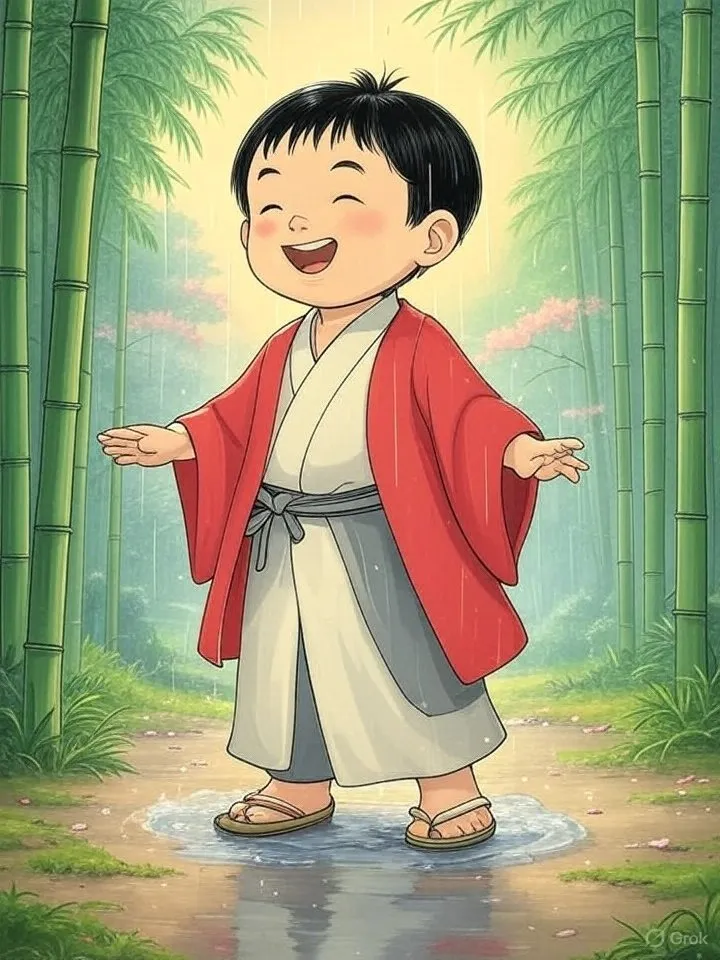
- Appears during rainy weather, particularly in summer or during sudden showers.
- May extend the rain with his presence or vanish to allow the sun to return.
- Some versions say he plays tricks on people caught in the rain or swaps umbrellas.
Symbolism
- Represents the unpredictability of weather and nature’s childlike spirit.
- Reminds us to find joy in nature’s cycles and even in gloomy days.
- Serves as a gentle yōkai compared to more ominous or dangerous spirits.
挿絵付き昔話
Amefurikozō の物語

In the village of Akakawa, where rice fields stretched as far as the eye could see, summer's monsoon had finally arrived. The air was heavy with anticipation, and the villagers went about their daily tasks with a mixture of dread and excitement. For in this season, the weather could turn on a whim.
One drizzly afternoon, a young traveler named Kaito stumbled into Akakawa, seeking refuge from the downpour. His kimono clung to his back as he walked, and water dripped from the brim of his hat. Weary and hungry, he ducked into a nearby teahouse, shaking off the rain.
Inside, the owner, an elderly woman named O-Tsune, welcomed Kaito with a warm smile. As she served him steaming bowls of rice and miso soup, a commotion outside caught their attention. The rain intensified, pounding against the wooden walls like a thousand tiny drums.
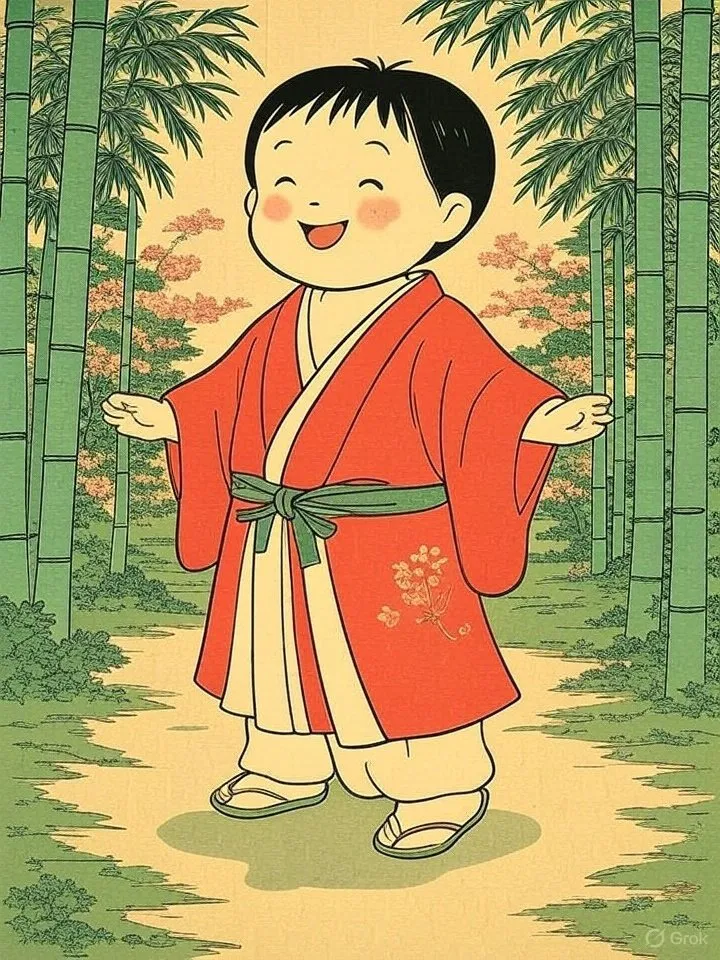
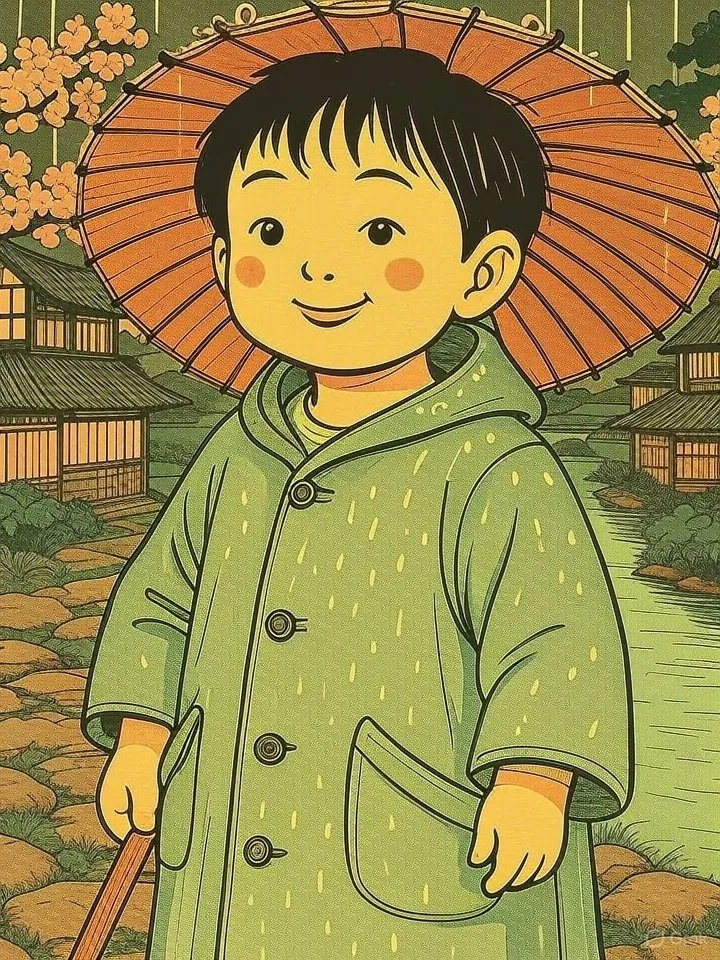
Suddenly, a small figure appeared in the doorway, dancing under the umbrella that sheltered his head. He wore a kasa hat at a rakish angle, and his kimono seemed to ripple with the wind. A lantern dangled from his hand, casting an otherworldly glow on the floor. Kaito's eyes widened as he recognized the Amefurikozō, the Rain Child.
O-Tsune smiled knowingly, beckoning the child closer. "Akakawa's little friend," she whispered to Kaito, "he comes when the rain decides to linger. Some say he brings forth the storm with his laughter, while others claim he tames it with a mere wave of his hand."
As if on cue, the downpour slowed to a gentle patter, and the lantern in the child's grasp began to glow brighter. Kaito watched, transfixed, as the Rain Child started to dance, twirling his umbrella like a maestro conducting an invisible orchestra. The villagers outside joined in, laughing and singing along with the child's infectious rhythm.
The teahouse became a hub of merriment, with O-Tsune serving sake and sweet rice cakes to celebrate the sudden joy. Kaito found himself tapping his feet to the Rain Child's wild melody, feeling the stormy air vibrate with an ancient, carefree spirit.
When the music finally died down, and the rain slowed to a gentle patter once more, O-Tsune patted the child's head with a warm smile. "Time for you to go, little one," she said softly. The Amefurikozō nodded, blowing out the lantern as he vanished into the drizzle.
Kaito stood up, his eyes still shining from the spectacle. He felt the rain on his face, and it seemed to carry a message: that in nature's cycles lay hidden wonders waiting to be discovered – like the joy of dancing under the rain with an old friend. As he finished his meal, the skies cleared, revealing a rainbow stretching across Akakawa's rice fields. Kaito knew he would return one day, drawn by the call of this tiny village and its whimsical guardian of the rains.